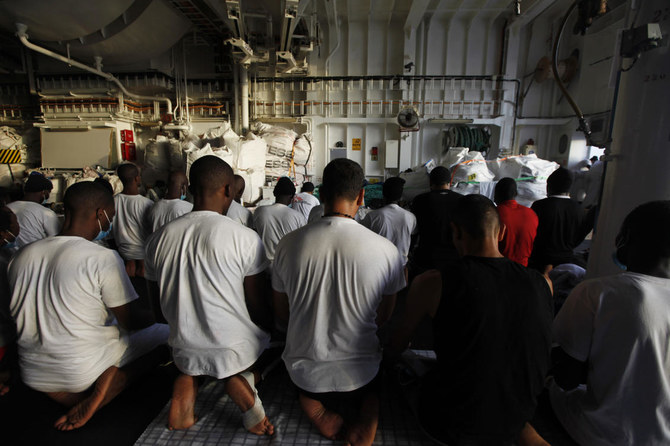
CAIRO: A major crackdown in western Libya resulted in the detention of 4,000 migrants, including hundreds of women and children, officials said Saturday.
The raids took place Friday in the western town of Gargaresh as part of what authorities described as a security campaign against illegal migration and drug trafficking. The Interior Ministry, which led the crackdown, made no mention of any traffickers or smugglers being arrested.
Officials said Friday that 500 illegal migrants had been detained but on Saturday reported that number had reached 4,000.
Gargaresh, a known hub for migrants and refugees, is about 12 kilometers (7.5 miles) west of Tripoli, the Libyan capital. The town has seen several waves of raids on migrants over the years, but the latest one was described by activists as the fiercest so far.
Since the 2011 NATO-backed uprising that ousted and killed longtime dictator Muammar Qaddafi, Libya has emerged as the dominant transit point for migrants fleeing war and poverty in Africa and the Middle East, hoping for a better life in Europe. Human traffickers have benefited from the chaos in the oil-rich nation and smuggled migrants through the country’s lengthy border with six nations. They then pack desperate migrants into ill-equipped rubber boats in risky voyages through the perilous Central Mediterranean Sea route.
The detained were gathered in a facility in Tripoli called the Collection and Return Center, said police Col. Nouri Al-Grettli, head of the center.
He said the migrants have been distributed to detention centers in Tripoli and surrounding towns. Libya’s detention facilities are miserable places where migrants have suffered from abuses and severe ill-treatment, according to rights activists.
A government official said authorities would “deport as many as possible” of the migrants to their home countries. He said many of the detained had lived illegally in Libya for years. The official spoke on condition of anonymity because he was not authorized to brief the media.
Tarik Lamloum, a Libyan activist working with the Belaady Organization for Human Rights, said the raids involved human rights violations against the migrants, especially in the way some women and children were detained. He did not elaborate.
Lamloum said many detained migrants have been registered with the UN refugee agency UNHCR, as refugees or asylum-seekers. The UNHCR did not immediate respond to a request for comment.
Hundreds of migrants were seen in images posted on social media Friday by the Interior Ministry sitting clustered together in a yard with the banner of the Collection and Return Center in the background.
Other images from Gargaresh purporting to show migrants show them with their hands tied behind their backs. An aerial photo showed men lying face down on the ground at a crossroads, with military trucks and guards around them.


![]()

Libya’s migrant roundup reaches 4,000 amid major crackdown
Short Url
https://arab.news/bxqh2
Libya’s migrant roundup reaches 4,000 amid major crackdown
- The Interior Ministry, which led the crackdown, made no mention of any traffickers or smugglers being arrested
Latest updates





© 2026 SAUDI RESEARCH & PUBLISHING COMPANY, All Rights Reserved And subject to Terms of Use Agreement.