

OPEC’s oil reserves up in 2020 even as drilling rigs fall

Short Url
Updated 30 September 2021
Follow

OPEC’s oil reserves up in 2020 even as drilling rigs fall

RIYADH/CAIRO: OPEC reported a rise in its oil reserves last year despite seeing a decline in drilling activities and the number of rigs.

Crude oil reserves in OPEC Member Countries increased by 0.3 percent to 1.24 trillion barrels at the end of 2020, compared to 1.23 trillion barrels in 2019, according to OPEC’s 2021 annual statistical bulletin.
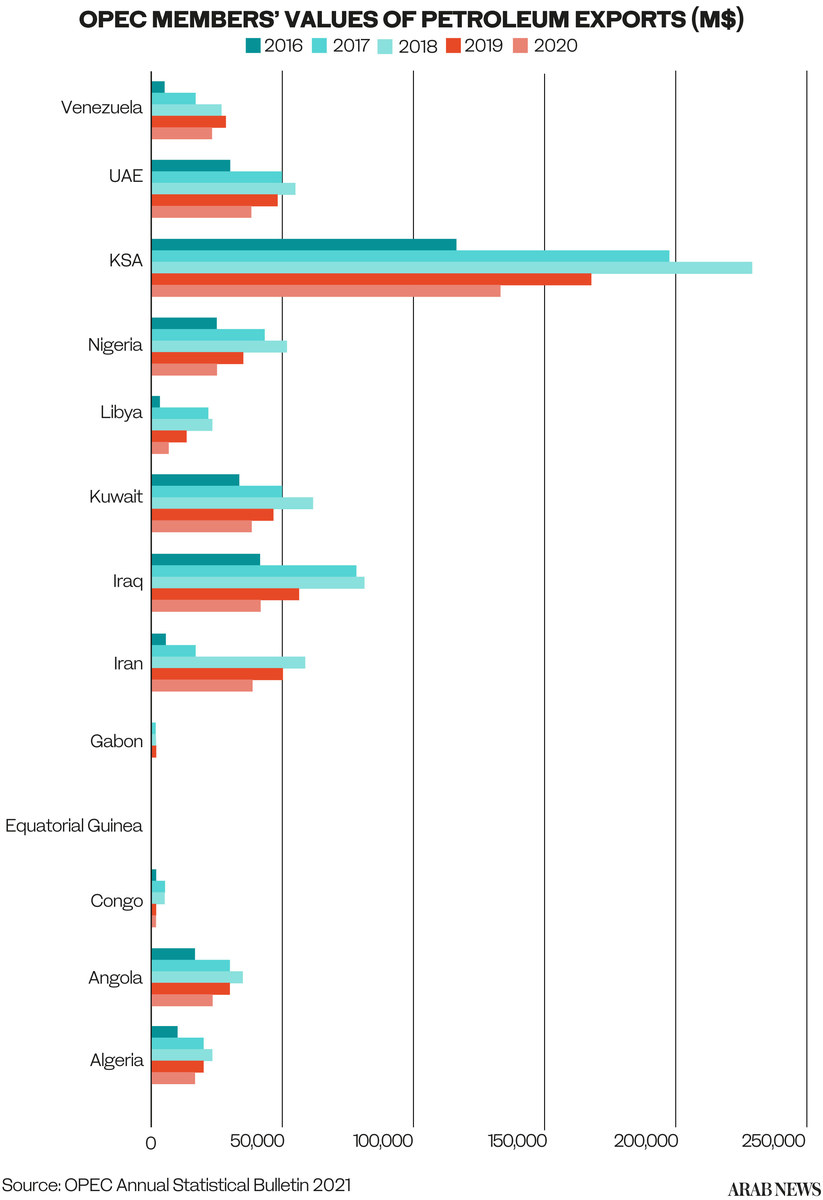
World crude oil reserves stood at 1.55 trillion barrels at the end of 2020, increasing by 0.2 percent from the last year.

As for the number of rigs, Saudi Arabia experienced a similar trend to other OPEC countries as its number of active rigs dropped noticeably from 115 in 2019 to 59 in 2020 — a decrease of 56 rigs. 

Outside of OPEC, the US’s rig count fell significantly in 2020 — down 58% to 341 in 2020, compared with 804 the previous year. 
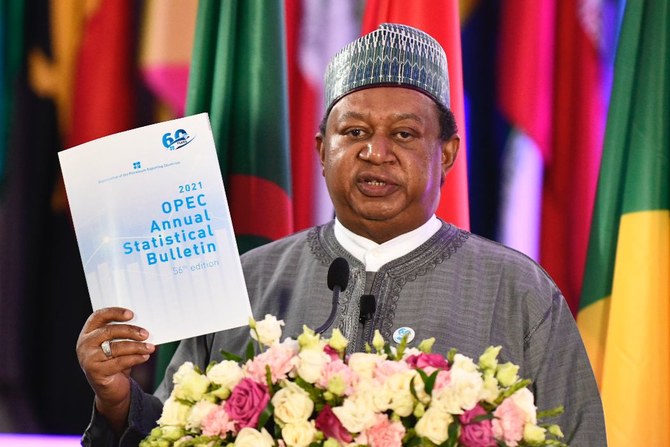
"OPEC’s commitment to high-quality, transparent oil and gas data supports our goal of fostering sustainable oil market stability for the benefit of producers, consumers and the global economy," Mohammad Barkindo, OPEC Secretary General wrote in the report issued today.

OPEC daily crude oil production declined sharply year-on-year by 3.72 million barrels, or 12.7 percent in 2020, while crude production by non-OPEC countries fell by 5.3 percent. 

The total world crude oil production declined by 8.2 percent, to average 69.09 million barrels a day, compared to 2019, the report showed.

Saudi Arabia opens 3rd round of Exploration Empowerment Program

Updated 9 sec ago
Follow

Saudi Arabia opens 3rd round of Exploration Empowerment Program

RIYADH: Saudi Arabia’s Ministry of Industry and Mineral Resources, in collaboration with the Ministry of Investment, has opened applications for the third round of the Exploration Empowerment Program, part of ongoing efforts to accelerate mineral exploration in the Kingdom, reduce early-stage investment risks, and attract high-quality investment from local and international mining companies.

The third round of the program offers a comprehensive support package targeting exploration companies and mineral prospecting license holders. The initiative aims to lower investment risks for their exploration projects and support a faster transition from exploration to development.

Incentives under the program include cash support of up to 25 percent of eligible exploration expenses, covering drilling, laboratory testing, and geological studies, alongside wage support of up to 15 percent for technical staff and experts based in Saudi Arabia.

"The program provides coverage of up to 70 percent of the total salaries of Saudi technical staff, such as geologists, during the first two years, increasing to 100 percent thereafter, in line with program requirements.

This support aims to develop talent, build national capabilities in mineral exploration, promote job localization, and facilitate the transfer of geological knowledge.

The application for the third round opened on Jan. 14, allowing participants to benefit from the Kingdom’s attractive investment environment, its stable legal framework, and streamlined regulatory structures, as well as integrated infrastructure that supports the transition from mineral resources to operational mines.

The ministry has set the timeline for the third round, with the application period running from Jan. 14 to March 31.

This will be followed by the evaluation, approval, and signing of agreements from April 1 to May 31, with the eligible projects set to be announced between June 1 and July 31 of the same year.

The program stages include submitting exploration data during the reimbursement and payment phase from Sept. 1 to Nov. 30, followed by technical and financial verification of work programs and approval of the disbursement of support funds in January 2027. The exploration data will then be published on the National Geological Database in April 2027.

The ministry emphasized that the EEP focuses on supporting the exploration of strategically important minerals with national priority. It also contributes to enhancing geological knowledge by providing up-to-date data that meets international standards, helping investors make informed decisions and supporting the growth of national companies and local supply chains.

The ministry urged companies to apply early to benefit from the program’s third round, which coincided with the fifth edition of the International Mining Conference, which was held from Jan. 13 to 15.