


RIYADH: Bright colors, regional flowers and celebrations of heritage are highlights of the second Flowerman Festival, hosted by the Ministry of Culture in the Asir region.
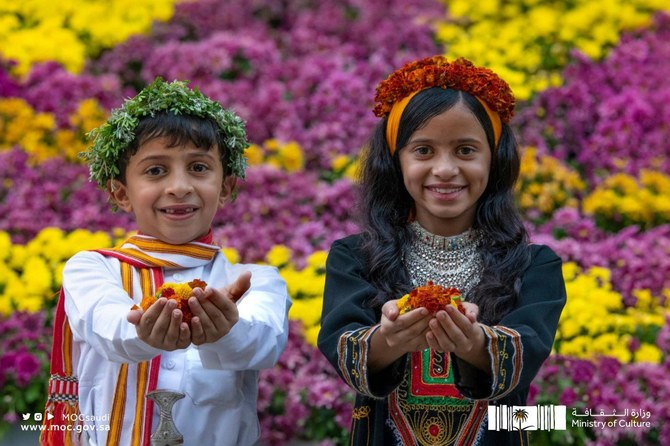
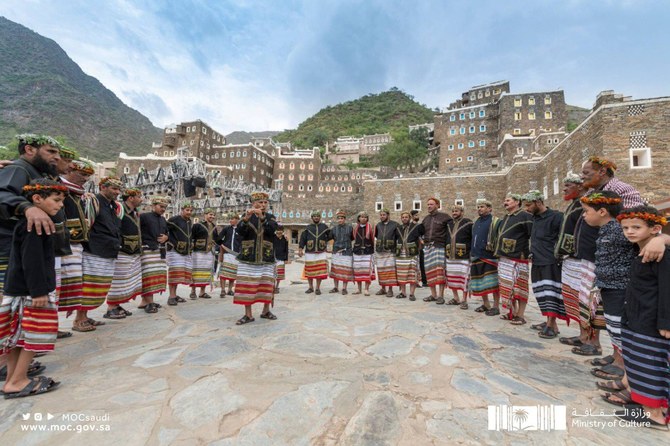
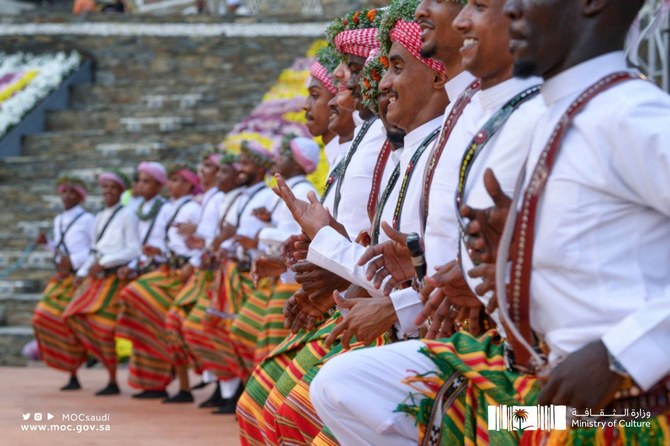
Young and old visitors wear colorful floral garlands and join hands and dance to celebrate this important cultural and historical event.
The Flowerman Festival celebrates the rural traditions in the Asir mountains in the southwestern region of Saudi Arabia from Sept 13 to Sept. 27.
One of the missions of the festival is to share the Flowerman heritage and spread awareness of its cultural diversity with local and international visitors through art, dance and storytelling.
The festival is centered around three features, which focus on the preservation of culture under the theme of “nine years of glory.”
The first feature of the festival depicts the stories of the historical roles of the flowermen in a feature called “FlowerMen and Determination,” showing Rijal Almaa’s timeline through dance and chanting.
The second feature of the festival will celebrate women and the important role they play in preserving the heritage of the Asir region through their colorful artwork.
Some of the local women can be seen around the festival grounds carefully weaving the traditional floral crowns made of marigolds, jasmine and basil.
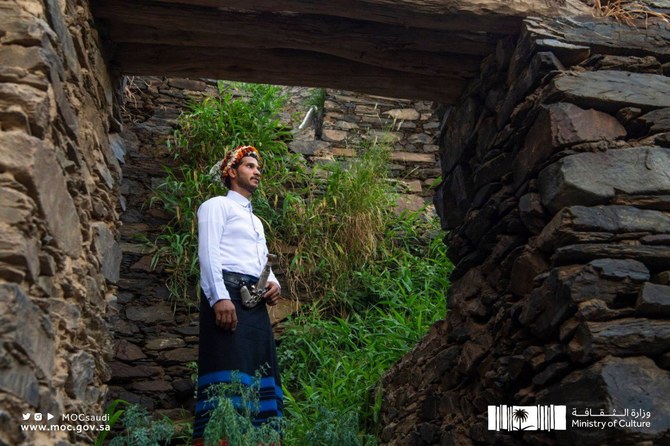
These floral crowns are the staple of the festival, worn not only the locals in Rijal Almaa village but by all visitors in celebration of its rural heritage.
Made of freshly cut flowers, these crowns are a historical symbol of power, health and eternity worn by many locals in the Asir and Jazan region.
The third feature of the festival is “Rijal’s Fort.” This showcases the local architecture — made of colorful stone, delicately stacked — and which also makes use of clay and wood.
Projected on the 60 buildings in the village is a laser show that shares the story of Rijal’s history.
At night these buildings, 14 of which were used as forts, are highlighted with bright colored lights that trace each corner of the structures, creating a bright glow from miles away.
The events are hosted in two locations — the first is the village of Rijal and the second is in Al-Soudah Park.
Al-Soudah Park features a 360-degree main stage where folk performances are held, and where the local colorful thobes and floral crowns have caught the attention of locals and international visitors.
Located 45 km west of Abha, the hub of the festival Rijal Almaa, the location is in the process of becoming a UNESCO World Heritage Site.
The hub was once the meeting place for merchants and pilgrims traveling to the holy cities of Makkah and Medina. Here merchants traded food, grains, household items, spices and jewelry.
This culturally rich region is home to the Rijal Almaa village, also referred to by international tourists as the gingerbread village because of the bright colors of the stone bricks carefully laid to create its century-old architectural structures.
Rijal Almaa holds a deep historical importance for the Kingdom; it is the location where the Asiri tribes claimed independence over the region and defeated the Ottoman forces in 1825.
The Flowerman Festival is a harmonious celebration of the environment and the rich local heritage of the village people. The festival showcases the connected villages that coexist within the environment, where people harvest flowers to create garlands and live in harmony with nature.
Few places in the world are preserved in the way that the Asir region is, with its historic villages hidden in the mountains.
The second edition of the festival offers live music, horseback riding and an open-air heritage market that sells many handmade crafts created by the local village people of the Asir region.
The first festival in 2019 welcomed more than 30,000 visitors with the theme of the local roses.
The Flowerman Festival will continue as an annual event organized by the Ministry of Culture to attract global visitors.


