

Iranian oil fails to end Lebanon’s fuel wars

1 / 3
Lebanese police stand guard in front of the central bank building, where anti-government demonstrators protest against the deepening financial crisis, in Beirut. (AP/File)
2 / 3
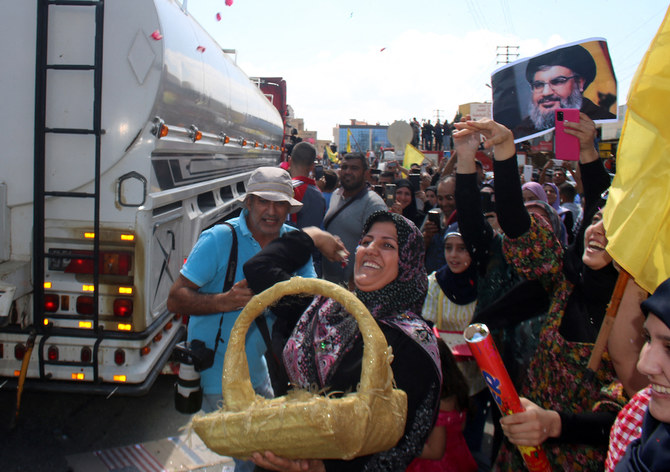
The Tehran-aligned group on Thursday began bringing tanker trucks carrying fuel from Iran. (AFP)
3 / 3
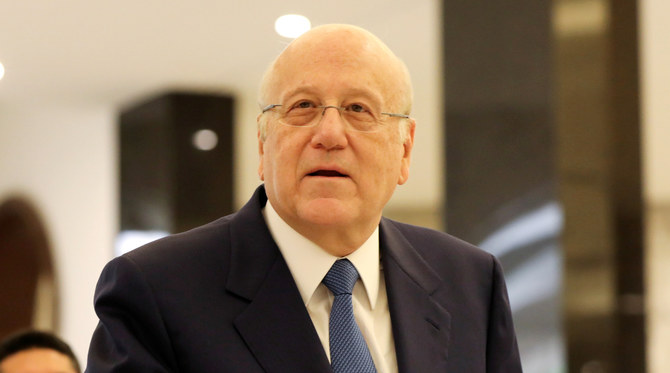
Lebanon's Prime Minister-Designate Najib Mikati. (Reuters)
Short Url
Updated 20 September 2021
Follow

Iranian oil fails to end Lebanon’s fuel wars

  • Lebanon has not asked for fuel from Iran, says PM Mikati
  • Maronite patriarch calls on government to end the smuggling of Iranian fuel from Syria

BEIRUT: Armed men opened fire at a gas station in the Bekaa valley on Sunday and threatened to kill the owner as Lebanon’s fuel wars continued to spiral out of control.

The incident in the town of Beit Chama came amid long queues at gas stations, frequent power cuts and a 20-liter canister of gasoline selling on the black market for 500,000 pounds ($327) when the official price is 180,000 pounds.

The fuel shortage has not been eased by the arrival last week of tanker trucks of diesel from Iran, smuggled across the border from Syria in a deal brokered by Hezbollah in breach of US sanctions. A third tanker is at sea on its way from Iran to the Syrian port of Baniyas.

Neither the arrival of Iraqi fuel to Electricité du Liban nor that of Iranian diesel has yielded positive results yet.

In his Sunday sermon, Maronite patriarch Bechara Boutros Al-Rahi denounced the smuggling of Iranian fuel from Syria. “The state cannot be built on practices or positions that contradict its entity and institutions,” he said.

Al-Rahi said the new government under Prime Minister Najib Mikati should “work as a united national team to stop the collapse and confront the continuous attack attempts against the state and its democratic system.”
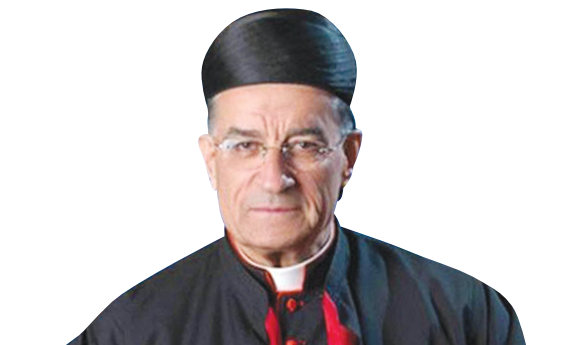
“The state cannot be built on practices or positions that contradict its entity and institutions,” he said, adding that the recent entry of fuel tankers and the obstruction of the investigation into the Beirut Port explosion were “among such practices.”

Al-Rahi expressed the hope that the new government would “work as a united national team to stop the collapse and confront the continuous attack attempts against the state and its democratic system.”

He urged the government to “carry out reforms, mobilize the financial and economic cycle, solve the fuel and electricity crises, and close the smuggling crossings on the border.”


The state cannot be built on practices or
positions that contradict its entity and institutions.
Bechara Boutros Al-Rahi
Lebanese Maronite Patriarch

Meanwhile, Mikati dismissed fears that Lebanon faced US penalties for breaching US sanctions by importing Iranian oil.

“The Lebanese government didn’t approve this … so I don’t believe it would be subject to sanctions,” Mikati told CNN on Saturday in response to a question about Hezbollah bringing Iranian fuel into Lebanon

“I am saddened by the lack of Lebanese sovereignty," he said.

A source close to Mikati told Arab News on Sunday: “The state of Lebanon has not asked Iran for fuel. This position had been officially expressed and has not changed.”

Iranian Foreign Ministry Spokesman Saeed Khatibzadeh commented on Mikati’s statements to CNN, saying on Sunday that sending Iranian fuel to Lebanon “happened according to a standard purchase process by Lebanese merchants. If the Lebanese government also wants to buy fuel from Iran, we would be happy to oblige.”

HIGHLIGHTS


• On Monday, PM Mikati’s government is expected to receive parliament’s vote of confidence with approximately 100 votes out of 128. It is expected that a vote of no confidence will be limited to the MPs of the Lebanese Forces bloc and several independent MPs.

• The Lebanese are still floundering with a series of never-ending crises, the foremost of which is the fuel crisis. Long queues at gas stations have remained the same, and the power rationing hours have not improved either.

On Monday, Mikati’s government is expected to receive parliament’s vote of confidence with approximately 100 votes out of 128. It is expected that a vote of no confidence will be limited to the MPs of the Lebanese Forces bloc and several independent MPs.

Politicians, meanwhile, were preoccupied with the repercussions of Halliburton winning a contract to explore oil and gas in the disputed maritime border area between Lebanon and Israel.

Parliament Speaker Nabih Berri called on the Ministry of Foreign Affairs to “take urgent and immediate action before the Security Council and the international community to verify the possibility of a new Israeli attack on Lebanese sovereignty and rights because any exploration contract with Halliburton or other companies in the disputed area undermines the framework agreement sponsored by the US and the UN.”

Lebanese-Israeli negotiations over the disputed area were held under US auspices and stopped in April after the Lebanese delegation insisted that negotiations start from Line 29 of the border, which enlarges the size of the disputed area to 2,290 km instead of 860 km.

This area was based on a map sent in 2011 to the UN, but Lebanon later considered this map to be based on wrong estimates, so it demanded an additional area of 1,430 square km, including parts of the Karish gas field, in which a Greek company works for Israel.

The current Lebanese proposal is known as Line 29, and Israel has accused Lebanon of obstructing negotiations by expanding the disputed area.


Egyptian woman faces death threats for filming alleged harasser

Updated 13 February 2026
Follow

Egyptian woman faces death threats for filming alleged harasser

  • Case revives longstanding national debate in Egypt over harassment and violence against women
  • A 2013 UN study found that 99.3 percent of Egyptian women reported experiencing harassment

CAIRO: A young Egyptian woman is facing death threats after posting a video showing the face of a man she says repeatedly harassed her, reviving debate over how victims are treated in the country.
Mariam Shawky, an actress in her twenties, filmed the man aboard a crowded Cairo bus earlier this week, accusing him of stalking and harassing her near her workplace on multiple occasions.
“This time, he followed me on the bus,” Shawky, who has been dubbed “the bus girl” by local media, said in a clip posted on TikTok.
“He kept harassing me,” added the woman, who did not respond to an AFP request for comment.
Hoping other passengers would intervene, Shawky instead found herself isolated. The video shows several men at the back of the bus staring at her coldly as she confronts her alleged harasser.
The man mocks her appearance, calls her “trash,” questions her clothing and moves toward her in what appears to be a threatening manner.
No one steps in to help. One male passenger, holding prayer beads, orders her to sit down and be quiet, while another gently restrains the man but does not defend Shawky.
Death threats
As the video spread across social media, the woman received a brief flurry of support, but it was quickly overwhelmed by a torrent of abuse.
Some high-profile public figures fueled the backlash.
Singer Hassan Shakosh suggested she had provoked the situation by wearing a piercing, saying it was “obvious what she was looking for.”
Online, the comments were more extreme. “I’ll be the first to kill you,” one user wrote. “If you were killed, no one would mourn you,” said another.
The case has revived a longstanding national debate in Egypt over harassment and violence against women.
A 2013 UN study found that 99.3 percent of Egyptian women reported experiencing harassment, with more than 80 percent saying they faced it regularly on public transport.
That same year, widespread protests against sexual violence rocked the Egyptian capital.
In 2014, a law criminalizing street harassment was passed. However, progress since then has been limited. Enforcement remains inconsistent and authorities have never released figures on the number of convictions.
Public concern spiked after previous high-profile incidents, including the 2022 killing of university student Nayera Ashraf, stabbed to death by a man whose advances she had rejected.
The perpetrator was executed, yet at the time “some asked for his release,” said prominent Egyptian feminist activist Nadeen Ashraf, whose social-media campaigning helped spark Egypt’s MeToo movement in 2020.
Denials
In the latest case, the authorities moved to act even though the bus company denied any incident had taken place in a statement later reissued by the Ministry of Transport.
The Interior Ministry said that the man seen in the video had been “identified and arrested” the day after the clip went viral.
Confronted with the footage, he denied both the harassment and ever having met the woman before, according to the ministry.
Local media reported he was later released on bail of 1,000 Egyptian pounds (around $20), before being detained again over a pre-existing loan case.
His lawyer has called for a psychiatric evaluation of Shawky, accusing her of damaging Egypt’s reputation.
These images tell “the whole world that there are harassers in Egypt and that Egyptian men encourage harassment, defend it and remain silent,” said lawyer Ali Fayez on Facebook.
Ashraf told AFP that the case revealed above all “a systemic and structural problem.”
She said such incidents were “never taken seriously” and that blame was almost always shifted onto women’s appearance.
“If the woman is veiled, they’ll say her clothes are tight. And if her hair is uncovered, they’ll look at her hair. And even if she wears a niqab, they’ll say she’s wearing makeup.”
“There will always be something.”