

ACWA Power won’t start other hydrogen projects before NEOM venture advanced: CEO

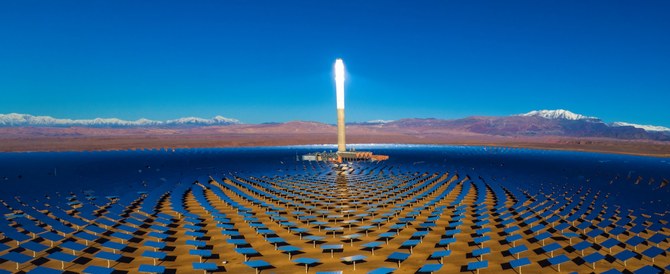
ACWA Power's Nooro III solar. Company launched its IPO on Sept. 2. (Supplied)
Short Url
Updated 12 September 2021
Follow

ACWA Power won’t start other hydrogen projects before NEOM venture advanced: CEO

  • “For us it’s about making sure we deliver the first project to give us the confidence and then the capabilities and capacity to then start replicating it,” CEO says

RIYADH: ACWA Power, the energy producer backed by Saudi Arabia’s sovereign wealth fund, sees big opportunities in the hydrogen market but the company isn’t planning to add another hydrogen project to its portfolio for some time until its venture with NEOM and Air Products is at an advanced level, its CEO said.

“The world is projecting a massive green hydrogen market ahead of us, so the market is there for us – we don’t need to worry about the market,” Paddy Padmanathan said in an interview with Arab News last week.

“For us it’s about making sure we deliver the first project to give us the confidence and then the capabilities and capacity to then start replicating it,” he said.

Air Products, in conjunction with ACWA Power and NEOM, signed an agreement last year for a $5 billion venture to produce 650 tons per day of green hydrogen by heating water using renewable energy, as well as 1.2 million tons per year of green ammonia for exporting the hydrogen to the global market. The project, which will be built in NEOM, is scheduled to be onstream in 2025.

“There is a lot of work that is going on by the three partners in order to prepare the site, get on with the engineering, and develop the design. Because it’s the first project of its kind we really want to spend the time to optimize it,” he said.

The venture has already appointed advisers, including Lazard, for the financial planning, and there are numerous other technical advisers, Padamanthan said.

Lazard, which advised Saudi oil giant Aramco on its initial public offering in 2019, approached banks early this year to sound out their appetite for the project, Reuters previously reported, citing sources familiar with the matter.

Acwa Power went into the hydrogen project at NEOM for three main reasons, said Padamanthan. First, its ability to reduce the cost of energy used in the project. Second, the advantage it gets from selling power on a long-term basis, and finally, its expertise in building complex projects from scratch.

"Over 60 percent plus or minus of the cost of producing green hydrogen using electrolysis is the cost of electricity, so... we have learned how to deliver competitive renewable energy, both solar and wind," he added.

Securing long-term offtake contracts for its power is a core principle in Acwa's business model, something it will keep in its NEOM's project. "So as we go forward with the hydrogen venture we are looking for that long offtake contract," he said. 

ACWA, an equal partner with NEOM and Air Products, will focus on the production of energy to feed it into the electrolyze to produce hydrogen, while Air Products will handle the production of hydrogen and convert it to liquid ammonia ready for customers at loading points. Through this strategy, ACWA is transferring the market risk to Air Products, he added. Market risk is therefore transferred from ACWA to Air Products.

Despite all this interest in hydrogen, ACWA's CEO thinks hydrogen still needs time to become a major source of energy on a global scale.

"Let's not overplay hydrogen. The fact of the matter is that hydrogen is in its early days," he said. 

Hydrogen can lower the emissions from the industrial sector which is responsible for roughly 40 percent of all global emissions, but this can happen if we can make hydrogen cost competitive, and "then if we can find storage solutions. The world needs to develop that for hydrogen, and then transportation solutions," he said, adding that there is loss of efficiency when transporting hydrogen, which requires shipping it in the form of ammonia to the final user.


Saudi non-oil exports jump 21% as trade balance improves: GASTAT 

Updated 5 sec ago
Follow

Saudi non-oil exports jump 21% as trade balance improves: GASTAT 

RIYADH: Saudi Arabia’s non-oil exports, including re-exports, rose 20.7 percent year on year in November to SR32.69 billion ($8.72 billion), official data showed. 

According to preliminary figures released by the General Authority for Statistics, national non-oil exports, excluding re-exports, increased by 4.7 percent in November compared with the same month in 2024. 

The strong performance highlights progress under the Kingdom’s Vision 2030 strategy, which aims to diversify the economy and reduce its long-standing dependence on crude oil revenues. 

In its latest report, GASTAT stated: “The ratio of non-oil exports, including re-exports, to imports increased in November 2025, reaching 42.2 percent, compared with 34.9 percent in November 2024. This increase was driven by a 20.7 percent rise in non-oil exports, alongside a 0.2 percent decline in imports over the same period.”  

It added: “The value of re-exported goods increased by 53.1 percent during the same period, driven by an 81.9 percent increase in ‘machinery, electrical equipment and parts’, which accounted for 51.5 percent of total re-exports.”  

Machinery, electrical equipment and parts also led the non-oil export basket, making up 24.2 percent of outbound shipments and recording an 81.5 percent annual increase. This was followed by products of the chemical industries, which represented 20.3 percent of total non-oil exports and rose 0.5 percent year on year. 

The data adds to signs of resilience in Saudi Arabia’s non-oil economy, with S&P Global’s Purchasing Managers’ Index at 57.4 in December, well above the 50 threshold that separates expansion from contraction. 

Top non-oil destinations 

The UAE was the leading destination for Saudi non-oil exports in November, with shipments valued at SR10.48 billion. 

India ranked second at SR3.01 billion, followed by China at SR2.32 billion, Singapore at SR1.76 billion and Bahrain at SR900.7 million. 

Exports to Egypt totaled SR815.5 million during the month, while Turkiye and Jordan received goods worth SR799.1 million and SR773.3 million, respectively. 

GASTAT said ports and airports played a central role in facilitating non-oil shipments in November. 

By sea, Jeddah Islamic Seaport handled the largest volume of non-oil exports at SR3.57 billion, followed by King Fahad Industrial Seaport in Jubail at SR3.51 billion. 

Ras Al-Khair Seaport was the exit point for non-oil goods valued at SR2.66 billion, while Jubail Seaport and King Abdulaziz Seaport in Dammam handled outbound shipments worth SR2.32 billion and SR2.14 billion, respectively. 

By air, King Abdulaziz International Airport handled goods worth SR5.60 billion, while King Khalid International Airport in Riyadh processed exports valued at SR3.53 billion. 

Exports and imports 

Saudi Arabia’s total merchandise exports reached SR99.73 billion in November, representing a 10 percent increase compared with the same month in 2024. 

“Merchandise exports in November 2025 increased by 10.0 percent compared to November 2024, and oil exports increased by 5.4 percent. The percentage of oil exports in total exports declined from 70.1 percent in November 2024 to 67.2 percent in November 2025,” GASTAT added.  

China remained the Kingdom’s largest export destination, accounting for 13.5 percent of total exports, followed by the UAE at 11.7 percent and Japan at 9.9 percent. India, South Korea, the US, Egypt, Singapore, Bahrain and Poland were also among the top 10 destinations, which together accounted for 71.4 percent of total exports. 

Imports declined by 0.2 percent year on year in November to SR77.38 billion, while the merchandise trade surplus surged by 70.2 percent, the report showed. 

China was the Kingdom’s largest source of imports, accounting for 26.7 percent of inbound shipments, followed by the US at 10.2 percent and the UAE at 6.2 percent.  

“Germany, Japan, India, Italy, France, Switzerland, and Egypt were also among the top ten import sources, with total imports from these ten countries representing 68.6 percent of Saudi Arabia’s overall imports,” added GASTAT.  

King Abdulaziz Port in Dammam was the leading entry point for goods, handling 22.8 percent of imports in November. Jeddah Islamic Port followed with 22.6 percent, ahead of King Khalid International Airport in Riyadh at 17 percent and King Abdulaziz International Airport in Jeddah at 11.9 percent.