

Why regulators are so concerned about ‘stablecoins’: crypto wrap

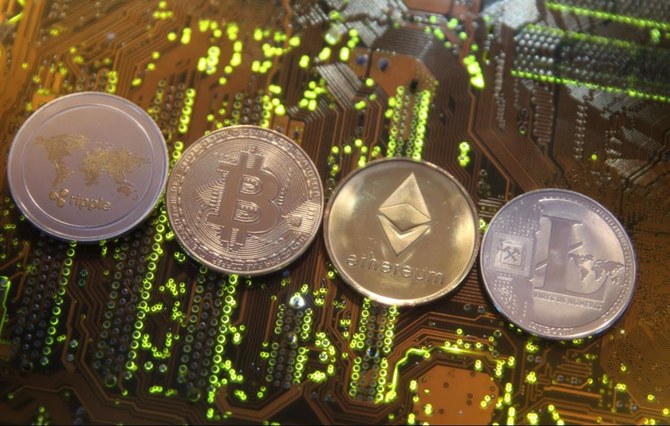
The stablecoins with the biggest market caps include Tether, USD Coin and Binance USD. (Reuters)
Short Url
Updated 11 September 2021
Follow

Why regulators are so concerned about ‘stablecoins’: crypto wrap

  • US Treasury Department met with industry figures this week to discuss the risks and benefits of stabelcoins

LONDON: The US Treasury Department met with industry figures this week to discuss the risks and benefits of stabelcoins, cryptocurrencies that are pegged to traditional currencies, Reuters reported on Friday, citing three unnamed sources.

But why are they so interested in them in the first place? With a market cap of about $125 billion, they are a tiny slither of the approximately $103 trillion of assets under management, although the wider crypto market surpassed a record $2 trillion in April.

At this stage, they are just gathering information. However, Janet Yellen, US Treasury Secretary, said in July that the government must move quickly to establish a regulatory framework for stablecoins.

One of the imminent concerns regulators have about stablecoins is that they are actually used as money. While bitcoin et al have proven great investments, not many people buy things with them, making them potentially a smaller part of the fabric of the financial system than, say, Tether, USD Coin or Binance USD.

With those stablecoins and many others, you don’t have to worry about swapping them for goods for fear of missing out on a surge in the currency’s value.

Policymakers are concerned that the rise in privately-operated currencies could undermine their control of the financial and monetary systems, increase systemic risks, promote financial crime, and hurt investors.

Among the questions Treasury officials asked industry participants this week was how they could mitigate the risks of too many people trying to cash in their stablecoins at the same time. That could make it hard for the managers of the coins to maintain their peg to the dollar, or whatever currency they are linked to, and risk leaving investors nursing a loss.

Treasury officials also asked whether major stablecoins should be backed by traditional assets. Many crypto enthusiasts have been ruing the end of the gold standard for some time, so maybe this is their opportunity to bring it back.

The Treasury is expected to release a number of reports detailing its thinking in the coming months, but it is unlikely that the industry will get away with remain the unregulated domain it is today.

In the markets today, bitcoin was 0.5 percent lower at $45,557.27, while Ethereum also declined 0.5 percent, to $3,319.24.


Gold rises on Iran war safe-haven bid; firm dollar limits upside

Updated 05 March 2026
Follow

Gold rises on Iran war safe-haven bid; firm dollar limits upside

BENGALURU: Gold prices rose on March 5, lifted by safe-haven demand amid an escalating war in the Middle East, while a stronger dollar and concerns around the US Federal Reserve’s monetary policy capped gains.

Spot gold was up 0.6 percent at $5,168.43 per ounce, as of 11:55 am Saudi time. US gold futures for April delivery were up 0.9 percent at $5,179.20.

Israel launched a large wave of strikes on Tehran on March 5, targeting what it said was infrastructure belonging to the Iranian authorities, after Iranian missiles sent millions of Israelis rushing into bomb shelters.

“On the one hand, there may be greater safe-haven demand for gold given the ongoing conflict in the Middle East. On the other hand, the risk of a prolonged period of higher energy prices that takes rate cuts off the table, and adds to the chance of rate hikes, could be capping further gains,” said Hamad Hussain, a climate and commodities economist at Capital Economics.

The US dollar rose about 0.3 percent after briefly retreating from three-month highs, as the fallout from the war roiled global markets and kept sentiment fragile.

Concerns about energy supply continued to drive up oil prices and stoke inflation fears.

Gold is considered a hedge against inflation in the long run, but also tends to thrive when interest rates are lower, as it is a non-yielding asset.

President Donald Trump, on March 4, officially nominated former Federal Reserve Governor Kevin Warsh to be the US central bank’s next chair.

US economic activity grew slightly, prices continued to increase and employment levels were stable in recent weeks, the Federal Reserve said on Wednesday in its latest “Beige Book” report.

Markets expect the Fed to keep rates steady at its next policy meeting on March 18, according to CME Group’s FedWatch tool.

Investors are looking out for the weekly US jobless claims data, due later today, and the US employment report for February on March 6 for further clues on monetary policy this year.

Spot silver rose 0.5 percent to $83.80 per ounce. Platinum gained 1.1 percent to $2,172.20, while palladium lost 0.7 percent to $1,662.07.