



RIYADH: Saudi authorities announced early Thursday the capture of a major Hezbollah drugs shipment, the Saudi Press Agency reported.
The shipment, which included 451,807 amphetamine tablets and was destined for Saudi Arabia, was intercepted by Nigerian authorities.
The tablets were concealed in mechanical parts which were being transported by sea from Lebanon.
Col. Talal Chalhoub, interior ministry spokesperson, said that one of the “drug production and smuggling networks” of Hezbollah was behind the attempt.
He said: “The shipment was seized in coordination with our counterparts in Nigeria before the network had the chance to ship it to another country.”
Chalhoub praised the cooperation with the Nigerian Interior Ministry in apprehending the drugs.
“The Kingdom will continue to monitor the criminal activities that target the Kingdom’s security and youth with drugs, counter and thwart them and arrest all those involved in such activities,” he said.
Opinion
This section contains relevant reference points, placed in (Opinion field)
In April, Saudi Arabia banned the import and transit of fruit and vegetables from Lebanon after authorities seized large quantities of Captagon pills that were hidden in a pomegranate consignment.
Customs authorities at Jeddah Islamic Port seized more than 7.8 million pills.
“Lebanese products are being used to smuggle drugs into the Kingdom’s territory, either through consignments intended for Saudi markets or those that transit through the Kingdom on their way to neighboring countries,” SPA reported at the time, adding that the most common products used to smuggle drugs were fruit and vegetables.
The pomegranate shipment entered Lebanon in stages through the Masnaa border crossing with Syria before it was transported to Saudi Arabia, a Lebanese customs source told Arab News in April.
The source said that Gulf states had long complained of drug smuggling operations to their territories from Syria via Lebanon.
The United Arab Emirates, Oman and Kuwait had all backed the Saudi ban.
Lebanon’s fruit and vegetable trade with Saudi Arabia was worth around $24 million per year, according to a Lebanese official.
The Jeddah port bust was most likely linked to Hezbollah, who is a Shiite group closely aligned to Iran and have a prominent position in Lebanese politics as well as an active military wing, an unnamed source told the Independent Persian.
The source pointed to Hezbollah’s reputed association with the smuggling of drugs, including Captagon pills manufactured in Syria, a charge the group strenuously denies.
The source added that Hezbollah, by virtue of its authority over both “legal and illegal” border checkpoints between Syria and Lebanon, has unchecked control over all drug-related operations.
Captagon is an amphetamine, and one of the most commonly used drugs on Middle East battlefields.
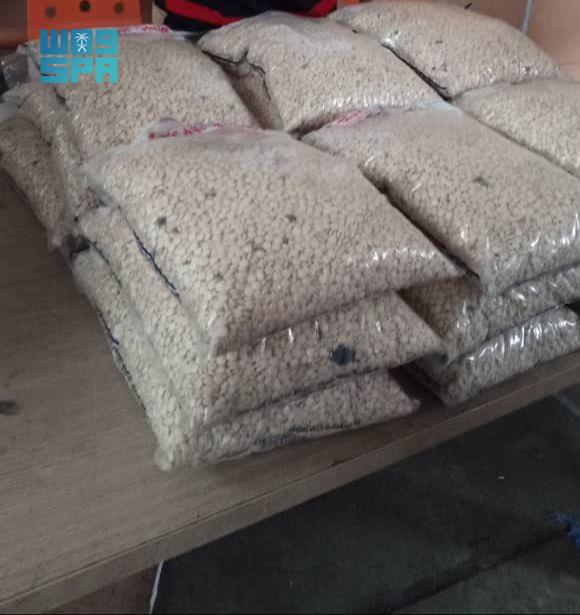
Nigerian authorities seized 451,807 amphetamine tablets from Lebanon. (SPA)
Combatants addicted to the narcotic say it helps them stay awake for days and numbs their senses, giving them stamina for long battles and allowing them to kill with abandon.
Owing to its ability to make users energetic and happy, Captagon is known to have also become a popular recreational drug in the wider region.
Earlier in April, Greek authorities seized more than four tons of cannabis hidden in a shipment of dessert-making machines heading from Lebanon to Slovakia in the country’s main port of Piraeus, following a tip from the US Drug Enforcement Administration (DEA).
Greece’s authorities said that the street value of the drugs was estimated at $4 million and that Saudi Arabia’s drug enforcement agency assisted them in the case.
In 2018, the US State Department named Hezbollah among the top five global criminal organizations. Reports indicate that Hezbollah’s criminal operations have increased of late in response to Iranian directives to generate income as part of its efforts to dodge US sanctions.


