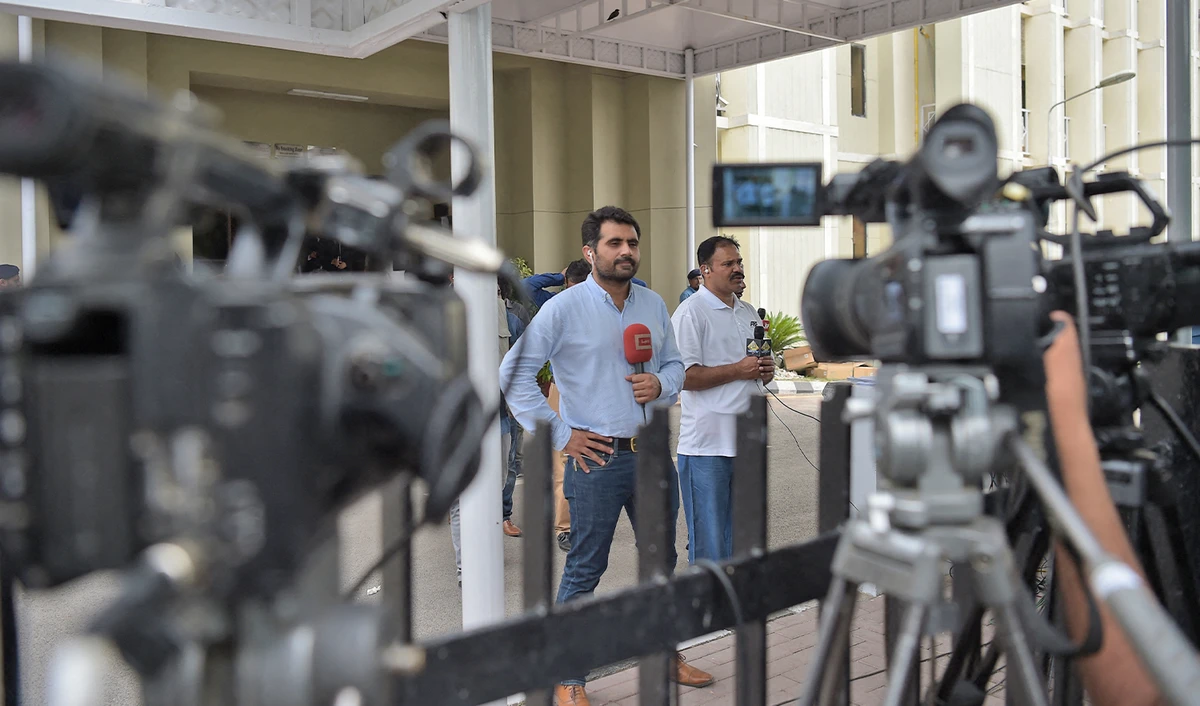
ISLAMABAD: Pakistan Federal Union of Journalists (PFUJ) has expressed concern over a recent threat made by the proscribed Tehreek-e-Taliban Pakistan (TTP) organization to the press, asking the government and media owners to take it seriously and take immediate steps to increase the security of journalists.
Earlier this week, TTP spokesman Mohammad Khurasani said the group had been tracking some media coverage in which it was described as a “terrorist outfit.” He warned the journalists not to force his faction to turn them into its “enemies.”
In a joint statement issued on Tuesday, PFUJ President Shahzada Zulfiqar and Secretary General Nasir Zaidi expressed concern over the safety of journalists, particularly those working in Balochistan and Khyber Pakhtunkhwa provinces.
“We have suggested that the media owners should be bound to provide life insurance to all their employees, particularly those working in the conflict areas,” the statement said. “Media owners should also provide safety gear to those working in conflict areas along with special training to deal with potentially hazardous situations.”
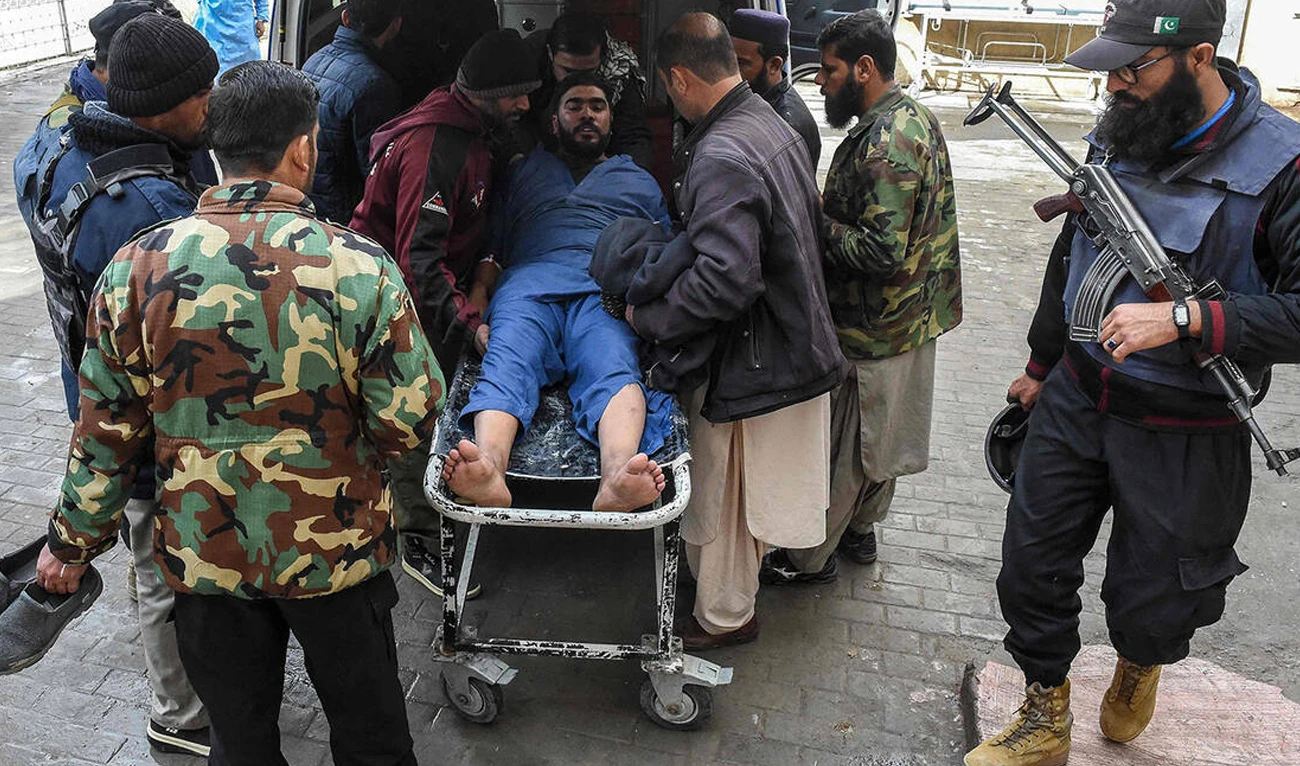
According to the PFUJ, militants have already killed over 30 journalists in Balochistan and Khyber Pakhtunkhwa provinces.
The association of journalists also said in its statement it was time the government accepted all its recommendations in the proposed Journalists’ Safety and Protection Bill.
TTP came into being in 2007 and the government listed it as a proscribed entity in August 2008, following its targeted attacks on civilians.
In 2014, under the country’s National Action Plan against terrorism, the government also banned all offshoots of the group and barred the media from “glorifying” militant factions.
Journalists’ body expresses concern over Pakistani Taliban's threat to media
https://arab.news/z7y5c
Journalists’ body expresses concern over Pakistani Taliban's threat to media
- TTP recently asked journalists not to call the faction a ‘terrorist outfit’ or be treated as ‘enemies’ by the group
- Pakistan Federal Union of Journalists said over 30 media workers had already been killed in militant attacks in Balochistan, Khyber Pakhtunkhwa
Pakistan PM orders strategy to improve project execution as multilateral lenders propose reforms
- Shehbaz Sharif says he will personally lead a steering committee to speed up priority projects
- Four working groups proposed to streamline approvals, procurement, land issues and staffing
ISLAMABAD: Prime Minister Shehbaz Sharif on Monday directed officials to draw up a detailed strategy to improve the planning and execution of development projects, saying he would personally chair a steering committee aimed at ensuring timely and transparent completion of priority schemes.
The move came during a meeting where the World Bank and Asian Development Bank presented recommendations to the government on strengthening project implementation.
According to the prime minister’s office, participants received a briefing that said project approvals involve multiple steps and need simplification, while timely procurement and better readiness tools could also help accelerate implementation.
“National projects of critical importance must be completed transparently and on time,” Sharif told officials, according to the statement. “This is our priority.”
He said the federal and provincial steering committee on development-sector reforms would be headed by him.
The statement said four working groups were also proposed during the meeting: one to review approval and preparation processes, a second to modernize procurement, a third to address land acquisition and resettlement challenges, and a fourth to focus on human-resource alignment and staff deployment for development schemes.
Sharif thanked the World Bank and Asian Development Bank for their support and said development projects must be aligned with the objectives of Pakistan’s Public Sector Development Program (PSDP) and provincial Annual Development Plans (ADPs).
The meeting was attended by senior federal ministers, provincial representatives, senior civil servants and the country directors of both multilateral lenders.