

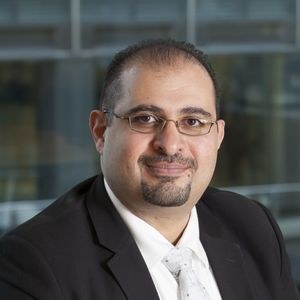

Gulf countries need to lead by example with ambitious infrastructure projects to unlock the true potential of a growing green and sustainable sukuk market that doubled this year, a leading analyst at credit ratings agency Fitch Ratings has told Arab News.
Bashar Al Natoor, the global head of Islamic finance at the agency, pointed to the rapid growth in the Sharia-compliant green sector, which saw issuances rise from $3 billion in 2020 to $6 billion in the first half of this year alone.
But he warned that without leadership from governments in the Gulf region, this branch of the sukuk market may fail to properly “ignite”.
LISTEN: Green #sukuk market will not ignite without the support of #Gulf governments, a @FitchRatings analyst told Arab News https://t.co/5xBmO70B1h pic.twitter.com/oG8bqDJqr9
— Arab News (@arabnews) September 7, 2021
A green sukuk is similar to a conventional Islamic bond, except the proceeds from the product can only be used to fund environmentally-friendly projects.
The sukuk was first issued in 2017, but despite the global economic downturn caused by the pandemic, the market has continued to grow.
However, Al Natoor says the rise still represents just 2.5 percent of total outstanding sukuk.
He told Arab News: “We’re not yet there, we don’t even have enough projects to push this ahead.
“We don’t have incentives from the government, we don’t have infrastructure, we don’t have a lot of governments themselves even in the GCC [Gulf Cooperation Council] issuing green and sustainable [sukuk], it continues to be efforts either by a bank or a company rather than a government."
Focusing on green and sustainable projects is very much pushing against an open door in the Kingdom, with the Saudi government putting those areas at the heart of its Vision 2030 programme.
This includes making renewable energy produce 50 percent of all consumed in Kingdom by 2030, reducing carbon emissions by more than 4 percent of global contributions, and planting 10 billion trees.
Saudi companies are following the government’s lead by pushing ahead with projects to contribute towards these goals.
Saudi Electricity Company became the first corporation in the Kingdom to issue green sukuk in September 2020, raising $1.3 billion in the process.
The proceeds from the offering are set to fund a smart meter rollout scheme, as well as helping to shift the company to a low-carbon footing — in line with Vision 2030.
Another Saudi-based institution to make use of green and sustainability focused sukuk is the Islamic Development Bank, which raised $2.5 billion through issuances in March. Some 90 percent of the proceeds are earmarked for social development projects, with the remaining 10 percent financing green enterprises.
Despite these examples, Al Natoor believes unless Gulf governments start to embrace the products, the sector will not achieve its full potential.
He added: “We have some regulations, we have some strategies but not yet to the extent that is required to ignite this market.
“If I were to say one [thing], it’s the topdown element. Awareness is important in general, availability of projects is important in general, understanding of these issues and moving it to a more priority.
“You need to have the mindset and the culture changing towards sustainability and green to say this is actually a priority.
“I’m not talking about the government, but in general, corporates, it’s not yet on their radar. It’s good to have, and when it moves from ‘good to have’ to a priority then also you see another ignition to make this market move further.”
One of the issues facing the sukuk is trust. Not only must investors be confident the bonds are Sharia-compliant, they must also be sure the projects they are funding meet green and sustainability criteria.
Al Natoor called for greater regulation from Gulf governments in these area to help instil confidence in the market.
He said: “All of these are improving, but not yet there to reach a level [of confidence].
“So even lack of disclose of issuers, and ‘what do you mean when you issue green?’ and ‘how is that really tested?’ and ‘what’s your framework?’. Disclosure is relatively not advanced in the region compared to other more developed markets, let alone sustainability which is already having an additional issue.
“I think going the extra mile, and this is key, there’s a lot that needs to be done in general, but you need to go the extra few miles to be focused on sustainable, and additional miles to be focused on Islamic finance and sukuk and what have you, and I think that’s an important message.”


