

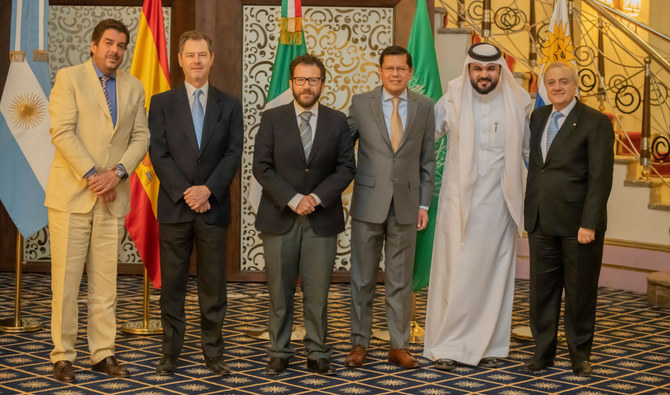

RIYADH: The first-ever cultural festival highlighting gender equality in Saudi Arabia has launched in Riyadh with the screening of a movie by a female director.
Organized by the Embassy of Mexico and Mexican movie theater chain Cinépolis Gulf, in collaboration with the embassies of Argentina, Spain and Uruguay, the “Ibero-American Film Festival” kicked off on Wednesday.
The event was attended by the Mexican Ambassador Aníbal Gómez-Toledo, Argentine Ambassador Marcelo Gilardoni, Spanish Ambassador Álvaro Iranzo and Uruguayan Ambassador Nelson Yemil Chabén, in association with Mexican exhibitor Cinépolis Gulf and Al-Hokair Group, a name synonymous with entertainment and tourism in Saudi Arabia.
The screening will be followed by a five-day film festival from Sept. 28 until Oct. 2 in the Cinepolis theaters in Jeddah and Dammam.
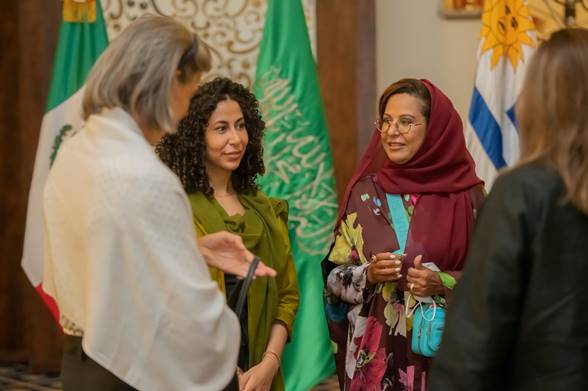
Guests at the launch of Ibero-American Film Festival in Riyadh. (Supplied)
The festival is aimed at highlighting gender equality by showcasing films directed by women filmmakers, or about women empowerment in the four Ibero-American countries and in Saudi Arabia, which is participating in the film festival as a special guest.
Gómez-Toledo said that gender equality is a highly relevant topic in the national agendas of the participating countries, explaining that his country is one of the few that has adopted a “feminist foreign policy.”
“The main goal of this film fest is to bring our cultures and our societies closer together,” he said. “It is the first time a Mexican exhibitor participates in an event like this in Saudi Arabia, in part, thanks to the Saudi Vision 2030 reforms.”
Alejandro Aguilera, CEO of Cinépolis Gulf, and Majed Al-Hokair, chairman of directors of Al-Hokair Group, said that Cinépolis, the largest cinema exhibitor in the Latin America and fourth largest in the world, is currently operating two theaters in the Kingdom, in Jeddah and Dammam. He added that the group will be opening 200 more screens in the country in the next three years.
The launch event concluded with the screening of the movie “Corazón de Mezquite” (Mezquite’s Heart), directed and produced by Mexican filmmaker Ana Laura Calderón, who presented the film and explained the importance of “telling the stories of their indigenous cultures in commercial cinema.”
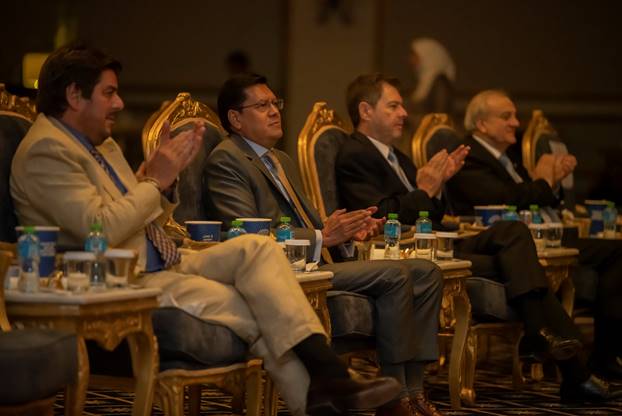
Guests at first Ibero-American Film Festival in Riyadh. (Supplied)
The movie tells the story of Lucía, a Yoreme girl in Northern Mexico, who dreams of healing her father’s broken heart by playing the harp, a musical instrument traditionally played only by men in her community and forbidden for women.
Lucía, however, fights for her dream against all obstacles and finds her place in the community.
Iffat Shaheen, an audience member at the film screening, told Arab News: “The film festival scheduled for later this month will definitely bring a refreshing change amid the pandemic with more entertainment options.”
She added: “Highlighting female perspectives is a good message to take home.”


