PRAGUE: A Czech army pilot returning from Kabul described the difficult conditions in Afghanistan on Thursday — with barely any air traffic control, no refueling and take-offs “at own risk.”
Identified only as “Major M M” on the Czech defense ministry website that published his account of the flight, the army pilot brought 62 people to Prague from Kabul on Wednesday.
“I have done a few non-traditional flights, but this one was demanding and damn long,” said the pilot, who joined the army 20 years ago.
His Airbus carried Czech soldiers, Afghan interpreters and their families, as well as four Afghans whose return had been requested by neighboring Slovakia.
In total, the Czech army flew 195 people from Kabul to Prague on three flights between Monday and Wednesday.
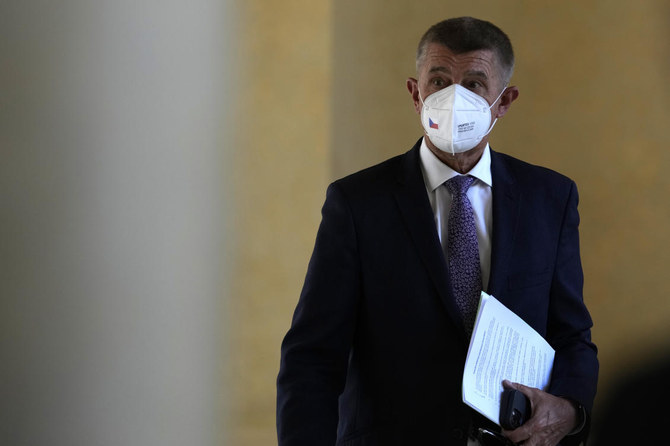
Czech Prime Minister Andrej Babis told reporters on Thursday that the third flight was also the last one.
The major, who flew to Kabul via Baku, had to do without air traffic control in Afghan airspace.
“We had to keep the distance in the air and land in an order, one plane after another. We looked for frequencies to communicate with each other,” he said.
“We could not expect to get fuel in Kabul, so we filled up the tank in Baku.”
His Airbus spent four-and-a-half hours at Kabul airport.
Despite the difficult conditions, the Airbus captain said departures at the chaos-stricken airport were well-organized.
“We considerately formed queues to taxi and take off. I followed the Traffic Collision Avoidance System (TCAS), just like the others,” he said.
“We could see the distances between us on the TCAS display and that was, besides direct communication among the crews, the main way to communicate,” he added.
He said the provisional air traffic control system at Kabul was barely audible, with controllers adding “at own risk” to each piece of information.
“We did not feel danger, but the situation was really difficult because of the conditions in Kabul. It was an experience,” the pilot added.


![]()

Czech pilot describes ‘demanding’ flight from Kabul
Short Url
https://arab.news/2ekpj
Czech pilot describes ‘demanding’ flight from Kabul
- The Czech army pilot brought 62 people to Prague from Kabul on Wednesday
- His Airbus carried Czech soldiers, Afghan interpreters and their families, and 4 Afghans requested by Slovakia


Latest updates


© 2026 SAUDI RESEARCH & PUBLISHING COMPANY, All Rights Reserved And subject to Terms of Use Agreement.