Abu Dhabi updates travel regulations for UAE citizens, residents and visitors

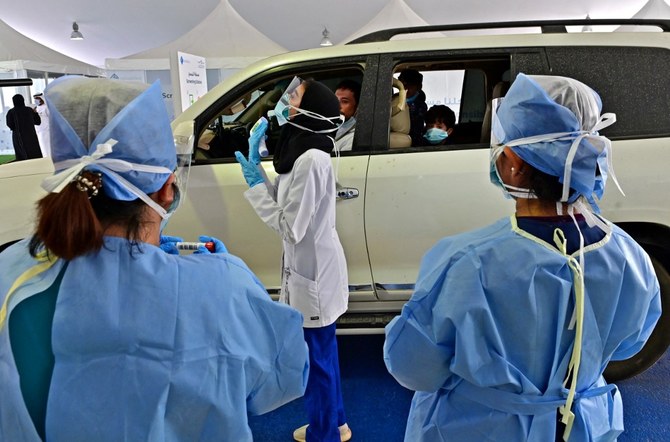
Above, a nurse instructs a driver about the procedure of the coronavirus COVID-19 testing at a drive thru verification center Abu Dhabi on April 2, 2020. (AFP)
Short Url
Updated 15 August 2021
Follow

Abu Dhabi updates travel regulations for UAE citizens, residents and visitors

  • Vaccinated visitors from green list countries now allowed to forego quarantine

DUBAI: Abu Dhabi has updated travel regulations for UAE nationals, residents and visitors arriving at the emirate from abroad from today, August 15.

Abu Dhabi Emergency, Crisis and Disasters Committee’s new rules will now allow vaccinated visitors from green list countries to forego quarantine but must take a PCR upon arrival and also on the sixth day.

“When arriving from other destinations, they must take a PCR test on arrival, quarantine for seven days and take a PCR test on day 6,” the committee said.

“The protocol applies to fully vaccinated UAE citizens and residents as well as visitors as documented on Alhosn app,” it added.

Meanwhile, unvaccinated citizens, residents and visitors landing in Abu Dhabi from green list destinations must be tested for coronavirus on arrival without the need to quarantine, and again on the sixth and ninth day of their stay in the emirate.

When arriving from other destinations, they must take a PCR test on arrival, quarantine for 10 days and take another PCR test on day nine, the committee added.

Abu Dhabi also updated home quarantine protocols for individuals who had contact with COVID-19 patients: those who have been vaccinated must quarantine for seven days and take a PCR test on day six.

If the PCR test result is negative, they can remove the wristband and end quarantine on day seven, the new protocols state.

Unvaccinated individuals meanwhile must quarantine for 10 days and take a PCR test on day nine. If the PCR test result is negative, they can remove the wristband and end quarantine on day 10.

UAE health officials on Saturday reported 1,206 new coronavirus cases and three more deaths, bringing the total number of recorded cases in the country to 700,587 including 1,997 fatalities.

The Gulf state has one of the world’s most aggressive inoculation program, with a vaccine distribution rate of 175.56 doses per 100 people or equivalent to 17,363,341 doses thus far.


Yemen humanitarian crisis to worsen in 2026 amid funding cuts, says UN

Updated 59 min 3 sec ago
Follow

Yemen humanitarian crisis to worsen in 2026 amid funding cuts, says UN

  • Yemen has been the ‍focus of one of the world’s largest humanitarian operations in a decade of civil war that disrupted food supplies

GENEVA: The UN warned on Monday that the humanitarian situation in Yemen is worsening and that gains made to tackle malnutrition ​and health would go into reverse due to funding cuts.
“The context is very concerning... We are expecting things to be much worse in 2026,” Julien Harneis, UN Resident and Humanitarian Coordinator for Yemen, told reporters in Geneva.
Some 21 million people will need humanitarian assistance this year, an increase from ‌19.5 million the ‌previous year, according to the ‌UN ⁠The ​situation ‌has been aggravated by economic collapse and disruption of essential services including health and education, and political uncertainty, Harneis said.
Funding Yemen traditionally received from Western countries was now being cut back, Herneis said, pointing to hopes for more help from Gulf countries.
The US slashed its ⁠aid spending this year, and leading Western donors also pared back help ‌as they pivoted to raise defense ‍spending, triggering a funding ‍crunch for the UN
Yemen has been the ‍focus of one of the world’s largest humanitarian operations in a decade of civil war that disrupted food supplies. The country has also been a source of heightened tensions ​in recent months between Saudi Arabia and the United Arab Emirates.
“Children are dying and it’s ⁠going to get worse,” Harneis said. Food insecurity is projected to worsen across the country, with higher rates of malnutrition anticipated, he stated.
“For 10 years, the UN and humanitarian organizations were able to improve mortality and improve morbidity...this year, that’s not going to be the case.”
He said Yemen’s humanitarian crisis threatened the region with diseases like measles and polio that could cross borders.
In 2025 680 million dollars was afforded to ‌the UN in Yemen, about 28 percent of the intended target, Harneis said.