

Coronavirus restrictions decreased Independence Day sales by 40 percent in Karachi — traders

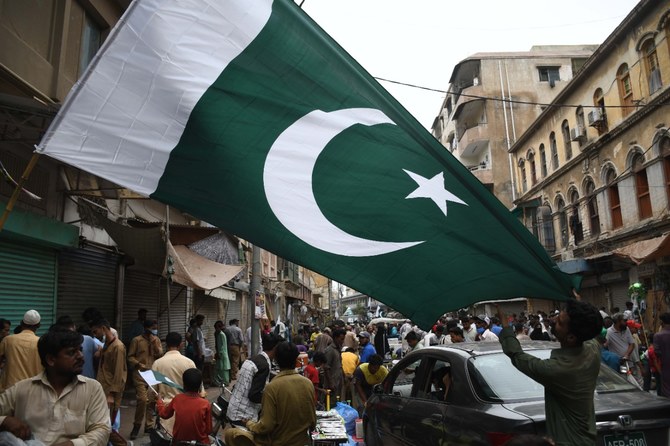
A vendor is selling a Pakistan flag at the paper market in Karachi on August 13, 2021, ahead of the country’s Independence Day on August 14. (AN Photo)
Short Url
Updated 14 August 2021
Follow

Coronavirus restrictions decreased Independence Day sales by 40 percent in Karachi — traders

  • People in Pakistan traditionally purchase flags, buntings, badges, caps and other decorative items in large quantities to celebrate August 14
  • Independence Day sales only took place for four days in Karachi during the ongoing month due to a lockdown imposed by the provincial authorities

KARACHI: Pakistani traders in this seaside metropolis on Friday complained of 40 percent reduction in Independence Day sales of national flags, badges and other decorative items due to a coronavirus lockdown imposed by the provincial administration of Sindh.
People in Pakistan traditionally purchase flags, buntings, badges and other decorative items in large quantities to celebrate August 14.
Thousands of people start visiting Karachi’s paper market on MA Jinnah Road from the beginning of August to buy Independence Day products to prepare for the celebrations.
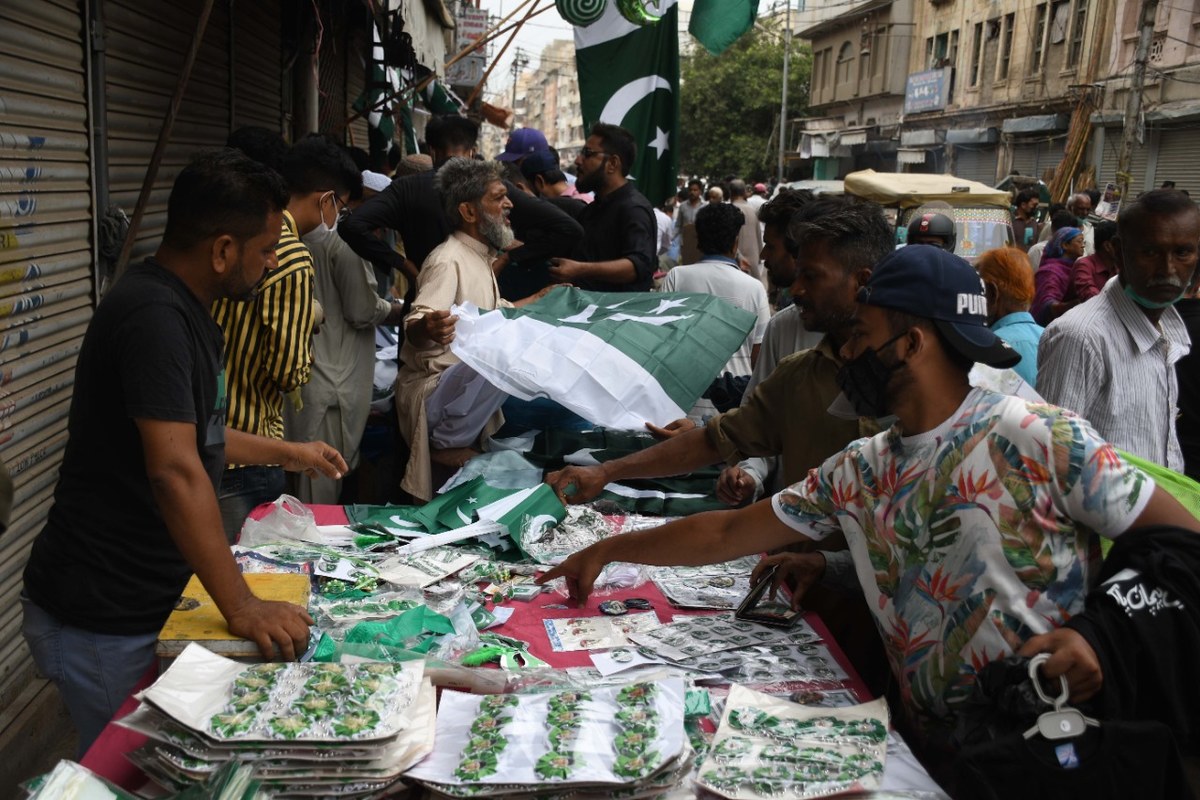


A large number of people are buying flags, badges, buntings, stickers, caps and other decorative items from a stall in Karachi’s paper market on August 13, 2021, to prepare for Pakistan's Independence Day. (AN Photo)

However, the market has only carried out its business activities for four days during the ongoing month since the Sindh government imposed a 10-day lockdown to prevent the coronavirus spread in the country’s most densely populated city.
“We have estimated that our sales of flags and other Independence Day items went down by about 30 to 40 percent this year due to the recent lockdown,” Atiq Mir, who heads a merchants’ association in the city, told Arab News on Friday.
“Last year, the sales were much better since market activities could be carried out until late at night,” he added.
In keeping with the directives of the Sindh administration, markets in Karachi also remain closed on Fridays and Sundays to contain the spread of coronavirus infections.
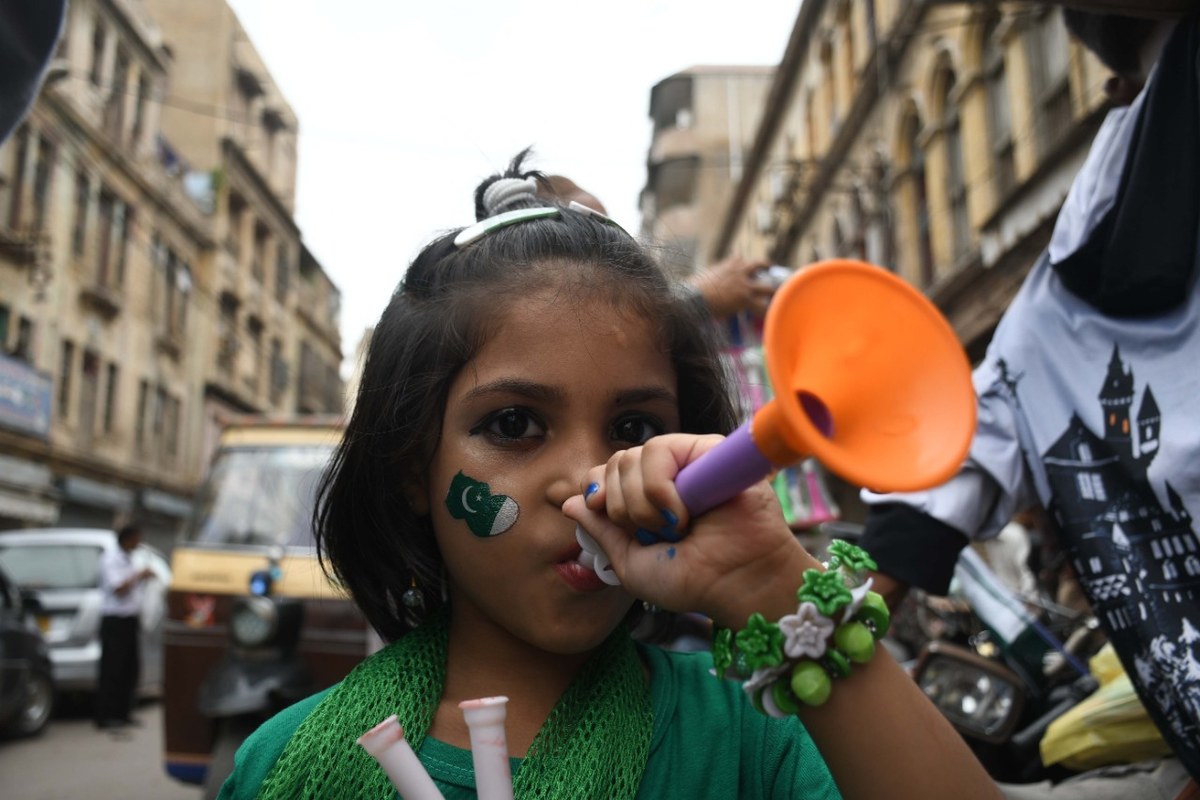


A girl is blowing a trumpet after buying it from a street vendor in Karachi on August 13, 2021. (AN Photo)

People directly dealing with the sales of Independence Day items complained about the strict imposition of virus restrictions while speaking to Arab News on Friday.
“It was like a curfew had been imposed in the market,” Shaikh Nisar Ahmed Perchamwala, who runs a major flag manufacturing and distribution outlet, said. “The lockdown completely ruined our business.”
Street vendors also maintained that much of their merchandize had been unsold.
“I set up a stall on Thursday to sell Pakistani flags along with green bangles and other stuff, but I was asked to wrap it up by police officials today [Friday],” Sabihuddin, a vendor who only mentioned his first name, said. “I still have about Rs20,000 of products left.”
Some traders in Karachi noted the Independence Day sales remained normal in other parts of the country where buying activities complemented the traditional celebratory mood ahead of the major national occasion.
Many Pakistani buyers also purchased flags of Kashmir to express solidarity with the residents of the disputed territory under Indian rule who lost the special constitutional status of their territory a little more than two years ago.



Pakistan reaffirms commitment to clamp down on informal sector to encourage investment

Updated 6 sec ago
Follow

Pakistan reaffirms commitment to clamp down on informal sector to encourage investment

  • Nestlé delegation briefs Finance Minister Muhammad Aurangzeb on localization, efficiency enhancements in Pakistan
  • Improved compliance, transparency, strengthened tax ecosystem central to economic recovery, stresses finance minister

KARACHI: Pakistan’s Finance Minister Muhammad Aurangzeb reaffirmed the government’s commitment to clamp down on the informal sector on Monday, the Finance Division said, citing transparency and a strengthened tax ecosystem as central to the country’s economic recovery. 

Pakistan’s government has cracked down on smuggled items and tightened enforcement in poorly taxed sectors, such as tobacco, in recent months as it pushes ahead with its efforts to maximize tax collection by discouraging the formal sector. Informal sector comprises businesses that operate outside the tax net, avoid registration and as a result, neglect regulatory oversight and violate quality, safety or labor standards. 

Aurangzeb met a delegation from Nestlé Pakistan at the Finance Division, where the two sides discussed the multinational’s efforts to strengthen its operations in the country through localization, portfolio adjustments and efficiency enhancements. 

“Emphasizing the government’s resolve to clamp down on the informal sector, an effort that has already begun yielding visible results in multiple industries, the finance minister noted that improved compliance, transparency and a strengthened tax ecosystem are central to Pakistan’s economic recovery,” the Finance Division said in a statement. 

Nestlé Pakistan Chief Executive Officer Jason Avancena provided an overview of the organization’s operations, claiming it had strengthened them through localization, portfolio adjustments, advanced automation, efficiency enhancements and continued innovation across product categories. 

Avancena said Nestlé is implementing solar and biomass energy systems, digital dashboards, environmentally improved packaging, and supply-chain automation in Pakistan. The delegation highlighted that Nestlé’s localization efforts have materially strengthened its resilience. 

“They noted that through sustained efforts to localize raw materials and reconfigure product portfolios, Nestlé Pakistan has reduced its import volumes by nearly half over the past three years from around $150 million to approximately $76–80 million, thereby minimizing exposure to foreign-exchange pressures and deepening integration with Pakistan’s agricultural and manufacturing base,” the Finance Division said. 

Aurangzeb commended the multinational for its efforts and underscored the government’s intention to facilitate greater formalization and enhanced tax equity across the food and beverages sector. He noted that informal players have “rapidly expanded” their market share by operating outside the tax net in sectors such as food and beverages. 

The delegation also discussed export performance, including the company’s presence in markets such as the United States, Canada, the Gulf, and the United Kingdom, sharing insights into challenges related to regional trade, particularly the Afghanistan corridor. 

Aurangzeb advised Nestlé to explore logistics partnerships to expand access to Central Asian markets, reiterating that Islamabad remains committed to enabling export-oriented industry growth.