




RIYADH: Saudi Arabia and Qatar signed an agreement on Monday to build a high-speed rail link between the two countries.
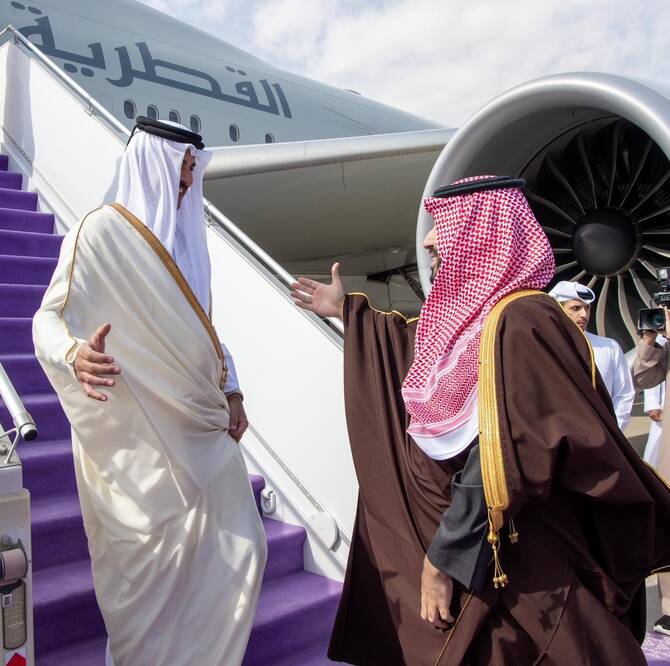
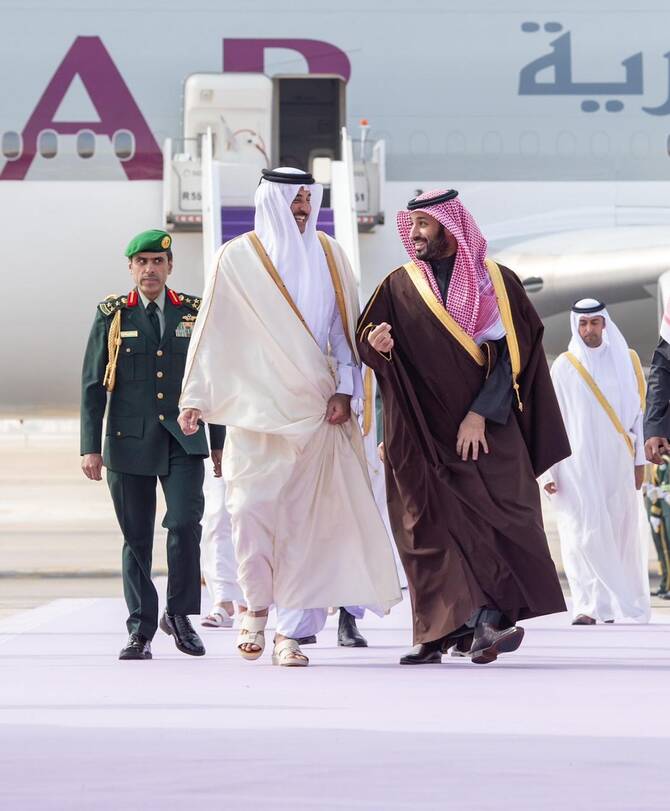
The announcement came after a meeting in Riyadh between Saudi Crown Prince Mohammed bin Salman and Qatar’s Emir Sheikh Tamim bin Hamad Al-Thani, held under the framework of the Saudi-Qatari Coordination Council.
The train link, which will connect King Salman International Airport in Riyadh to Hamad International Airport in Doha, will be a first for the two nations and reduce travel time between the two capitals to just two hours.
According to a joint statement, the project is expected to be completed within six years and create 30,000 jobs across the two countries. Once operational it will carry more than 10 million passengers a year.
The leaders witnessed the signing of the deal at Al-Yamamah Palace in Riyadh, where they also co-chaired the eighth session of the Qatari-Saudi Coordination Council.
The deal was signed by Saudi Transport and Logistics Services Minister Saleh Al-Jasser and Qatar’s Transport Minister Sheikh Mohammed bin Abdulla bin Mohammed Al-Thani. It is seen as a strategic step aimed at enhancing cooperation, developmental integration and sustainable development and demonstrating a shared commitment to regional prosperity.
The high-speed line will stretch 785 km and carry trains capable of traveling at speeds above 300 kph. There will be a number of stops between the two airports, including Hofuf and Dammam.
The service is expected to significantly improve rail travel in the region and provide a boost to trade and tourism. The economic benefit to both countries has been estimated at SR115 billion ($30.6 billion).
Designed using state-of-the-art technologies and smart engineering, the line will also contribute to environmental sustainability by reducing carbon emissions and supporting the transition to more efficient and innovative transport options. This makes it one of the key projects supporting regional development and strengthening connectivity and integration among the Gulf Cooperation Council countries.
During the council meeting, the two sides highlighted the strength of their economic ties, with bilateral trade in 2024 up 634 percent since 2021 at $930.3 million (excluding re-exported goods).
Sheikh Tamim was accompanied at the talks by Prime Minister Sheikh Mohammed bin Abdulrahman bin Jassim Al-Thani and other senior officials.
سمو #ولي_العهد وسمو أمير دولة قطر يرأسان مجلس التنسيق السعودي القطري.#أمير_قطر_في_الرياض#واس pic.twitter.com/NZWp3vbnb9
— واس الأخبار الملكية (@spagov) December 8, 2025


