

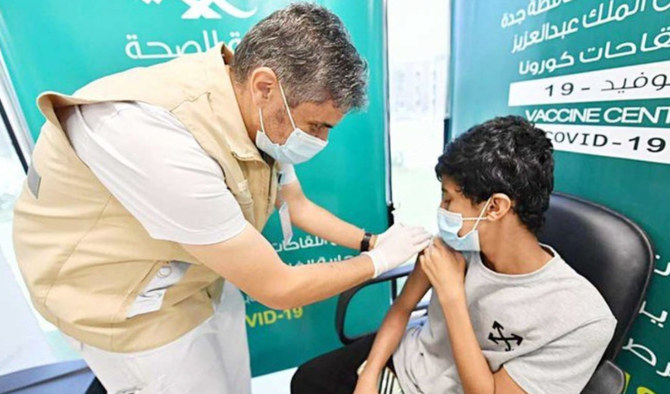

JEDDAH: Every child under the age of 18 has the right to be vaccinated against diseases and failure to do so amounts to abuse, Saudi Arabia’s Public Prosecution Office said as it shared information on child protection laws and regulations related to healthcare.
The first article of the Saudi Child Protection System stipulates that “any failure to provide the basic needs of the child including: physical, health, emotional, psychological, upbringing, educational, intellectual, social, cultural as well as safety and security needs” is considered neglect.
Article 1/13 of the Executive Regulations of the Child Protection Law stipulates that health needs include all that is necessary to provide healthcare for children, including “whatever necessary to provide the child with fundamental health care, including immunization with serums and vaccines, protect the child from epidemics and diseases, and ensure the child gets the appropriate treatment.”
Article 3/3 of the Child Protection System also stipulates that “failing to complete the child’s compulsory vaccinations” is deemed a case of abuse or neglect.
Article 3/8 says that the child must be provided with vaccines “as specified by the relevant health authorities and in accordance with the scheduled dates and periods prescribed in this regard.”
It also says that providing vaccinations to the child is the duty of the father or the guardian, adding that authorities are obliged to create a medical file for every child to register the required vaccinations and the development of his or her health conditions.
“The school health or the substitute health authority shall conduct the periodic medical checkup for school students throughout the pre-university education levels, provided that this checkup takes place at least once a year,” it reads.
Students aged 12-18 are being urged to book their COVID-19 shots, following a government announcement that only fully jabbed pupils could return to the classroom when the new school year begins at the end of this month.
HIGHLIGHTS
• Saudi Arabia reported 864 new cases of COVID-19 on Tuesday.
• The death toll has risen to 8,357 with 12 more virus-related fatalities.
Saudi Arabia has so far vaccinated 30,427,077 people, including 1,522,485 who are elderly.
About 58.16 percent of the population has received one dose, while 29.23 percent has completed the vaccination program. At this rate, 70 percent of the population is expected to be fully vaccinated by Oct. 8 this year.
The Ministry of Hajj and Umrah has confirmed that local pilgrims aged 12 to 18 can obtain Umrah permits if they have been fully jabbed.
The announcement follows the inauguration of the 2021 Umrah season on Aug.10. More than 13,000 permits were issued for this age group, allowing them to perform Umrah and visit the Prophet’s Mosque in Madinah.
Deputy Minister of Hajj and Umrah Dr. Abdul-Fattah bin Suleiman Mashat said that Umrah permits were issued through the Eatmarna and Tawakkalna applications.
Mashat added that the ministry had worked with other authorities before this year’s season to establish executive mechanisms and create a safe environment for pilgrims.
Saudi Arabia on Tuesday reported 12 more COVID-19-related deaths, taking the overall toll to 8,357.
There were 864 new cases, meaning that 535,176 people in the country have contracted the disease since the start of the pandemic. There are 10,829 active cases, of which 1,396 are critical.
Of the newly recorded cases, 159 were in Makkah, 125 in the Eastern Province, 121 in Riyadh, and 50 were in Madinah.
There were a further 451 patient recoveries, raising this total to 515,990.
Saudi Arabia had so far conducted more than 26 million PCR tests, with 93,481 carried out in the past 24 hours.
Testing hubs and treatment centers have dealt with hundreds of thousands of people since the start of the outbreak.
Taakad centers provide COVID-19 testing for those who show no or only mild symptoms or believe they have come into contact with an infected individual.
Tetamman clinics offer treatment and advice to those with virus symptoms such as fever, loss of taste and smell, and breathing difficulties.
Appointments for both services can be made through the Ministry of Health’s Sehhaty app.


