



WASHINGTON, TEHRAN: The US has urged Iran’s new President Ebrahim Raisi to return to talks on both nations resuming compliance with the 2015 Iran nuclear deal, repeating the US stance that the window for diplomacy would not stay open forever.
With the rise of Raisi, who took the oath of office on Thursday, all branches of power within the Islamic Republic will be controlled by anti-Western hard-liners loyal to Supreme Leader Ayatollah Ali Khamenei.
Iran has been negotiating with six major powers to revive a deal abandoned three years ago by then US President Donald Trump, who said it was too soft on Tehran. The last round of talks in Vienna ended on June 20.
“Our message to President Raisi is the same as our message to his predecessors ... the US will defend and advance our national security interests and those of our partners. We hope that Iran seizes the opportunity now to advance diplomatic solutions,” State Department spokesman Ned Price told reporters.
“We urge Iran to return to the negotiations soon so that we can seek to conclude our work,” Price added during a regular briefing.
He said “this process cannot go on indefinitely” and at some point the benefits of reviving the 2015 agreement will have been eroded by the advancements of Iran’s nuclear program.
Iran began violating the pact, which gave it sanctions relief in return for curbing its atomic program, in 2019 by conducting nuclear activities that were barred under the deal, formally called the Joint Comprehensive Plan of Action (JCPOA).
Iran says its nuclear program is for peaceful purposes only.
BACKGROUND
Iran began violating the pact, which gave it sanctions relief in return for curbing its atomic program, in 2019 by conducting nuclear activities that were barred under the deal, formally called the Joint Comprehensive Plan of Action.
Raisi said Tehran backs any diplomatic moves to lift US sanctions but will not bow to pressure.
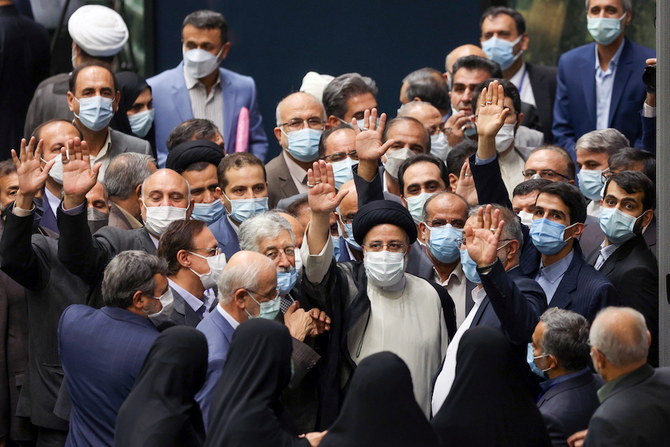
Raisi, who won a June 18 election marked by record abstention, has taken office with Iran facing an economy battered by US sanctions, a grinding health crisis and thorny negotiations on its nuclear program. “Sanctions against the nation of Iran must be lifted,” Raisi said at his swearing-in ceremony in parliament. “We will support any diplomatic plans that will realize this goal.”
But he stressed that “the policy of pressure and sanctions will not cause the nation of Iran to back down from following up on its legal rights.”
The 60-year-old former judiciary chief officially began his four-year mandate on Tuesday, when he was inaugurated by supreme leader Ayatollah Ali Khamenei.
On Thursday, he was sworn in before Iran’s parliament, to which he will present his Cabinet list early next week, state television reported. “Today I am the servant of all the republic and of more than 80 million people,” Raisi told parliament, stressing his administration will be one of “national consensus.”
Raisi’s presidency is due to consolidate power in the hands of conservatives, following their 2020 parliamentary election victory, which was marked by the disqualification of thousands of reformist or moderate candidates.
He succeeds moderate Hassan Rouhani, whose landmark achievement during his two-term presidency was the 2015 nuclear agreement.
Around 80 foreign dignitaries attended Raisi’s swearing-in ceremony, according to state TV, including Afghan President Ashraf Ghani and Iraq’s President Barham Saleh.
Opinion
This section contains relevant reference points, placed in (Opinion field)
EU nuclear deal negotiator Enrique Mora was also present, seated behind Ghani and representatives of Iran-backed regional groups such as Ismail Haniyeh, leader of Gaza’s Islamist rulers Hamas.
One of his administration’s main foreign policy priorities will be improving relations with regional countries, Raisi said. “I extend the hand of friendship and brotherhood to all countries in the region, especially our neighbors,” he said.
He also noted that Iran’s regional “capabilities support the peace and security of countries” and would only be used “against the threats of oppressive powers.”
Criticized by the West for his human rights record, Raisi said in his speech that “we are the true defenders of human rights.”
The new president vowed the Islamic republic will “stand alongside the oppressed,” whether they be at “the heart of Europe, in America, in Africa, whether in Yemen, or Syria or Palestine.”
Raisi will have to “face multiple challenges due to the high number of problems,” an editorial in the ultraconservative Kayhan newspaper said, including “unprecedented inflation,” steep housing prices, a private sector recession and “corruption.”
Reformist newspaper Shargh expressed the hope that “political games will make way for healthy intellectual rivalry and different discourse and voices” in the new government.




