

Gulf economies expected to grow 2.2 percent this year, says World Bank

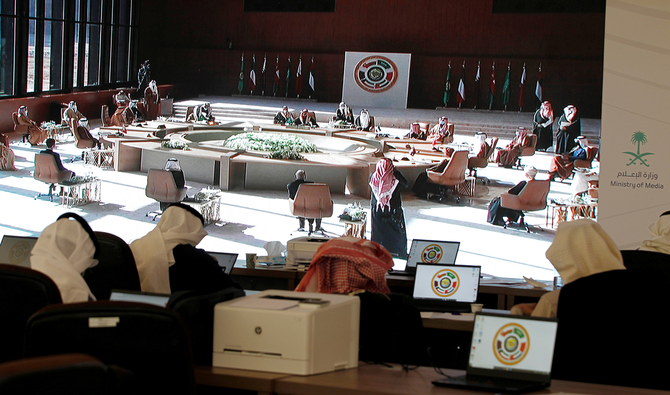
A general view of the Gulf Cooperation Council's (GCC) 41st Summit, is pictured via screen at the media centre in Al-Ula, Saudi Arabia January 5, 2021. (Reuters)
Short Url
Updated 05 August 2021
Follow

Gulf economies expected to grow 2.2 percent this year, says World Bank

  • Most GCC countries are expected to continue to post deficits over the coming years
  • The countries that posted the largest deficits in 2020 — Bahrain, Kuwait and Oman — are expected to remain in deficit until 2023

RIYADH: Economies of the Gulf Cooperation Council (GCC) will likely grow at an aggregate 2.2 percent this year after a 4.8 percent contraction last year caused by the pandemic and lower oil prices, the World Bank said on Wednesday.

“With recent progress made with the rollout of the COVID-19 vaccine globally and with the revival of production and trade worldwide, the prospects for an economic recovery are firmer now than at the end of last year,” it said in a research report.

“Although downside risks remain, the forecast stands for an aggregate GCC economic turnaround of 2.2 percent in 2021 and an annual average growth of 3.3 percent in 2022–23.”

It remains vital for GCC countries — which include Bahrain, Kuwait, Oman, Qatar, Saudi Arabia, the UAE — to diversify their economies, the World Bank said, as oil revenues account for over 70 percent of total government revenues in most GCC countries.

It said it expects Kuwait and Qatar to introduce a value-added tax (VAT) this year, following the example of other GCC states that have implemented the revenue-diversifying measure in different phases over the last few years.

On the fiscal side, most GCC countries are expected to continue to post deficits over the coming years, the World Bank said, after shortfalls intensified last year because of the coronavirus crisis.

The countries that posted the largest deficits in 2020 — Bahrain, Kuwait and Oman — are expected to remain in deficit until 2023, but with narrower ratios than in the 2020 downturn. While a rebound in oil prices may lift economic prospects in the short term, the World Bank said downside risks to its outlook are “extremely high” because of the region’s heavy exposure to global oil demand and the service industries.

“Mobility restrictions including for international travel may hurt attendance at future high-profile events in the GCC — the 2020 (rescheduled to 2021) World Expo in the UAE and the 2022 Federation Internationale de Football Association (FIFA) World Cup in Qatar,” it said.


Copper slips as subdued demand, high inventories weigh

Updated 10 sec ago
Follow

Copper slips as subdued demand, high inventories weigh

LONDON: Copper fell on Thursday, giving up some gains from the previous session as rising inventories and subdued ​demand due to the holiday in top metals consumer China weighed on prices.

Benchmark three-month copper on the London Metal Exchange edged down 0.7 percent to $12,816 a metric tonne as of 1:10 p.m. Saudi time, after a 2.3 percent jump on Wednesday.

The Shanghai Futures Exchange is closed until February 23 for Lunar New Year, ‌with Chinese traders ‌largely out of the market.

“It’s ​really ‌difficult ⁠to ​read too ⁠much into the price action this week,” said Ole Hansen, head of commodity strategy at Saxo Bank. “We need to get China back and see what happens then, both on the speculative and also on the physical demand in the following weeks.”

The dollar dipped ⁠but held above its recent lows after minutes ‌from the US ‌Federal Reserve showed policymakers did not seem ​to be in a ‌rush to cut interest rates and that ‌several were open to hikes if inflation proved sticky.

A weaker US dollar makes greenback-priced metals more affordable for holders of other currencies.

Copper stocks in LME-approved warehouses meanwhile increased by another ‌925 tonnes to 225,575 tonnes, the highest since March.

While high stocks were ⁠weighing on ⁠prices, copper was being propped up by technicals, Hansen explained. “Since last August, every time we have come down the 50-day moving average has been giving support,” he said, adding that the support level was currently at $12,670.

In other metals, zinc fell 0.3 percent to $3,342.50 a tonne and aluminum shed 0.7 percent to $3,067, after breaking a four-day losing streak on Wednesday. Lead edged up 0.1 percent to $1,965, nickel nudged up 0.6 percent to $17,375 and ​tin was up 0.5 percent ​at $46,120.
