

UAE’s ADNOC sells first cargo of blue ammonia to Japan

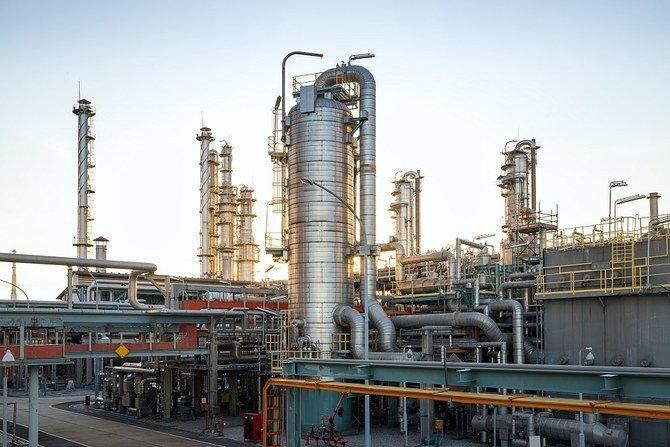
Green hydrogen is created with renewable energy and water, while blue hydrogen uses the traditional Haber-Bosch method but captures the carbon emissions. (Shutterstock)
Short Url
Updated 04 August 2021
Follow

UAE’s ADNOC sells first cargo of blue ammonia to Japan

  • Shipments were sold at an attractive premium to grey ammonia
  • CO2 from the ammonia production process will be captured and transferred to Al Reyadah

ABU DHABI: Abu Dhabi National Oil Company (ADNOC) said it has partnered with Fertiglobe to sell its first cargo of blue ammonia to Itochu in Japan, for use in fertilizer production.

The shipments represent the first production milestone of a planned scale-up of blue ammonia production capabilities in Abu Dhabi, which is expected to include a low-cost debottlenecking program at Fertiglobe’s Fertil site, UAE state news service WAM reported, citing a statement from ADNOC.

They were sold at an attractive premium to grey ammonia, underscoring the favorable economics for blue ammonia as an emerging source of low-carbon energy, it said.

Ammonia is a carrier fuel for hydrogen. A report earlier this year by Dii Desert Energy and Roland Berger said the Gulf region could create a $200 billion green hydrogen industry by 2050. The Gulf benefits from its strategic geographic location between European and Asian markets.

Green hydrogen is created with renewable energy and water, while blue hydrogen uses the traditional Haber-Bosch method but captures the carbon emissions.

CO2 from the ammonia production process will be captured and transferred to Al Reyadah, the first commercial-scale carbon capture plant in the Middle East and the world’s first commercial facility to capture CO2 from the iron and steel industry. The CO2 is subsequently used in ADNOC Onshore’s Rumaitha and Bab fields where it is stored underground. Each year, Al Reyadah captures up to 800,000 tons of CO2 from local UAE steel production.

Fertiglobe, the world’s largest seaborne exporter of nitrogen fertilizers, is a 58:42 joint venture between Dutch-listed chemical producer OCI and ADNOC. In June, Fertiglobe, ADNOC and ADQ said they would partner in a one million metric ton per annum blue ammonia project at TA’ZIZ in Ruwais, subject to regulatory approvals.

In April, it was reported that ADNOC and OCI had hired banks, including Morgan Stanley and Citigroup, for a possible $7 billion IPO of Fertiglobe.

“Today’s announcement builds upon ADNOC’s commitment to expanding the UAE’s position as a regional leader in the production of hydrogen and its carrier fuels, meeting the needs of critical global export markets such as Japan,” said Sultan Ahmed Al Jaber, minister of industry and advanced technology and ADNOC group CEO.

Ammonia can be used as a low-carbon fuel across a wide range of industrial applications, including transportation, power generation, refining and industries, including steel, wastewater treatment, cement and fertilizer production. For Japan, in particular, hydrogen and its carrier fuels, such as blue ammonia, are expected to play an important role in the country’s ongoing industrial decarbonization efforts.


Saudi Arabia’s cultural sector is a new economic engine between Riyadh and Paris, says ambassador

Updated 25 January 2026
Follow

Saudi Arabia’s cultural sector is a new economic engine between Riyadh and Paris, says ambassador

RIYADH: Culture has become a fundamental pillar in bilateral relations between France and Saudi Arabia, according to the French Ambassador to the Kingdom, Patrick Maisonnave.

Maisonnave noted its connection to the entertainment and tourism sectors, which makes it a new engine for economic cooperation between Riyadh and Paris.

He told Al-Eqtisadiah during the opening ceremony of La Fabrique in the Jax district of Diriyah that cultural cooperation with Saudi Arabia is an important element for its attractiveness in the coming decades.

La Fabrique is a space dedicated to artistic creativity and cultural exchange, launched as part of a partnership between the Riyadh Art program and the French Institute in Riyadh. 

Running from Jan. 22 until Feb 14, the initiative will provide an open workspace that allows artists to develop and work on their ideas within a collaborative framework.

Launching La Fabrique as a space dedicated to artistic creativity

The ambassador highlighted that the transformation journey in the Kingdom under Vision 2030 has contributed to the emergence of a new generation of young artists and creators, alongside a growing desire in Saudi society to connect with culture and to embrace what is happening globally. 

He affirmed that the relationship between the two countries is “profound, even cultural par excellence,” with interest from the Saudi side in French culture, matched by increasing interest from the French public and cultural institutions unfolding in the Kingdom.

Latest estimates indicate that the culture-based economy represents about 2.3 percent of France’s gross domestic product, equivalent to more than 90 billion euros ($106.4 billion) in annual revenues, according to government data. The sector directly employs more than 600,000 people, making it one of the largest job-creating sectors in the fields of creativity, publishing, cinema, and visual arts.

Saudi Arabia benefiting from French experience in the cultural field

Maisonnave explained that France possesses established cultural institutions, while Saudi Arabia is building a strong cultural sector, which opens the door for cooperation opportunities.

This comes as an extension of the signing of 10 major cultural agreements a year ago between French and Saudi institutions, aiming to enhance cooperation and transfer French expertise and knowledge to contribute to the development of the cultural system in the Kingdom.

He added that experiences like La Fabrique provide an opportunity to meet the new generation of Saudi creators, who have expressed interest in connecting with French institutions and artists in Paris and France.

La Fabrique encompasses a space for multiple contemporary artistic practices, including performance arts, digital and interactive arts, photography, music, and cinema, while providing the public with an opportunity to witness the stages of producing artistic works and interact with the creative process.