SHIMULIA, BANGLADESH: Hundreds of thousands of Bangladeshi garment workers rushed back to major cities Saturday, besieging train and bus stations, after the government said export factories could reopen despite a deadly coronavirus wave.
With the economy badly hit by the pandemic, the government excluded the factories that supply top brands in Europe and North America from a nationwide lockdown order.
Authorities had ordered factories, offices, transport and shops to close from July 23 to August 5 as daily coronavirus infections and deaths hit record levels.
Officially, Bangladesh has reported 1.2 million cases and more than 20,000 deaths. Experts say the real figures are at least four times higher.
The government said however that the country’s 4,500 garment factories, which employ more than four million people, can reopen from Sunday, sparking a rush back to industrial cities.
The influential garment factory owners had warned of “catastrophic” consequences if orders for foreign brands were not completed on time.
Hundreds of thousands who had gone back to their villages to celebrate the Eid al Adha Muslim festival and sit out the lockdown, headed to Dhaka in any available transport — some just walking in the monsoon rain.
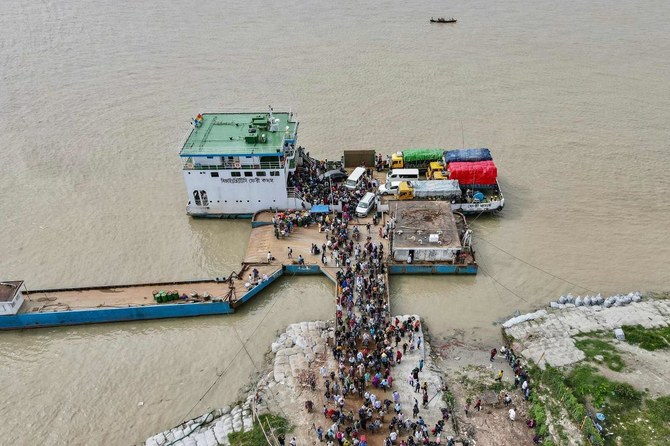
At the Shimulia ferry station, 70 kilometers (45 miles) south of Dhaka, tens of thousands of workers waited hours for boats to take them to the capital.
Garment factory worker Mohammad Masum, 25, said he left his village before dawn, walked more than 30 kilometers (20 miles) and took rickshaws to get to the ferry port.
“Police stopped us at many checkpoints and the ferry was packed,” he said.
“It was a mad rush to get home when the lockdown was imposed and now we are in trouble again getting back to work,” Jubayer Ahmad, another worker, told AFP.
Bangladesh is the world’s second largest garment exporter after China and the industry has become the foundation of the economy for the country of 169 million people.
Mohammad Hatem, vice president of the Bangladesh Knitwear Manufacturers and Exporters Association, said up to $3 billion worth of export orders were at risk if factories had stayed closed.
“The brands would have diverted their orders to other countries,” Hatem told AFP.


![]()

Global fashion’s workshop returns as Bangladesh factories reopen despite virus surge
Short Url
https://arab.news/9q5yp
Global fashion’s workshop returns as Bangladesh factories reopen despite virus surge
- Country’s 4,500 garment factories employ more than four million people
- Nation suffered 80,000 pandemic deaths, experts predict


Latest updates


© 2026 SAUDI RESEARCH & PUBLISHING COMPANY, All Rights Reserved And subject to Terms of Use Agreement.