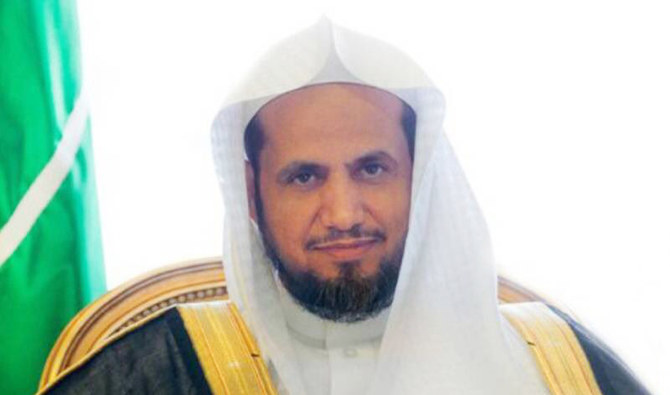

JEDDAH: Saudi Arabia’s Bureau of Investigation and Public Prosecution will not tolerate trafficking in persons and will take legal measures against the perpetrators of such crimes, the Kingdom’s attorney general has said.
Sheikh Saud bin Abdullah Al-Mujib said that the victims of such crimes would receive special attention from the competent care authorities.
His statement was made in response to World Day Against Trafficking on July 30.
“The Saudi state, since its inception, has been protecting rights and freedoms from all forms of crime and exploitation, emphasizing the Basic Law of Governance and all the systems in force in the Kingdom and international treaties and charters, and designated an independent system concerned with this crime — the Anti-Trafficking in Persons Law,” Al-Mujib said.
“The Public Prosecution is responsible for filing a criminal case against violators of the Anti-Trafficking in Persons Law, as well as inspecting and monitoring shelters for victims of trafficking in persons in order to protect them,” he said. “The system stipulates a number of severe penalties for those who carry out any of the criminal descriptions.”
The bureau has also allocated an independent department to investigate such crimes and undertake the related procedures to deal with them.
Meanwhile, president of the Saudi Human Rights Commission (HRC), Dr. Awwad bin Saleh Al-Awwad, said that the Kingdom was at the forefront of anti-trafficking efforts.
He said that the Kingdom was deeply committed to the protection and promotion of human rights. It had focused on criminalizing and combating trafficking in persons crimes through a variety of measures and procedures that guaranteed human dignity and protected against all forms of degradation and exploitation.
“The Kingdom of Saudi Arabia, under the direction of King Salman and the supervision of the Crown Prince Mohamed bin Salman, has made progress in its ranking on TIP (Trafficking In Persons) index reports putting itself on par with developed countries,” Al-Awwad said.
“The Kingdom continues to exert significant and relentless efforts to combat trafficking in persons crimes through a variety of measures, most notably the formation of the National Anti-Trafficking in Persons Committee, the passing of adequate laws and legislations that guarantee the protection of victims and the preservation of their rights,” he said.
Saudi Arabia had made domestic and international commitments by signing and ratifying agreements and conventions, he said.
Al-Awwad said that the Kingdom did not limit its efforts to the passing of laws and legislation that combated trafficking in persons. Rather, it made sure those laws were implemented and respected by creating initiatives and mechanisms to ensure implementation.
Saudi Arabia’s Anti-TIP National Referral Mechanism (NRM) created a national reference and framework to guarantee better Anti-Trafficking in Persons cooperation.
The NRM also helped to raise awareness about the regulatory, legal and procedural aspects of the issue, created principles for dealing with Trafficking in Persons cases, and clarified the roles and responsibilities assigned to various government agencies.
The NRM further helped to promote victim protection, ensured they were able to access the range of services provided to them, and contributed to tracking and addressing cases.
Al-Awwad said that these efforts affirmed the Kingdom’s commitment to the protection of human rights as a deeply rooted principle in the Saudi quest to preserve human dignity.
He said that the committee worked to enhance cooperation with various government agencies, NGOs and international organizations.
Alongside other measures, the committee assigned a national TIP crimes team and organized a variety of training programs to build national Anti-Trafficking in Persons capacities, he said.