



BEIRUT: Five days ahead of the one-year anniversary of the Beirut port blast, Lebanon President Michel Aoun told Public Prosecutor Judge Ghassan Oweidat he was ready to give a statement about the deadly explosion.
“No one is above the law no matter how high up, and justice can only be achieved through the specialized judicial branches that provide guarantees,” Aoun told Oweidat during a meeting on Friday.
The Aug. 4, 2020 explosion of ammonium nitrate stored in the Port of Beirut claimed the lives of 215 people, injured more than 6,000, and destroyed the capital’s waterfront along with large sections of neighboring residential areas.
Aoun informed Oweidat of his “absolute readiness to testify” if Judge Tarek Bitar decided to hear his statement under the code of criminal procedure. Aoun previously admitted that he had been informed of the presence of tons of ammonium nitrate only days before the explosion.
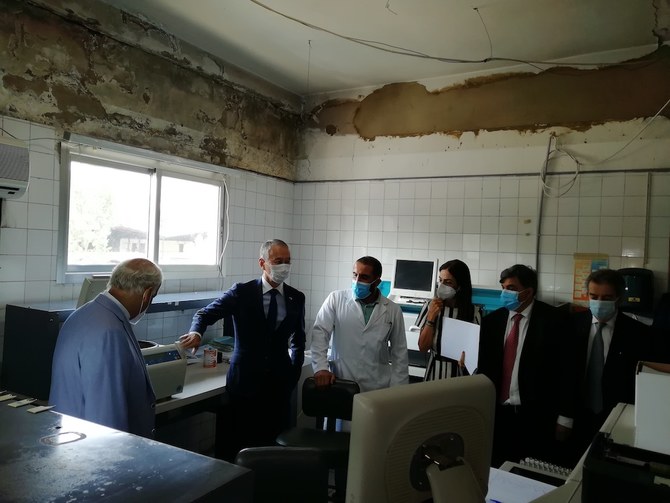
Meanwhile, renovation work on destroyed homes and institutions surrounding the port continued. Among the destroyed areas include the Karantina Governmental Hospital, which received foreign aid for its reconstruction and rehabilitation.
The Japanese Ambassador to Lebanon Takeshi Okubo delivered personal protective equipment, laboratory equipment, and a blood bank management system valued at $175,000 to the hospital on Friday. Okubo toured the medical departments where the equipment was installed as some walls in the facility still lay in ruin from the blast.
On Friday, Civil Defense Director-General Brig. Gen. Raymond Khattar inaugurated a training center for indoor fire fighting that was funded by the French state and named “August 4, 2020 Martyrs Center.”
The Beirut Fire Brigade lost 10 members in the blast. They were battling the fire at the port before the ammonium nitrate exploded.
During the inauguration, French Ambassador to Lebanon Anne Grillo said the center is within the framework of the French assistance to support Lebanon.
“France is determined to help Lebanon and will never back down,” Grillo said. “We will stand by your side as long as you need, and we will provide other equipment to the Beirut Fire Brigade to put out fires in open spaces.”
The investigation into the blast continued this week as Judge Bitar waited for the immunity of political, military, and security figures to be lifted so he can proceed with questioning.
The defendants, who have been charged with “negligence” and “possible intent to murder,” include Lebanon's caretaker Prime Minister Hassan Diab, ministers, and parliament members, along with other general and state security directors.
The authorities’ inability to pursue the defendants has raised widespread political and popular debate over how the ruling authority has dealt with the aftermath of a human catastrophe.
On Thursday, the Beirut and North Bar Associations gave permission to prosecute lawyer and former public works minister Youssef Fenianos. He did not hold immunity like other defendants, some of which are current ministers and MPs.
Former MP and legal expert Salah Hanin told Arab News: “The prime minister and ministers do not have immunity when they commit a criminal offense such as the port explosion crime. It subjects them to ordinary laws and to the same judiciary that exercises its authority over all citizens.”
He referenced Article 60 of the Lebanese Constitution, which states only the president is tried before the supreme council when violating the constitution, high treason, or committing a crime.
“As for the rest of the officials, including prime ministers and ministers, they are tried according to ordinary laws,” Hanin said. “They have no immunity if they are accused of committing a crime. They are only tried before the supreme council in case of high treason or breach of duty.”
Commenting on the possibility of the MPs and ministers trying to explain their actions as a “breach of duty,” Hanin said: “The explosion killed more than 200 people, wounded thousands, and destroyed half of the capital; is that not a crime?”
According to Hanin, former judicial investigator Fadi Sawan previously said defendants do not have immunity when they commit a crime but “politicians pounced on him and he was removed from the case.”
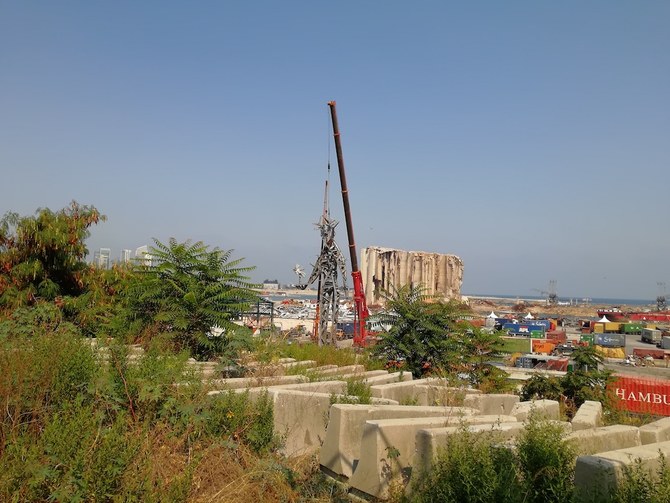
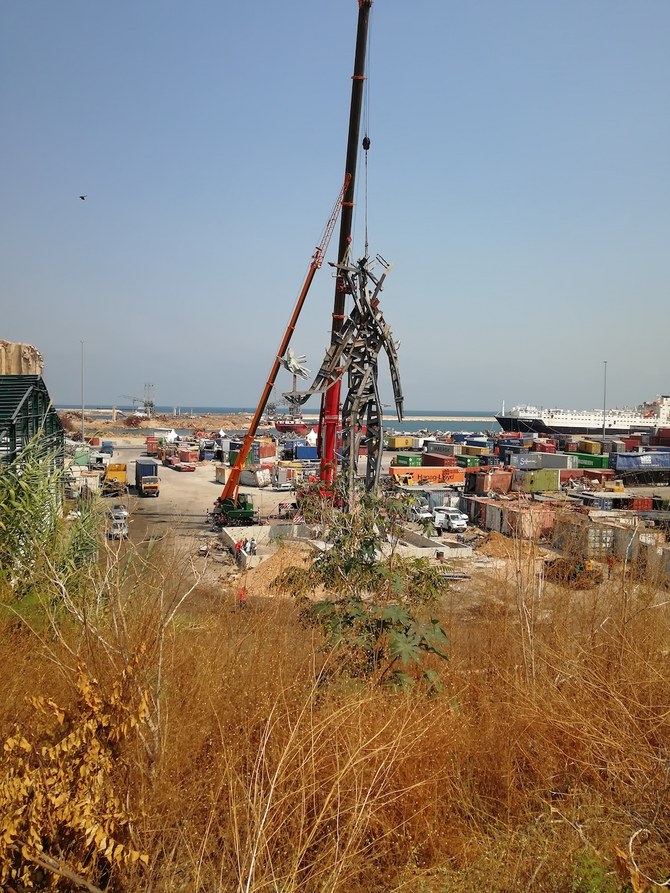
In other developments, a local artist set up a giant steel structure made out of rubble from the explosion in the Beirut port to commemorate the tragic anniversary. The artwork depicted a figure rising from the rubble carrying a dove of peace.
Lebanese civil societies are preparing to observe the anniversary by marching toward the port on Wednesday while a religious mass is scheduled to be held for the victims of the explosion in the port yard.


