

Iranian hackers posed as aerobics instructors to target defense workers

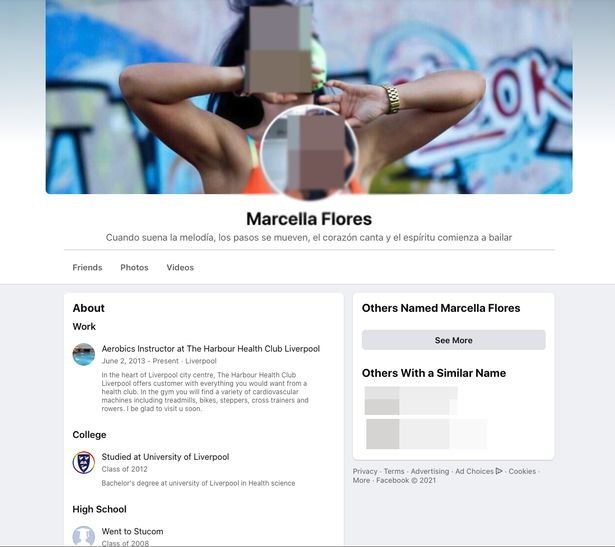
A fake Facebook page that was controlled by an Iranian hacker, according to reports. (Screenshot)
Short Url
Updated 29 July 2021
Follow

Iranian hackers posed as aerobics instructors to target defense workers

  • They sent “flirtatious” videos to build rapport and later delivered malware to targets’ devices
  • It is unclear whether any sensitive information was stolen

LONDON: A group of Iranian hackers posed as aerobics instructors from Liverpool, UK, and sent flirtatious messages in an attempt to steal sensitive information from defense and aerospace industry personnel.

The hackers’ false identities were exposed by Facebook and the cybersecurity company Proofpoint, which said the operation proves the effort that Iran is putting into targeting individuals of interest.

The hackers have been identified as part of the TA456 group, which also goes by the name of Tortoiseshell — a group widely believed to be aligned with the Islamic Revolutionary Guard Corps.

Proofpoint described the group as “one of the most determined Iranian-aligned threat actors” that it tracks, due to tactics of spending months or years building up a relationship with targets across various platforms, as well as its “general persistence.”

The operatives created fake Facebook, Instagram and email accounts for a woman named Marcella Flores. She was depicted as a smiling, tanned and dark-haired Spanish woman working as a fitness instructor in Liverpool. They created a fake education and work history for her.

Proofpoint said that Flores would target people who publicly identified themselves as employees at defence contractors on social media accounts, befriending them before starting up a conversation.

In one case, she sent the target benign messages and photographs, as well as a “flirtatious” video to build a rapport, before later sending a link to a dietary survey but that in fact contained a malware download that would steal usernames, passwords and other data.

Proofpoint did not say whether the attacks were successful, but if they were, the stolen information could be used to gain access to larger aerospace companies that the original target was a subsidiary or contractor for.

Facebook banned her account and that of several others earlier this month, saying that they were all fake online personas created by the Iranian operatives to “conduct espionage operations across the internet.”

Facebook said: “Our investigation found them targeting military personnel and companies in the defence and aerospace industries primarily in the US, and to a lesser extent in the UK and Europe.”

When the comprehensive campaign was revealed, Amin Sabeti, an expert in Iranian cyber-operations, told Arab News that the strategy — which he dubs “social engineering” hacking — is a go-to tactic for Iranian operatives, or those working on behalf of the state.

“It’s the same pattern that Iranian state-backed hackers have been following for years,” he said.

Sabeti explained that they rely on manipulating targets into providing sensitive information or account details that can then be exploited for their gain — and, since they are operating from Iranian soil, “they have the consent of the regime.”

Sabeti said: “It’s easy, cheap, there’s plausible deniability and it works, it’s effective.”


UN rights chief Shocked by ‘unbearable’ Darfur atrocities

Updated 18 January 2026
Follow

UN rights chief Shocked by ‘unbearable’ Darfur atrocities

  • Mediation efforts have failed to produce a ceasefire, even after international outrage intensified last year with reports of mass killings, rape, and abductions during the RSF’s takeover of El-Fasher in Darfur

PORT SUDAN: Nearly three years of war have put the Sudanese people through “hell,” the UN’s rights chief said on Sunday, blasting the vast sums spent on advanced weaponry at the expense of humanitarian aid and the recruitment of child soldiers.
Since April 2023, Sudan has been gripped by a conflict between the army and the paramilitary Rapid Support Forces that has left tens of thousands of people dead and around 11 million displaced.
Speaking in Port Sudan during his first wartime visit, UN Human Rights commissioner Volker Turk said the population had endured “horror and hell,” calling it “despicable” that funds that “should be used to alleviate the suffering of the population” are instead spent on advanced weapons, particularly drones.
More than 21 million people are facing acute food insecurity, and two-thirds of Sudan’s population is in urgent need of humanitarian aid, according to the UN.
In addition to the world’s largest hunger and displacement crisis, Sudan is also facing “the increasing militarization of society by all parties to the conflict, including through the arming of civilians and recruitment and use of children,” Turk added.
He said he had heard testimony of “unbearable” atrocities from survivors of attacks in Darfur, and warned of similar crimes unfolding in the Kordofan region — the current epicenter of the fighting.
Testimony of these atrocities must be heard by “the commanders of this conflict and those who are arming, funding and profiting from this war,” he said.
Mediation efforts have failed to produce a ceasefire, even after international outrage intensified last year with reports of mass killings, rape, and abductions during the RSF’s takeover of El-Fasher in Darfur.
“We must ensure that the perpetrators of these horrific violations face justice regardless of the affiliation,” Turk said on Sunday, adding that repeated attacks on civilian infrastructure could constitute “war crimes.”
He called on both sides to “cease intolerable attacks against civilian objects that are indispensable to the civilian population, including markets, health facilities, schools and shelters.”
Turk again warned on Sunday that crimes similar to those seen in El-Fasher could recur in volatile Kordofan, where the RSF has advanced, besieging and attacking several key cities.
Hundreds of thousands face starvation across the region, where more than 65,000 people have been displaced since October, according to the latest UN figures.