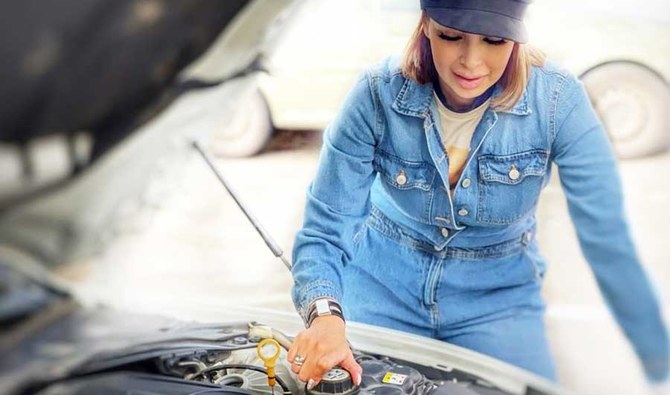

JEDDAH: Trying to choose the perfect car can be a confusing and intimidating experience for anyone, but especially new drivers. Dealing with the problems that come with car ownership can be even more vexing.
With a growing number of women getting behind the wheel in Saudi Arabia, one Saudi woman is on a mission to teach them what lurks under the hood so that they are better able to choose a vehicle that suits them and keep it running well.
In 2018 women in the Kingdom were officially given permission to drive, empowering many to take to the road for the first time. For many new drivers, however, trying to decide which vehicle is best can feel like a leap into the unknown, to say nothing of the stress and confusion when basic mechanical problems arise.
Nada Hambazaza, a public relations manager at an automotive and marketing agency in Jeddah, grew up with a love of cars and decided she wanted to learn how they work. This ultimately inspired her to launch a YouTube channel to teach other women about cars, and now she plans to take the next step by providing some basic lessons on maintenance and repairs.
HIGHLIGHTS
• In 2018 women in the Kingdom were officially given permission to drive, empowering many to take to the road for the first time. For many new drivers, however, trying to decide which vehicle is best can feel like a leap into the unknown, to say nothing of the stress and confusion when basic mechanical problems arise.
• Nada Hambazaza’s YouTube channel, the Arabic name of which translates as ‘for safer driving,’ provides content in Arabic for an Arab audience.
• Hambazaza has more than 15 years of experience working in office management and public relations. She said her mission with her YouTube channel is to ensure women are capable of looking after their vehicles themselves without needing any help for basic maintenance.
“I have had a passion for cars since I was a kid,” she told Arab News. “I used to see my family members taking care of their cars and I spent a lot of time with them. So I understand more than most females, at least in the terminologies related to cars.
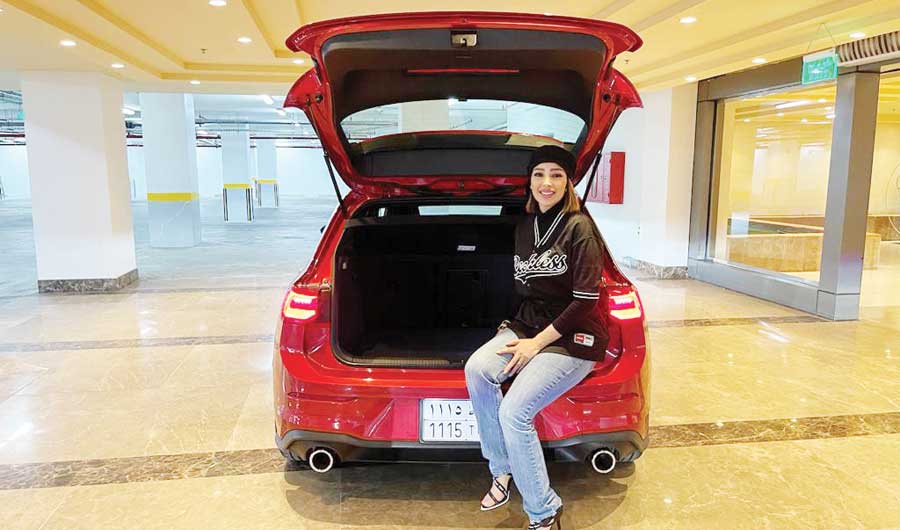
Nada Hambazaza launched a YouTube channel to teach other women about cars, and now she plans to provide some basic lessons on maintenance and repairs. (Supplied)
“Learning is a nonstop journey; I always keep educating myself through web searches and watching related material to advance my knowledge.”
Hambazaza’s YouTube channel, the Arabic name of which translates as “for safer driving,” provides content in Arabic for an Arab audience.
“I’m not by any means a mechanic but I know basic maintenance,” she said. “Different people have different thoughts — you don’t have to physically work on the car yourself, but at least gain the knowledge and delegate the physical work to a specialist.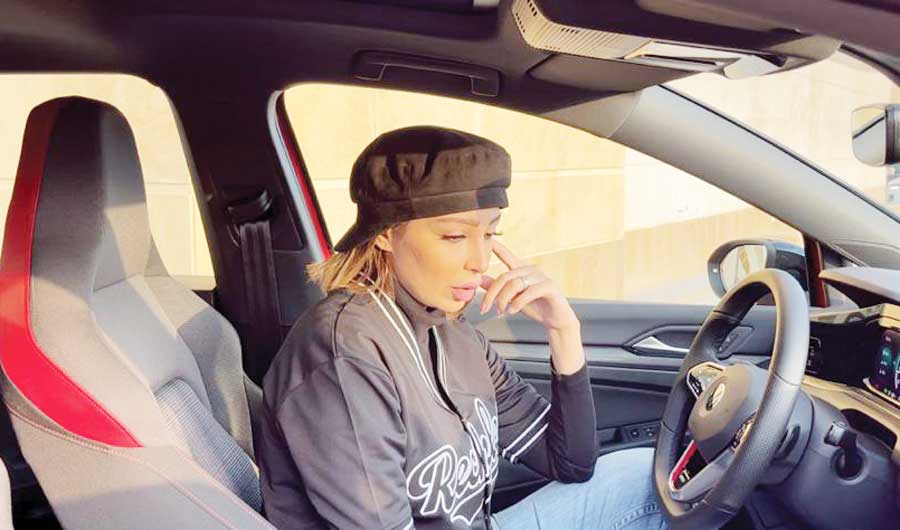
“You can be sure that there are some tasks that can be done easily by yourself without the need for a mechanic’s help; just a little knowledge can get the job done.”
Hambazaza has more than 15 years of experience working in office management and public relations. She said her mission with her YouTube channel is to ensure women are capable of looking after their vehicles themselves without needing any help for basic maintenance.
Learning is a nonstop journey; I always keep educating myself through web searches and watching related material to advance my knowledge.
Nada Hambazaza
“The main purpose of the program is to spread awareness, mainly to new drivers, so that they get to know more about their vehicle, the main parts and how they are structured, in addition to knowing how to handle certain situations,” she explained. In addition, viewers can send their questions about specific scenarios or issues for Hambazaza to answer.
Her short videos aim to be informative and easy to understand, she said, and to provide Saudi women with information in a simple and engaging way that will appeal to new and experienced drivers alike who might lack important, basic knowledge that could make their motoring lives easier.
In addition to the backing of her husband and family, Hambazaza said she has received support and positive feedback from other people, which helped ease her initial fears about how her videos would be received.
“I was a bit nervous in the beginning, thinking I would receive tons of comments about how girls can’t work on cars,” she said. “But the overall reaction has been very supportive and my close circle of friends and family is pushing me to do more and encouraging me to continue.”
Times have changed in Saudi society and gender is no longer the barrier it once was to pursuing a career in previously male-dominated fields such as the automobile industry.
“Underestimating women getting into this field is no longer applicable to today’s world,” Hambazaza said. She encouraged girls and young women always to pursue their passions, and added that if they find their dream job in the automotive industry “don’t allow anything to pull you back — follow your dreams.”