

Saudi Arabia bans citizens from traveling to Indonesia over COVID-19 concerns

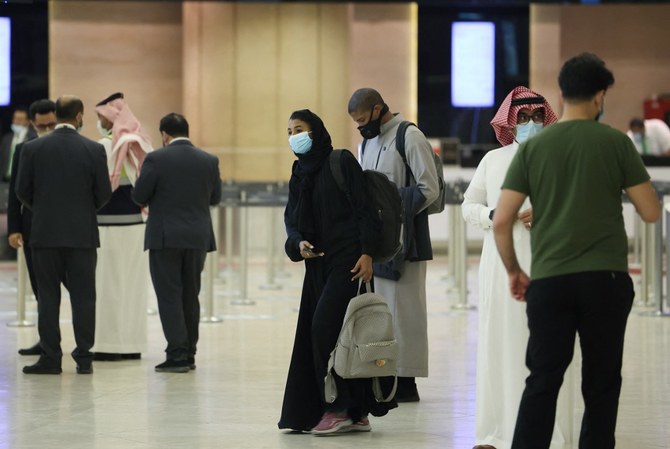
Saudi Arabia on Wednesday banned its citizens from travelling to Indonesia directly or indirectly. (File/AFP)
Short Url
Updated 22 July 2021
Follow

Saudi Arabia bans citizens from traveling to Indonesia over COVID-19 concerns

  • The ban will last until the COVID-19 situation in Indonesia becomes stable
  • Citizens who are already in Indonesia are being urged to return

JEDDAH: Saudi citizens have been banned from traveling to Indonesia over coronavirus disease (COVID-19) concerns, the Saudi Interior Ministry announced on Wednesday

An official source at the ministry said that the move was taken to ensure citizens’ safety due to a surge in COVID-19 cases exacerbated by the delta variant.

The restrictions will continue until the situation is stabilized, the source added.

Saudi citizens currently in Indonesia have been told to exercise caution, stay away from areas with high infection rates, maintain all precautionary measures and return to the Kingdom at the earliest opportunity.

Currently, pilgrims participating in this year’s Hajj rituals are completing their final steps under strict health measures with no reported COVID-19 infections.

Meanwhile, the Saudi Ministry of Health has continued to administer COVID-19 vaccines during the Eid Holiday at vaccination centers, as part of the community immunization campaign.

Over 23.3 million doses have been administered across the Kingdom, with more than 1.4 million elderly citizens or residents being inoculated against COVID-19.

HIGHLIGHT

As of Aug. 1, only fully vaccinated people will be allowed to enter public spaces in Saudi Arabia, including malls, restaurants, shops and markets.

On Wednesday, the Health Ministry reported 1,142 confirmed cases, with 10,905 of the cases remaining active and 1,374 in a critical condition. The latest cases bring the overall number of infections to 513,284.

The Riyadh region reported the highest number of cases with 302, followed by Makkah with 188, the Eastern Province with 176 and Asir region with 143.

In addition, 1,024 patients had recovered from the disease, bringing the total number of recoveries in the Kingdom to 494,264.

The ministry also reported 12 more COVID-19-related deaths. The death toll now stands at 8,115.

Saudi Arabia so far has conducted over 24 million polymerase chain reaction (PCR) tests, with over 86,000 carried out in the past 24 hours.

Testing hubs and treatment centers set up throughout the country have dealt with hundreds of thousands of people since the outbreak of the pandemic.

Among them, Taakad (make sure) centers provide COVID-19 testing for those who show no or only mild symptoms or believe they have come into contact with an infected individual. Tetamman (rest assured) clinics offer treatment and advice to those with virus symptoms such as fever, loss of taste and smell, and breathing difficulties.

Appointments for both services can be made via the ministry’s Sehhaty app.

The Ministry of Health called on citizens and expats in the Kingdom to take the vaccine available at vaccination centers across the country in order to preserve the health and safety of all members of society.

As of Aug. 1, only fully vaccinated people will be allowed to enter public spaces in Saudi Arabia, including malls, restaurants, shops and markets.

Visitors to these public places will need to show proof of vaccination upon entrance, according to the Saudi Ministry of Municipal and Rural Affairs.

The Health Ministry continues to call on all people to adhere to precautionary measures to limit the spread of the virus in light of the global spread of the new delta variant.


AI, automation creating new jobs and displacing traditional roles: Saudi HR minister

Updated 15 sec ago
Follow

AI, automation creating new jobs and displacing traditional roles: Saudi HR minister

  • Ahmad Al-Rajhi: Expect significant growth in tech-centric jobs like AI specialists and data analysts, while roles such as data entry and administrative assistants may decline
  • Al-Rajhi: Rising living costs and economic slowdowns will shape which skills are most valued, like resilience, flexibility and creative thinking

RIYADH: Artificial intelligence, robotics and automation are creating new opportunities while displacing traditional roles, Saudi Arabia’s Minister of Human Resources and Social Development Ahmad Al-Rajhi said in his opening remarks at a conference in Riyadh on Monday.

Al-Rajhi was speaking during the opening of the third Global Labor Market Conference, which is being held under the theme “Future in Progress” and brings together decision-makers, thought leaders and experts from around the world.

“Expect significant growth in tech-centric jobs like AI specialists and data analysts, while roles such as data entry and administrative assistants may decline,” he said.

Al-Rajhi added that the green transition is driving demand for renewable energy engineers and environmental specialists.

“We will see a surge in green jobs as industries adapt to climate goals,” he said.

The minister also pointed to broader economic and geopolitical pressures shaping labor markets globally, including rising living costs and slowing growth.

“Rising living costs and economic slowdowns will shape which skills are most valued, like resilience, flexibility and creative thinking,” he said.

Al-Rajhi added that demographic shifts, including aging populations in some regions and expanding working-age populations in others, will continue to influence labor supply and demand, increasing the need for healthcare, training and inclusive job creation.

Turning to the global youth employment challenge, he said international trends highlight the urgency of coordinated action.

“More than 262 million young people worldwide are not in employment, education or training in many regions, and job creation is not keeping pace with population growth, while other countries are facing the pressure of aging workforces and rising dependency ratios,” Al-Rajhi said, citing international estimates.

He added that rapid technological change is outpacing education and training systems, making continuous upskilling essential across both advanced and emerging economies.

“These pressures differ by region, but they are too complex for countries to address in isolation,” he said.

Highlighting Saudi Arabia’s domestic workforce transformation, Al-Rajhi said more than 2.5 million Saudis have joined the private sector since 2020, describing young men and women as a growing national asset driving new fields and skills development.

“These indicators, among others, show an economy movement for people who are investing in themselves, learning, competing and shaping the future with confidence,” he said.

During the event, Saudi Minister of Industry and Mineral Resources Bandar Al-Khorayef announced the launch of an occupations and skills framework for the mining and industrial sectors, aimed at clarifying job roles and workforce requirements.

He said the framework will cover more than 500 occupations and outline the skills, job descriptions and titles needed across the sectors, helping private companies, educators and training providers to align workforce development with industry demand.

“This is an important framework to allow different players in the ecosystem, from private sector who will actually need (those) kinds of jobs, but it will allow, I think, most importantly, training and the training ecosystem,” Al-Khorayef said

Saudi Minister of Tourism Ahmed Al-Khateeb added global travel is expected to continue rising over the next decade, driving demand for tourism workers as the Kingdom expands new destinations and cities.

He said the global tourism sector is expected to create 91 million jobs by 2035, while facing a projected shortfall of 43 million workers.

“(This is) good news for the job market in Saudi Arabia. We’re projecting to create an additional 400,000 jobs to 600,000 jobs in the next five to six years, just to fill the new destinations, the new cities that we are building today.”

Al-Khateeb added that tourism does not require highly specialized skills in the same way as sectors such as engineering or medicine, but instead builds soft skills that can deliver positive outcomes.

He said that employment in the tourism sector has risen sharply since the Kingdom launched its tourism strategy in 2019, contributing to job creation and lower unemployment, and underscoring the importance of training and workforce development.

“When we launched tourism back in 2019, we used to have 750,000 people working in the sector. Last year, we surpassed 1 million,” he said.

He added that tourism has become one of the most impactful sectors for reducing unemployment and creating jobs, with an emphasis on ensuring that workers entering the industry are well trained.

Saudi Minister of Transport and Logistics Services Saleh Al-Jasser said infrastructure investment plays a key role in driving economic growth, development and job creation, citing its strong multiplier effect across sectors.

Al-Jasser also cited a recent World Bank statement at the World Economic Forum in Davos on the scale of the labor market challenge ahead.

“There would be 1.2 billion (entering) the labor market in the next 10 years … but only 400 million jobs will be opening up,” he said.

He added that the growing global focus on job creation will be decisive in determining whether development succeeds or falls short in the years ahead.

The event will run from Jan. 26–27 and will focus on six key pillars: trade changes and employment; informal economies; the new global skills landscape; the real impact of artificial intelligence on jobs and productivity; building resilient labor markets in times of crisis; and improving job quality, with particular attention to youth as the foundation of the future economy.