

Saudi Arabia steps up efforts to boost private-sector employment for citizens

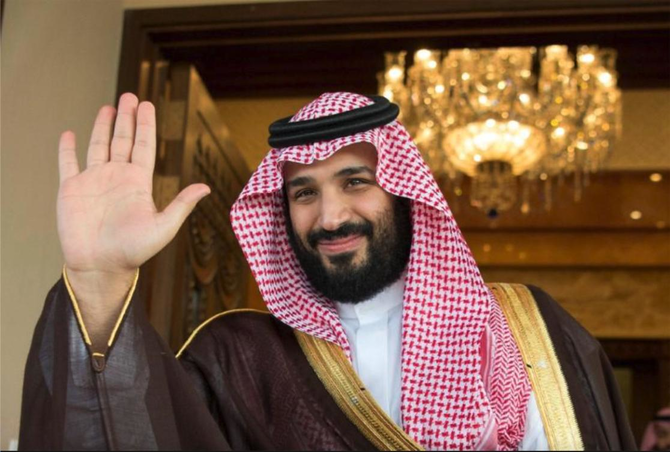
Saudi Arabian Deputy Crown Prince Mohammed bin Salman's Vision 2030 has mandated an increase in Saudization. (Reuters)
Short Url
Updated 16 July 2021
Follow

Saudi Arabia steps up efforts to boost private-sector employment for citizens

  • Hadaf supported employment of 142,000 citizens in the private sector during H1
  • Saudi Logistics Academy inaugurated by Minister of Transport and Logistics Saleh Aljasser

RIYADH: Saudi Arabia is increasing opportunities for training and employment of nationals as it seeks to meet the goals of Vision 2030.

The Saudi Human Resources Development Fund (Hadaf) said it supported the employment of 142,000 citizens in the private sector during the first half of 2021. Among the beneficiaries of Hadaf’s support, 59 percent were women, it said on its official Twitter account on Thursday.

Medium-sized enterprises benefited the most from employment support, with 67,000 employees.

Recent initiatives to help boost skills in the national workforce include the inauguration, this week, of the Saudi Logistics Academy in Riyadh by Minister of Transport and Logistics Saleh Aljasser.

The academy is dedicated to qualifying Saudis in seven sectors, namely postal logistics services, maritime and ports transport, international trade, shipping and export, land transport, e-commerce, warehouse management and air transport.

Aljasser said that the ministry has signed agreements with a number of companies in the private sector, which have committed to employing 350 trainees from the graduates of this academy, Al Eqtisadiah reported.

Another initiative seeks to localize operation and maintenance contracts in public entities and companies in which the state contributes at least 51 percent of its capital.

Over 71,000 citizens were employed in the sector’s establishments since the initiative was launched two years ago until the end of May 2021, SPA reported citing data and reports of the initiative.

Earlier this month, Saudi employment officials set minimum salaries for operations and maintenance roles under a broader localization push.

Senior managers working in public operations and maintenance are entitled to a minimum salary of SR9,000 ($2,399), the Ministry of Human Resources and Social Development said on July 7.


Lebanese social entrepreneur Omar Itani recognized by Schwab Foundation

Updated 23 January 2026
Follow

Lebanese social entrepreneur Omar Itani recognized by Schwab Foundation

  • FabricAID co-founder among 21 global recipients recognized for social innovation

DAVOS: Lebanon’s Omar Itani is one of 21 recipients of the Social Entrepreneurs and Innovators of the Year Award by the Schwab Foundation for Social Entrepreneurship.

Itani is the co-founder of social enterprise FabricAID, which aims to “eradicate symptoms of poverty” by collecting and sanitizing secondhand clothing before placing items in stores in “extremely marginalized areas,” he told Arab News on the sidelines of the World Economic Forum in Davos, Switzerland.

With prices ranging from $0.25 to $4, the goal is for people to have a “dignified shopping experience” at affordable prices, he added.

FabricAID operates a network of clothing collection bins across key locations in Lebanon and Jordan, allowing people to donate pre-loved items. The garments are cleaned and sorted before being sold through the organization’s stores, while items that cannot be resold due to damage or heavy wear are repurposed for other uses, including corporate merchandise.

Since its launch, FabricAID has sold more than 1 million items, reached 200,000 beneficiaries and is preparing to expand into the Egyptian market.

Amid uncertainty in the Middle East, Itani advised young entrepreneurs to reframe challenges as opportunities.

“In Lebanon and the Arab world, we complain a lot,” he said. Understandably so, as “there are a lot of issues” in the region, resulting in people feeling frustrated and wanting to move away. But, he added, “a good portion of the challenges” facing the Middle East are “great economic and commercial opportunities.”

Over the past year, social innovators raised a combined $970 million in funding and secured a further $89 million in non-cash contributions, according to the Schwab Foundation’s recent report, “Built to Last: Social Innovation in Transition.”

This is particularly significant in an environment of geopolitical uncertainty and at a time when 82 percent report being affected by shrinking resources, triggering delays in program rollout (70 percent) and disruptions to scaling plans (72 percent).

Francois Bonnici, director of the Schwab Foundation for Social Entrepreneurship and a member of the World Economic Forum’s Executive Committee, said: “The next decade must move the models of social innovation decisively from the margins to the mainstream, transforming not only markets but mindsets.”

Award recipients take part in a structured three-year engagement with the Schwab Foundation, after which they join its global network as lifelong members. The program connects social entrepreneurs with international peers, collaborative initiatives, and capacity-building support aimed at strengthening and scaling their work.