

Pakistan's southwestern province reports fresh Congo virus cases

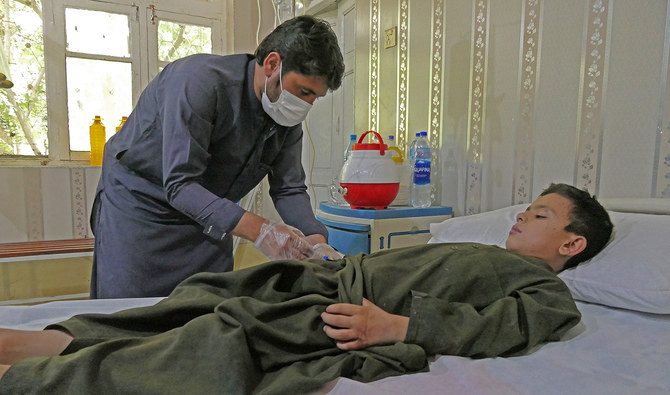
A doctor at the Fatima Jinnah Chest Hospital in Quetta is providing medical treatment to an 11-year-old Congo virus patient, Abdul Nasir, on July 9, 2021. (AN Photo)
Short Url
Updated 09 July 2021
Follow

Pakistan's southwestern province reports fresh Congo virus cases

  • The country’s Balochistan province has reported nine cases of the infectious disease since the beginning of the year
  • Crimean-Congo Hemorrhagic Fever is caused by a tick-borne virus and has a high fatality ratio

QUETTA: Pakistan’s southwestern Balochistan province has identified two new cases of Congo virus, confirmed a senior doctor on Friday, adding that provincial health authorities were alarmed by the development since there were limited medical facilities in the region that were mostly dealing with the coronavirus pandemic.
Crimean-Congo Hemorrhagic Fever — or Congo virus — is an infectious disease transmitted by ticks to humans and animals. These ticks can also be found on the skin of goats, sheep, cows, buffalos and camels that are sacrificed by Muslims during the Islamic festival of Eid Al-Adha.
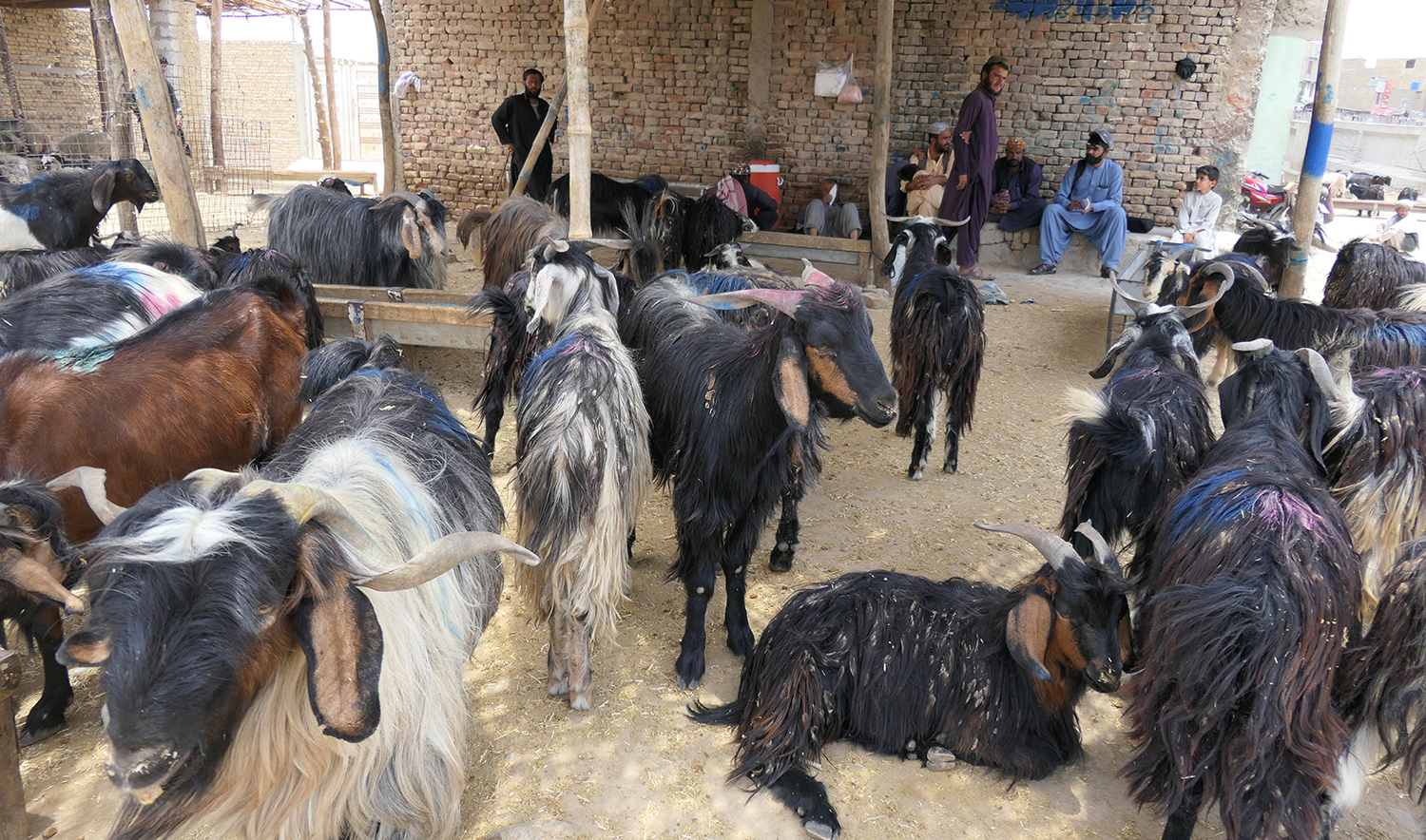


A herd of animals can be seen at a cattle market in Quetta on July 9, 2021. (AN Photo)

According to the World Health Organization (WHO), a Congo virus outbreak constitutes a threat to public health system since the disease can spread and has a high fatality ratio of 10 to 40 percent. The fatal Congo virus is still endemic in Africa and different parts of Asia.
“One of the patients who contracted the virus belonged to Loralai near the Pak-Afghan border area and had been discharged after getting medical treatment,” Dr. Sadiq Baloch, who works as additional medical superintendent at the Fatima Jinnah Chest Hospital in Quetta, told Arab News. “An 11-year-old boy from Chaman is still under treatment in the Congo Virus Isolation Ward.”
Baloch feared the situation could get worse in the province if necessary precautionary measures were not taken against the disease.
“With Eid Al-Adha less than two weeks away, cattle markets have emerged across the country,” he continued. “People must take safety precautions while visiting these places to buy animals.”
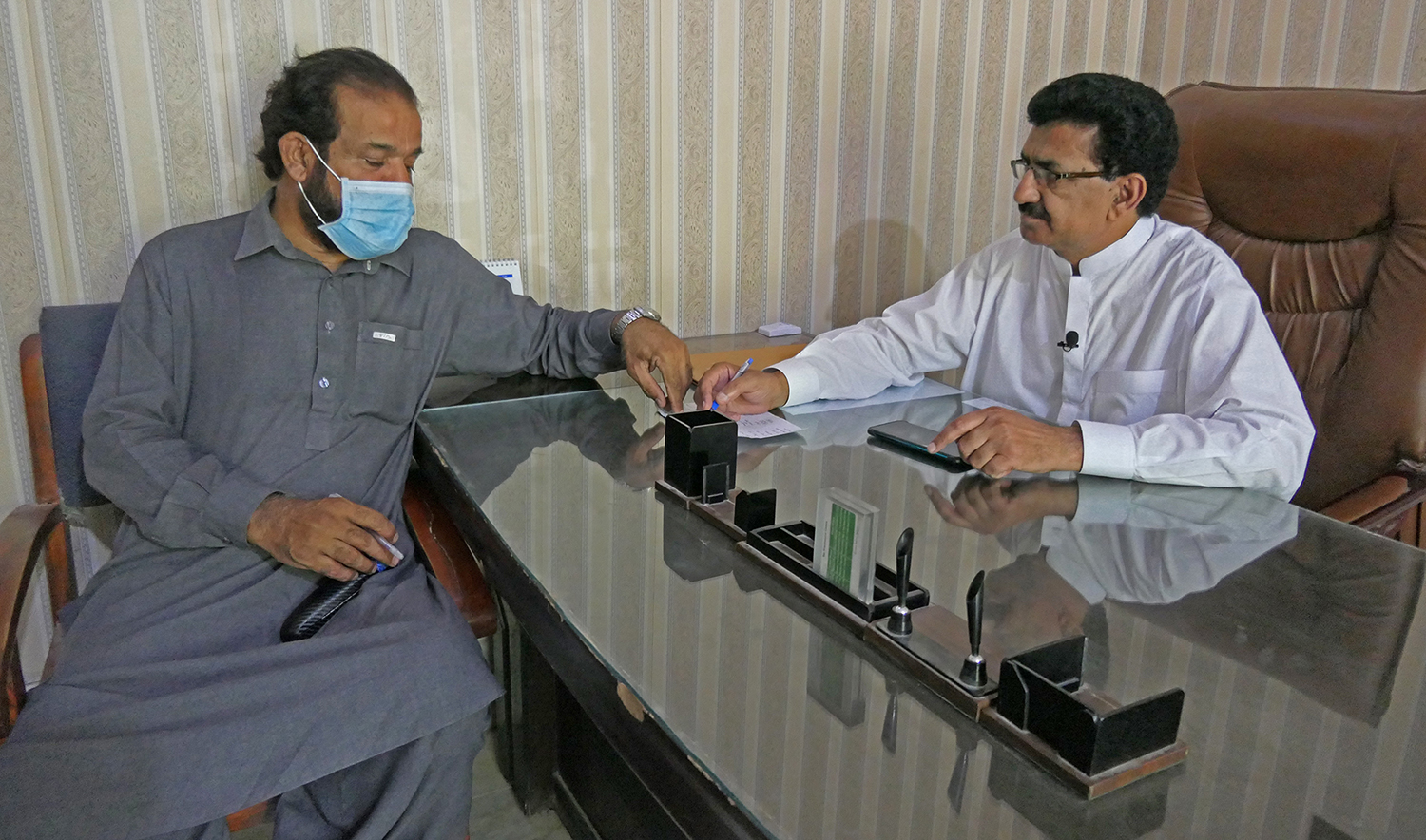


Two senior doctors of the Fatima Jinnah Chest Hospital, Dr. Sadiq Baloch (right) and Dr. Shams Dotani, can be seen together at their office in Quetta on July 9, 2021. (AN photo)

Dr. Shams Dotani, who supervises the hospital's Congo Virus Isolation Ward, said Balochistan had reported 27 virus cases in 2020, though everyone was more focused on COVID-19 and people did not pay much attention to the disease last year.
“Previously, we did not even have a proper lab to test people for Congo virus but now we have a functional facility where suspected patients can be tested,” he said. “Still, we need to educate people since a majority of our patients are brought here when they are in their last stages.”
11-year-old Abdul Nasir, who is currently undergoing medical treatment at the facility, was rush to the hospital five days ago by his family while he was suffering from nasal bleeding.
“My son was in a critical condition when we brought him to this place, but he is now recovering,” Haji Rahim, Nasir's father, told Arab News.
Medical professionals in Balochistan say they have witnessed an increase in Congo virus cases, saying nine patients suffering from the disease were only identified this year and four of them, including two butchers, had lost their lives.
“We used to treat Congo virus patients from Afghanistan in the past,” Dotani said. “But we have now been getting local patients from remote districts of Balochistan.”
Meanwhile, three major cattle markets have been established in Quetta ahead of Eid Al-Adha that have started attracting customers.
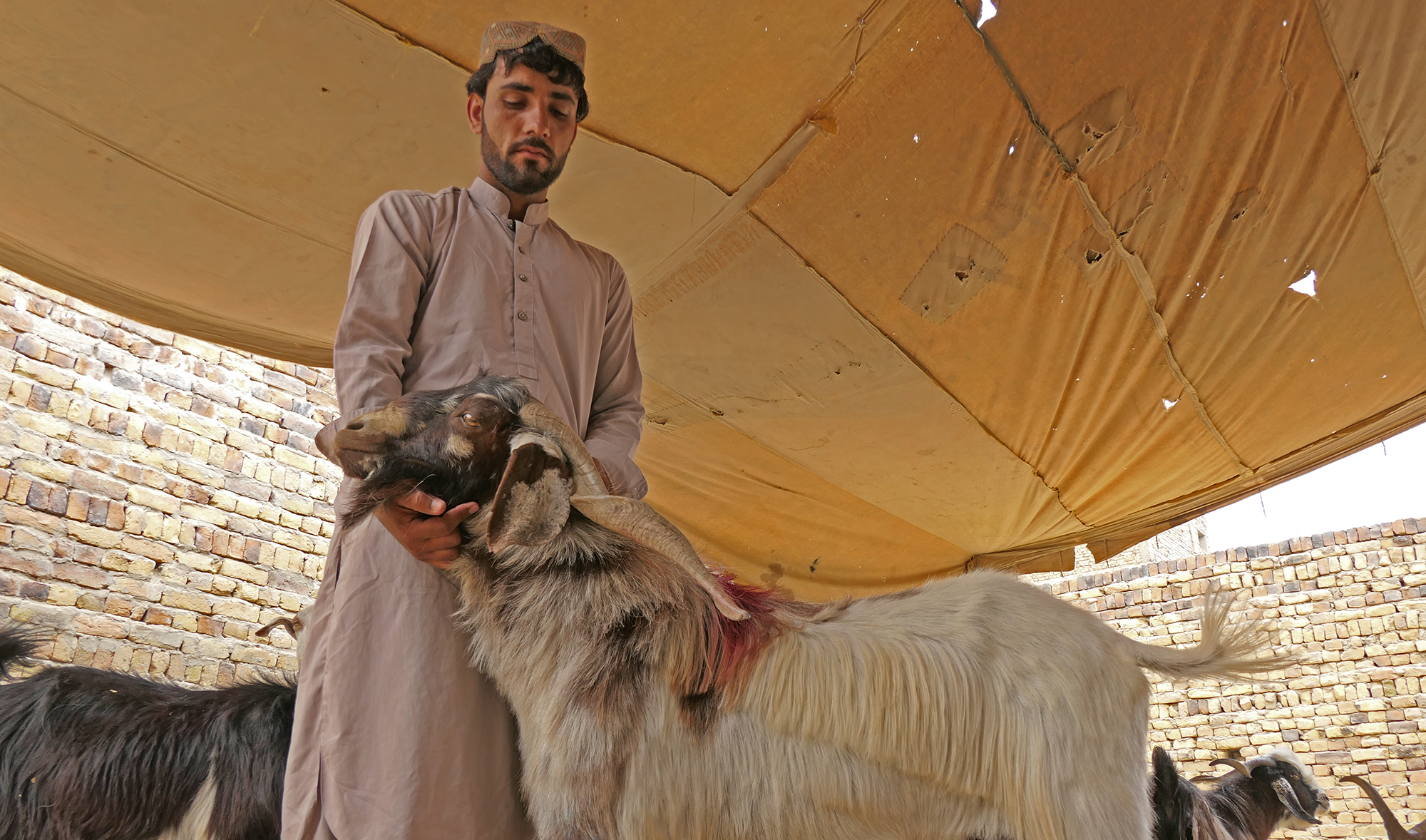


Rozi Khan, who has brought about 50 animals to a cattle market in Quetta, stands with a goat on July 9, 2021. (AN Photo)

Rozi Khan, who has brought about 50 sacrificial animals to one of these markets, requested the government to use anti-virus spray since “these ticks are harmful to both animals and customers.”
“We have been here for the last nine days, but officials of the livestock department have only visited us once with the anti-virus spray,” Khan told Arab News, adding they should spray the whole place on a daily basis to protect humans and animals from the deadly virus.


Pakistan says IMF has not imposed new conditions under $7 billion bailout

Updated 4 sec ago
Follow

Pakistan says IMF has not imposed new conditions under $7 billion bailout

  • Finance ministry says measures cited as ‘new conditions’ are phased extensions of reforms already agreed
  • Media described steps like civil servants’ asset disclosures and sugar industry deregulation as new demands

ISLAMABAD: Pakistan said on Sunday some of the reform measures mentioned in the media and linked to the International Monetary Fund (IMF) bailout program are not “new conditions” imposed by the lender but extensions of commitments already agreed under the arrangement.

Local media and social platforms have described a series of IMF-linked structural benchmarks as fresh conditions under the $7 billion loan for Pakistan in recent weeks. News reports published and broadcast in India also mentioned 11 measures under the loan, describing them as new IMF demands imposed on the country.

“The Ministry of Finance has clarified the intent, context, and continuity of reform measures under Pakistan’s IMF Extended Fund Facility (EFF) program, particularly in response to recent commentary regarding so-called ‘new conditions,’” said an official statement circulated in Islamabad.

“The purpose is to reaffirm that the measures referenced are part of a phased, medium-term reform agenda agreed with the IMF, many of which are extensions or logical progressions of reforms already initiated by the Government of Pakistan,” it added.

The ministry said the EFF is designed to support medium-term structural reforms implemented in a sequenced manner, with each program review building on prior actions to meet policy objectives agreed at the outset.

It provided detailed clarification on 11 measures that had been characterized as new conditions, including public disclosure of asset declarations of civil servants, strengthening the operational effectiveness of the National Accountability Bureau, empowering provincial anti-corruption bodies through access to financial intelligence and facilitating foreign remittances.

Other measures cited included the development of the local currency bond market, deregulation of the sugar industry, a comprehensive reform roadmap for the Federal Board of Revenue, a medium-term tax reform strategy, phased privatization of power distribution companies, regulatory reforms to strengthen corporate compliance and contingency measures to address potential revenue shortfalls.

The ministry said several of these reforms had been embedded in the Memorandum of Economic and Financial Policies (MEFP), a document detailing mutually agreed commitments, dating back to May 2024 and March 2025, including pledges related to tax policy, governance, energy sector restructuring and revenue mobilization.

“During discussions and negotiations with the IMF, the Government of Pakistan presents its planned policy reform initiatives,” the statement added. “Where the IMF assesses that these initiatives contribute to the agreed program objectives, they are incorporated into the MEFP.”

“As a result,” it continued, “many of the structural benchmarks and actions included in the latest MEFP are derived from reforms already undertaken or initiated by the Government of Pakistan, rather than being externally imposed or newly introduced conditions.”

The statement noted the measures outlined in the latest MEFP represent “continuity, sequencing and deepening of Pakistan’s agreed reform agenda” under the IMF loan, rather than the “imposition of abrupt or unprecedented conditions.”