

Warnings of rising terror threats to UK if Afghanistan abandoned

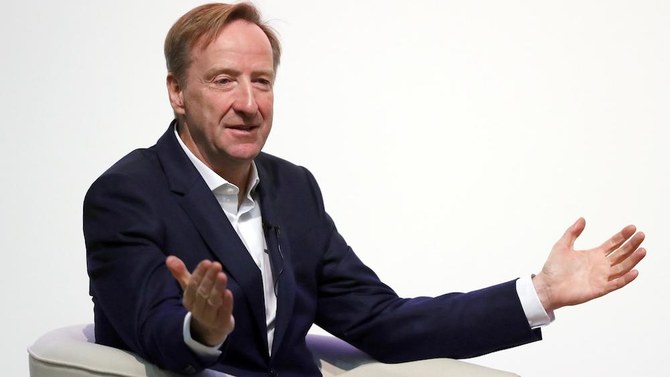
Sir Alex Younger, former head of MI6 — Britain’s foreign intelligence service — said the threat from terrorist groups such as Al-Qaeda and Daesh would grow if the UK turns its back on Afghanistan. (Reuters)
Short Url
Updated 06 July 2021
Follow

Warnings of rising terror threats to UK if Afghanistan abandoned

  • Ex-MI6 spymaster: Daesh, Al-Qaeda ‘have the capacity to regenerate’
  • ‘With NATO out of the country, terrorists will have greater freedom to organize attacks against us,’ analyst tells Arab News

LONDON: The terrorism threat to Britain will rise following the US-led coalition’s withdrawal from Afghanistan, members of the UK’s security establishment have said. 

Sir Alex Younger, former head of MI6 — Britain’s foreign intelligence service — said the threat from terrorist groups such as Al-Qaeda and Daesh would grow if the UK turns its back on Afghanistan.

He added that the most likely outcome of the withdrawal is a civil war between a resurgent Taliban and the NATO-backed government in Kabul.

The former spymaster warned that history risks repeating itself following the Soviet invasion and eventual withdrawal from Afghanistan in 1989, where “neglect” gave rise to extensive terrorist-training networks.

Recalling intelligence the UK uncovered upon invading Afghanistan in 2001 following the 9/11 attacks that year, he told Sky News that there “was a level of terrorist infrastructure that could only have been imagined before we got there — training camps that would’ve been not out of place in a sort of conventional military or special forces barracks.”

He added: “I’ve talked about the significance of the date of Sept. 11, 2001. I think the other very significant date is Feb. 16, 1989, which is when the Russians left Afghanistan. What the West then did is turn their back on that country, with all of the consequences that I’ve laid out. And I think … it would be an enormous mistake for us to do that again.”

Sir Alex said after the West’s two decades of involvement in Afghanistan, “there are groups there, we’ve been very successful in disrupting both Daesh and Al-Qaeda. They’re on the back foot. But it would be wrong, patently, to claim that they’ve gone away. And they have the capacity to regenerate.”

A UN report in June warned that some 500 Al-Qaeda fighters remained in Afghanistan. Other sources say roughly 2,000 Daesh fighters are also present but in smaller groups.

Sir Alex said: “I think if terrorist groups are allowed to regenerate somewhere like Afghanistan, it will lead to more threat on the shores of our country and our allies.”

Analysts have shared his sentiments. “Abandoning Afghanistan in this way is resetting the conditions that drew us in, namely 9/11,” Kyle Orton, an independent geopolitical researcher, told Arab News.

“With NATO out of the country, terrorists will have greater freedom to organize attacks against us — not only Al-Qaeda, which will come back into power with the Taliban, but the increasingly powerful Daesh branch in the country.”

Philip Ingram, a former senior British military intelligence officer who served in Afghanistan, told Arab News: “The West’s withdrawal, combined with the Taliban expansion and possible eventual takeover of the country, will likely set the conditions for terror organizations both old and potentially new to use Taliban-controlled Afghanistan as a coherent global terror training ground.”

He added: “This will potentially have not just an impact on regional stability but on the export of terror globally.”

Stephen Lovegrove, the UK government’s new national security adviser, told MPs that the world is now “likely to be more dangerous.”

Despite the NATO withdrawal, and amid rising concern for Afghanistan’s security, Britain’s Defense Minister Ben Wallace told Parliament that London will continue to work with Kabul and “focus on the threats that emanate from Afghanistan and may grow to emanate towards the UK and our allies.”

Debate is now raging inside Downing Street and Britain’s defense establishment about how the UK can continue to have an effect in Afghanistan while abiding by the Doha agreement signed with the Taliban, which requires all foreign troops and security contractors to leave the country by September this year.

The use of special forces to continue to advise and support the government in Kabul is being considered, and questions have been raised over the security of the British Embassy in the capital, which Downing Street says will remain open.


India, EU agree on trade deal slashing tariffs on 99.5% of Indian exports

Updated 1 min 32 sec ago
Follow

India, EU agree on trade deal slashing tariffs on 99.5% of Indian exports

  • Agreement expected to be signed later this year and come into force in early 2027
  • Duty cuts on 99.5% Indian exports to EU unlikely to offset US tariff impact, expert says

NEW DELHI: India and the EU have concluded negotiations on a deal creating a free trade zone of 2 billion people, European Commission President Ursula von der Leyen and Indian Prime Minister Narendra Modi said on Tuesday.

Talks for the pact, referred to by both leaders as the “mother of all deals,” started in 2007 and stalled repeatedly over the years, with the negotiation process only speeding up last year, following new US tariff polices.

The agreement is expected to be signed later this year and may come into force in early 2027.

“People around the world are calling it the ‘mother of all deals.’ This agreement brings huge opportunities for India’s 1.4 billion people and for millions of people across European countries,” Modi said during a joint press conference with Von der Leyen and European Council President Antonio Costa in New Delhi.

“It represents 25 percent of the global GDP and one-third of global trade.”

The deal paves the way for India to open its vast market to free trade with the EU, its biggest trading partner, and gain preferential access for almost all of its exports to the 27-nation European bloc.

“We have created a free trade zone of 2 billion people, with both sides set to gain economically,” Von der Leyen said. “We have sent a signal to the world that rules-based cooperation still delivers great outcomes.”

The conclusion of negotiations comes as US President Donald Trump slapped India with 50 percent tariffs and has threatened to impose new duties on several EU countries unless they support his efforts to take over Greenland.

“This is a signal to the US that like-minded entities, EU and India, are willing to come together and work together,” Prof. Harsh V. Pant, vice president of the Observer Research Foundation, told Arab News.

“Here are two countries that are bringing in a greater predictability and less volatility in their relationship, and they will move ahead irrespective of what the US does.”

The deal is expected to double EU goods exports to India by 2032 as tariffs on 96.6 percent of EU goods exports — from automobiles and industrial goods to wine and chocolates — will be eliminated or reduced, saving up to $4.75 billion per year in duties on European products, according to a European Commission press release on Tuesday.

At the same time, the EU will eliminate or reduce tariffs on 99.5 percent of goods imported from India over seven years, India’s Ministry of Commerce and Industry said in a statement, projecting gains mainly in labor-intensive sectors like textiles, leather, marine products, gems and jewelry.

“Indian services will also benefit from the trade deal. But, more than just export growth, the deal is part of a broader EU-India alliance on green tech, critical raw materials, digital rules and other aspects, which should channelize higher FDI (foreign direct investment) into India,” said Dr. Anupam Manur, professor of economics at the Takshashila Institution.

“India can potentially have a welfare and income gain of 0.5 percent of its GDP in the long run. It would also boost Indian exports to the EU by about $5 billion from the current level of about $76 billion.”

The agreement is unlikely to fully compensate for a slowdown in trade with the US.

“In the near term, this will partially offset the loss of exports to the US due to tariffs but cannot be expected to entirely mitigate it. Shifting supply chains and exports take time,” Manur said.

“The implementation of the FTA would take about a year’s time. The deal is expected to come into force by early 2027.”