Punjab authorities kick off 'NORM' campaign to increase mask-wearing

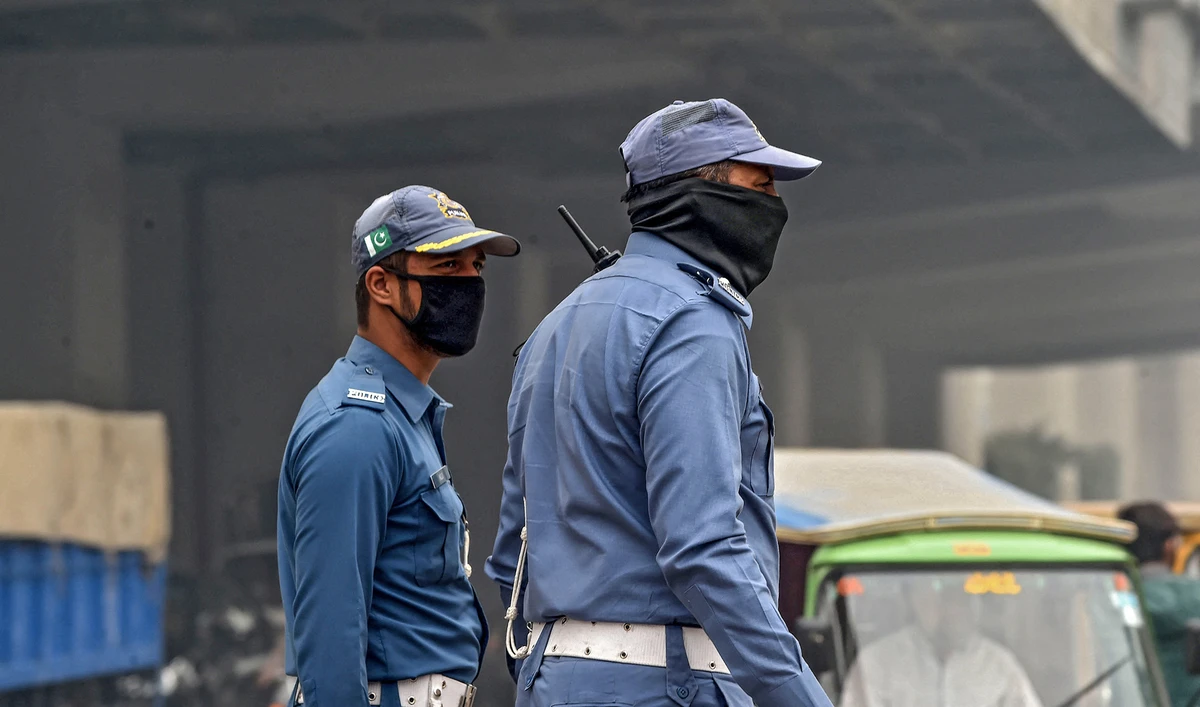
Police officers control traffic on a street amid heavy smog conditions in Lahore on November 14, 2019. (AFP/File)
Short Url
Updated 30 June 2021
Follow

Punjab authorities kick off 'NORM' campaign to increase mask-wearing

  • Commissioner of Lahore city says the NORM initiative was originally conceived by students Yale and Stanford universities
  • NORM model is an evidence-based approach to normalizing mask-wearing, being implemented in Bangladesh, Pakistan, India, Nepal, Latin America

LAHORE: The provincial administration of Punjab on Wednesday launched an initiative entitled NORM to deliver free face masks to people at their doorstep to ensure their safety and prevent the possibility of a fourth wave of the coronavirus pandemic in the country’s most densely populated region.

The Pakistan Medical Association recently warned against another surge in COVID-19 cases and highlighted the importance of following health guidelines to prevent further spread of the virus.

The NORM model is an evidence-based approach to increasing mask-wearing and is being implemented in Bangladesh, Pakistan, India, Nepal, and Latin America.

“This unique model to deliver face masks at people’s doorsteps has been originally conceived by the students Yale and Stanford universities,” Commissioner Lahore Captain Muhammad Usman Younis told Arab News, adding the Lahore University of Management Sciences (LUMS) was helping implement the project.

“The district government approached philanthropists and the business community [to implement the project] and they gave us a positive response,” he said, saying provincial authorities would distribute “10.5 million masks in Lahore alone.”

Speaking to Arab News, Maha Rehman, a LUMS faculty member supervising the project, said the initiative was based on a similar project launched in rural areas in Bangladesh.

“The mask distribution campaign will also be extended to mosques and markets,” she said, noting that celebrities had also been engaged to reinforce the awareness campaign.

Apart from university students and the business community, the project has also been supported by the country’s postal service free of cost.

“We are partners of the Punjab government in the project initiated by the Lahore commissioner, and we plan to deliver 4.5 million masks in the first phase of the campaign to the people of Lahore,” Shahid Iqbal, superintendent of the Pakistan Post in Lahore, told Arab News, adding that the project would soon be expanded to other districts of the province as well.

President of Lahore Chamber of Commerce and Industry Tariq Misbah said the business community in the city had also distributed masks and sanitizers among police officers working in the metropolis.

“We are fully participating in the cause and will meet the demand of the district and provincial governments in connection with this,” he noted.

Pakistan says Azerbaijan’s SOCAR to finalize oil and gas investment next month

Updated 7 sec ago
Follow

Pakistan says Azerbaijan’s SOCAR to finalize oil and gas investment next month

  • SOCAR signals February decision after Davos talks, citing Pakistan’s reform momentum
  • Existing LNG, fuel supply ties point to deeper Azerbaijan-Pakistan energy cooperation

ISLAMABAD: Pakistan’s finance ministry said on Thursday Azerbaijan’s state energy company SOCAR is set to finalize an investment in Pakistan’s oil and gas sector next month, following high-level engagements on the sidelines of the World Economic Forum in Davos.

The announcement came after a business roundtable chaired by Finance Minister Muhammad Aurangzeb, where SOCAR President Rovshan Najaf told Pakistani officials the company viewed Pakistan as a long-term energy partner, according to a statement from the finance ministry.

Pakistan has been seeking fresh foreign investment into its energy sector as part of broader economic reforms aimed at stabilizing supply, reducing costs and improving contractual transparency. The oil and gas sector, alongside mining and minerals, has been identified by Islamabad as central to energy security and industrial growth.

SOCAR already has a commercial footprint in Pakistan through SOCAR Trading, which supplies liquefied natural gas under a government-to-government framework with Pakistan LNG Limited. Under the arrangement, SOCAR can supply up to one LNG cargo per month without take-or-pay obligations, giving Pakistan greater flexibility in managing demand and pricing. The agreement has been extended into 2025, reflecting continued cooperation.

“SOCAR views Pakistan as a natural long-term energy partner,” Najaf said, according to the finance ministry statement, citing Pakistan’s “market depth, growing energy demand, and ongoing reform momentum in the oil and gas sector.”

He also highlighted SOCAR’s engagement with Pakistan State Oil on petroleum product supply and expressed interest in expanding cooperation across the broader oil and gas value chain as reforms advance.

Welcoming the planned investment, Aurangzeb reiterated the government’s commitment to attracting “strategic and commercially viable investment” in energy, saying reforms were focused on improving pricing transparency, contractual clarity and risk-sharing mechanisms, according to the statement.

SOCAR is a major state-owned energy company operating in more than 20 countries, with a workforce exceeding 66,000 employees and reported revenues of about $50.6 billion in 2024, the ministry said.

Pakistan and Azerbaijan have been deepening economic ties in recent years, with energy cooperation emerging as a key pillar alongside trade and investment discussions. Officials say the expected SOCAR investment would mark a significant step in strengthening bilateral energy links.