Saudi Arabia may build new airport in Riyadh amid tourism drive

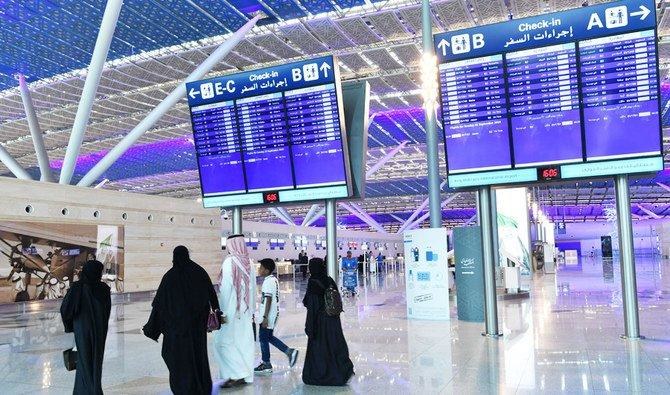
PIF has said it is studying establishing a new company to “support the aviation sector aspiration locally and regionally.” (file/SPA)
Short Url
Updated 24 June 2021
Follow

Saudi Arabia may build new airport in Riyadh amid tourism drive

  • Riyadh airport would be hub for new tourism-focused airline
  • The size and timeline of any new airport have not been decided

RIYADH: Saudi Arabia is considering building an airport in Riyadh, to serve as a base for a new airline the kingdom’s sovereign wealth fund is looking to launch as it targets a vast increase in tourist arrivals, Bloomberg reported citing people familiar with the matter.

The $430 billion fund said earlier this year it plans to invest in aviation to help capture the tourist boom envisioned by Crown Prince Mohammed Bin Salman.

The new airline, reported locally earlier this year, would serve tourists and business travelers, while Saudi national carrier would focus on religious tourism from its base in Jeddah, said the people, asking not to be identified due to the sensitivity of the matter.

The Public Investment Fund (PIF) is exploring the idea of investing billions in a new international airport in Riyadh, the people said. The size of the facility and timeline for its construction haven’t been set and the PIF could decide not to move ahead with those plans, they said.

Declining to comment on the plans for a new airport in Riyadh, a spokesman for the fund referred to earlier commitments to invest in the sector and to study establishing a new company to “support the aviation sector aspirations locally and regionally.”

The project would further Saudi Arabia’s goal to attract 100 million tourists a year by 2030, a sixfold increase from 2019. The project is still in early stages of development.

This project is in line with Crown Prince Mohammed Bin Salman’s strategy to diversify the economy away from a reliance on oil sales, by opening up the country to visitors.


Saudi public investment fund assets rise 36% to$58bn in Q3 

Updated 25 sec ago
Follow

Saudi public investment fund assets rise 36% to$58bn in Q3 

RIYADH: Assets held by public investment funds in Saudi Arabia rose 36 percent from a year earlier to about SR217.9 billion ($58.1 billion) by the end of the third quarter of 2025, driven by strong growth in domestic investments, official data showed. 

Asset values also rose 5.7 percent from the previous quarter, according to data from the Capital Market Authority cited by the Saudi Press Agency. 

Saudi Arabia’s stock exchange has seen strong growth in recent years, attracting increased investor interest in fixed-income instruments amid a global environment of elevated interest rates. 

According to SPA, the number of subscribers to public investment funds reached 1.59 million by the end of the third quarter, representing an annual increase of 1.5 percent. 

The growth in public investment fund assets was driven by a 39 percent year-on-year rise in assets of local funds, which reached SR186.9 billion in the third quarter of 2025 and accounted for 86 percent of total assets. 

Meanwhile, assets of foreign funds rose to SR31.1 billion, reflecting annual growth of 21 percent. 

The number of public investment funds in the Kingdom increased 11.6 percent year on year to 346, up from 310 in the third quarter of 2024. 

Public investment fund assets were distributed across a range of investment types, including equities, bonds, cash instruments, real estate investments, and other assets. 

Local money market funds held the largest share of assets at SR75.6 billion, followed by local equities at SR46.6 billion, real estate investment funds at SR28.9 billion, and funds invested in other local assets at SR19.6 billion. 

To further strengthen the capital market ecosystem, the Kingdom announced earlier this month that it would open its financial markets to all foreign investors. 

The measures introduced by the Capital Market Authority include the removal of restrictions such as the Qualified Foreign Investor framework, which required a minimum of $500 million in assets under management, as well as the abolition of swap agreements.