

Saudi label Hindamme presents ‘Driving Jacket’ at London’s Victoria & Albert Museum

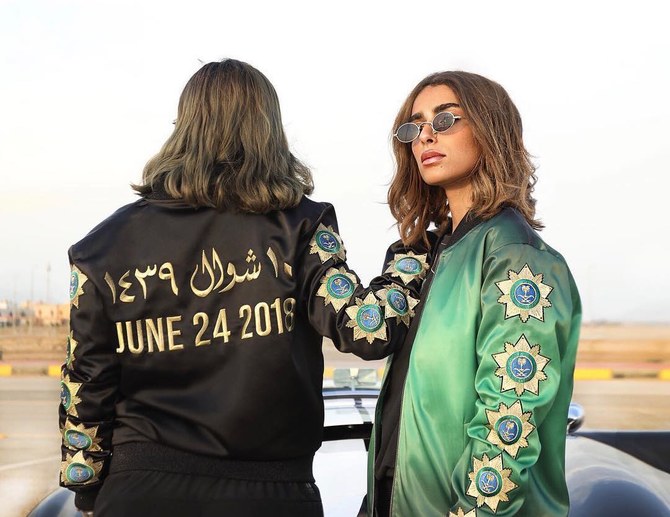
Khoja designed the black and green bomber jackets with the insignia “June 24, 2018, 10 Shawwal 1439.” (Instagram)
Short Url
Updated 21 June 2021
Follow

Saudi label Hindamme presents ‘Driving Jacket’ at London’s Victoria & Albert Museum

DUBAI: Saudi brand Hindamme, founded by designer Mohammed Khoja, is presenting its “Driving Jacket” at London’s Victoria & Albert Museum. 

Khoja designed the black and green bomber jackets with the insignia “June 24, 2018, 10 Shawwal 1439” — the date when women in the Kingdom were allowed to drive.

The unisex design, which was created in 2018, features gold and black embroidery in comes in the colors of Saudi Arabia’s flag. 

The Victoria & Albert museum is exhibiting the green version of the jacket, which has become part of its permanent collection.


A post shared by HINDAMME (@hindamme)


In a previous interview with Arab News, Khoja said: “I was moved by the decision to lift the ban on women driving, because it seemed like something that would never happen. It is a symbolic gesture. The ban has always been held against us as Saudis.”

Khoja said he hoped his jacket would help fashion-conscious Saudis mark the event.

“Every country has historic days when things happen that shift the course of the future — and this is one of those dates. That was the inspiration. I thought, how can I, as a designer, pay tribute to this?

“I call it a driving jacket to commemorate the date.”


A post shared by HINDAMME (@hindamme)

The designer said he was “super-proud” of the direction Saudi society was taking with this “progressive push.”

The exhibition showcases clothing, accessories, design, and cultural memorabilia.

Besides Hindamme’s jacket, the museum is also presenting a pair of shoes by Christian Louboutin, the Mae West Lips sofa designed by Salvador Dali, the 2015 Selfish book of selfies by Kim Kardashian and more. 


BMW Art Cars mark 50 years at inaugural Art Basel Qatar

Updated 09 February 2026
Follow

BMW Art Cars mark 50 years at inaugural Art Basel Qatar

DOHA: BMW’s long-running Art Car initiative took center stage at the inaugural Art Basel Qatar, with Thomas Girst, BMW Group’s head of cultural engagement, reflecting on five decades of collaboration between artists, engineers and the automobile.

Speaking at the fair, Girst situated the Art Car program within BMW’s broader cultural engagement, which he said spanned “over 50 years and hundreds of initiatives,” ranging from museums and orchestras to long-term partnerships with major art platforms.

“Every time Art Basel moves — from Miami to Hong Kong to Qatar — we move along with them,” he said. “That’s why we’re here.”


A post shared by Art Basel (@artbasel)

The occasion also marked the 50th anniversary of the BMW Art Car series, which began in 1975 with Alexander Calder’s painted BMW 3.0 CSL. Since then, the project has grown into a global collection that brings together motorsport, engineering, design and contemporary art. “Those Art Cars speak to a lot of people at the intersection of motorsports, technology, racing engineering, arts, lifestyle and design,” Girst said.

For Girst, the relationship between art and the automobile has deep historical roots. He pointed to early modernist fascination with cars, noting that “since the inception of the automobile,” artists have seen it as both a subject and a symbol of modernity. “There’s a reason for arts and culture and cars to mix and mingle,” he said.

At Art Basel Qatar, visitors were invited to view David Hockney’s BMW Art Car — Art Car No. 14 — displayed nearby. Girst described the work as emblematic of the program’s ethos, highlighting how Hockney painted not just the exterior of the vehicle but also visualized its inner life. The result, he suggested, is a car that reflects both movement and perception, turning the act of driving into an artistic experience.

Central to BMW’s approach, Girst stressed, is the principle of absolute artistic freedom. “Whenever we work with artists, it’s so important that they have absolute creative freedom to do whatever it is they want to do,” he said. That freedom, he added, mirrors the conditions BMW’s own engineers and designers need “to come up with the greatest answers of mobility for today and tomorrow.”

The Art Car World Tour, which accompanies the anniversary celebrations, has already traveled to 40 countries, underscoring the project’s global reach. For Girst, however, the enduring value of the initiative lies less in scale than in its spirit of collaboration. Art, design and technology, he said, offer a way to connect across disciplines and borders.

“That’s what makes us human. We can do better things than just bash our heads in — we can create great things together,” he said.