DUBAI: DP World may offer international investors an opportunity to buy a stake in the Jebel Ali Free Zone, Bloomberg reported.
The Dubai-based port operator is working with consultants to gauge interest in the industrial zone and is studying options including selling a stake in the free zone or some of the assets there, the news wire reported, citing people familiar with the matter who asked not to be identified.
They said that any sale is likely to attract the interest of infrastructure funds and strategic investors and no final decisions have been taken on the structure of a potential deal.
A DP World representative declined to comment.
Jebel Ali Free Zone attracts nearly a quarter of foreign direct investment to Dubai, with more than 8,000 companies having established operations in the commercial zone since its inception in the mid-1980s, according to its website.
State-owned DP World is exploring selling equity stakes in certain assets, reducing its leverage to around 4 times its earnings by 2022, and maintaining its investment grade rating, Bloomberg reported. It had agreed to buy the free zone operator in a deal worth $2.6 billion in 2014.
Dubai turned DP World into a private company in early 2020 to relieve its debt burden and avoid a repeat of the economic crisis that forced its financial bailout in 2009.

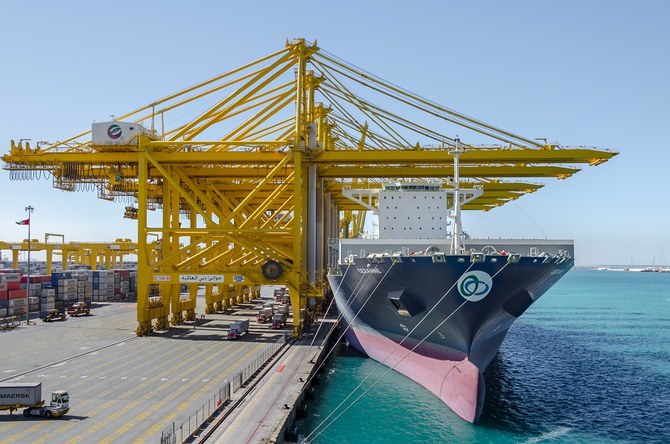
DP World may sell Jebel Ali Free Zone stake
https://arab.news/2nyev
DP World may sell Jebel Ali Free Zone stake
- The Dubai-based port operator is working with consultants to gauge interest in the industrial zone
Saudi POS spending jumps 28% in final week of Jan: SAMA
RIYADH: Saudi Arabia’s point-of-sale spending climbed sharply in the final week of January, rising nearly 28 percent from the previous week as consumer outlays increased across almost all sectors.
POS transactions reached SR16 billion ($4.27 billion) in the week ending Jan. 31, up 27.8 percent week on week, according to the Saudi Central Bank. Transaction volumes rose 16.5 percent to 248.8 million, reflecting stronger retail and service activity.
Spending on jewelry saw the biggest uptick at 55.5 percent to SR613.69 million, followed by laundry services which saw a 44.4 percent increase to SR62.83 million.
Expenditure on personal care rose 29.1 percent, while outlays on books and stationery increased 5.1 percent. Hotel spending climbed 7.4 percent to SR377.1 million.
Further gains were recorded across other categories. Spending in pharmacies and medical supplies rose 33.4 percent to SR259.19 million, while medical services increased 13.7 percent to SR515.44 million.

Food and beverage spending surged 38.6 percent to SR2.6 billion, accounting for the largest share of total POS value. Restaurants and cafes followed with a 20.4 percent increase to SR1.81 billion. Apparel and clothing spending rose 35.4 percent to SR1.33 billion, representing the third-largest share during the week.
The Kingdom’s key urban centers mirrored the national surge. Riyadh, which accounted for the largest share of total POS spending, saw a 22 percent rise to SR5.44 billion from SR4.46 billion the previous week. The number of transactions in the capital reached 78.6 million, up 13.8 percent week on week.
In Jeddah, transaction values increased 23.7 percent to SR2.16 billion, while Dammam reported a 22.2 percent rise to SR783.06 million.

POS data, tracked weekly by SAMA, provides an indicator of consumer spending trends and the ongoing growth of digital payments in Saudi Arabia.
The data also highlights the expanding reach of POS infrastructure, extending beyond major retail hubs to smaller cities and service sectors, supporting broader digital inclusion initiatives.
The growth of digital payment technologies aligns with Saudi Arabia’s Vision 2030 objectives, promoting electronic transactions and contributing to the Kingdom’s broader digital economy.


