DUBAI: Saudi Arabia is doubling down on its landmark Diriyah Gate project to build a leisure and cultural zone in the historic heart of Riyadh.
Jerry Inzerillo, CEO of the authority that runs the landmark project, told Arab News that his budget has been increased from $20 billion to $40 billion, and its scope increased significantly.
“What has happened is that the master plans, (following further) research, have evolved into a broader vision to allow it to be a component (of the strategy to turn) Riyadh into one of the 10 great cities of the world,” he said.
Inzerillo, a veteran of the global tourism business who was appointed to the top job at the Diriyah Gate Development Authority (DGDA) in 2018, revealed the project’s new ambitions in an interview with “Frankly Speaking,” the series of video conversations with leading business and political leaders.
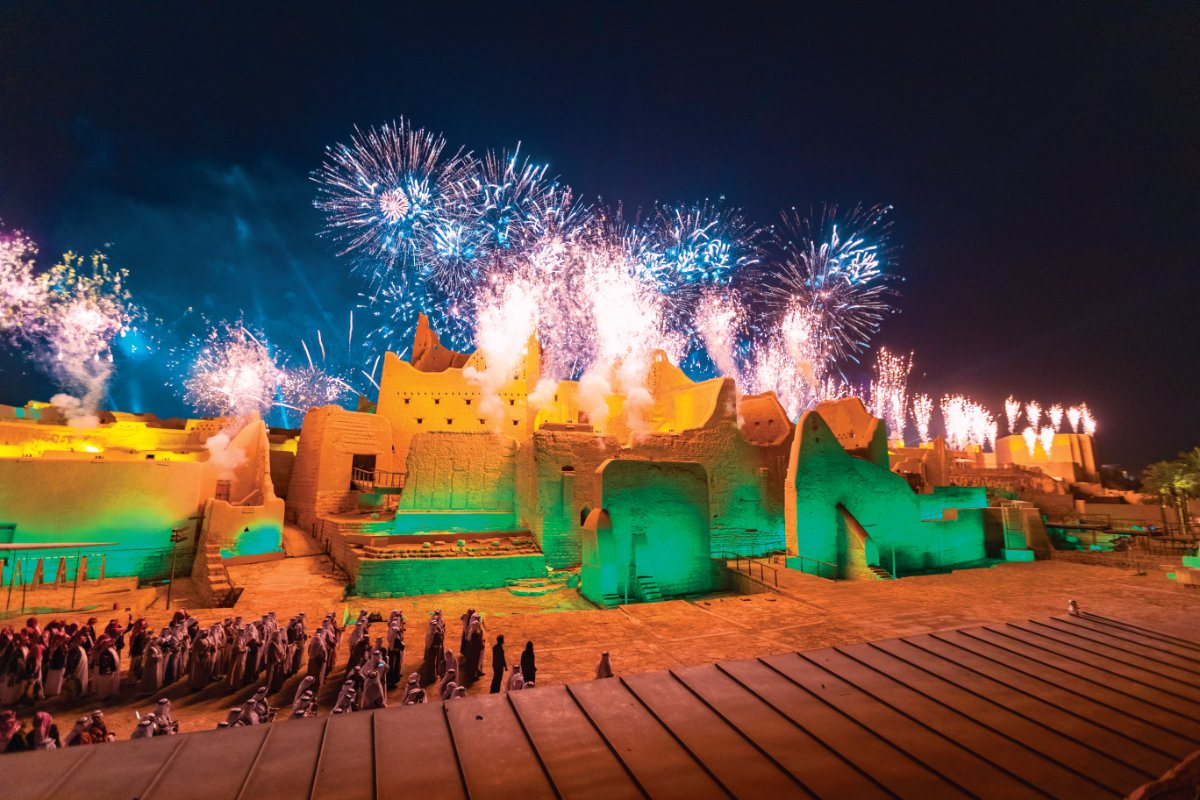
The inaugural celebration of Diriyah Gate. (Supplied)
During the interview, he also spoke of the DGDA’s prime place within the Vision 2030 giga-projects, the effect of the COVID-19 pandemic on the Kingdom’s tourism industry, and its far-reaching plans to rival such global attractions as the pyramids in Egypt and the Colosseum in Rome.
The move to increase the project’s budget and scope was the brainchild of Saudi Crown Prince Mohamed bin Salman, Inzerillo said.
“It’s not just that we were given some more money. It’s a result of a change in vision. He (the crown prince) studies plans meticulously. As the smartest guy in the room, his visual acuity is amazing,” he said.
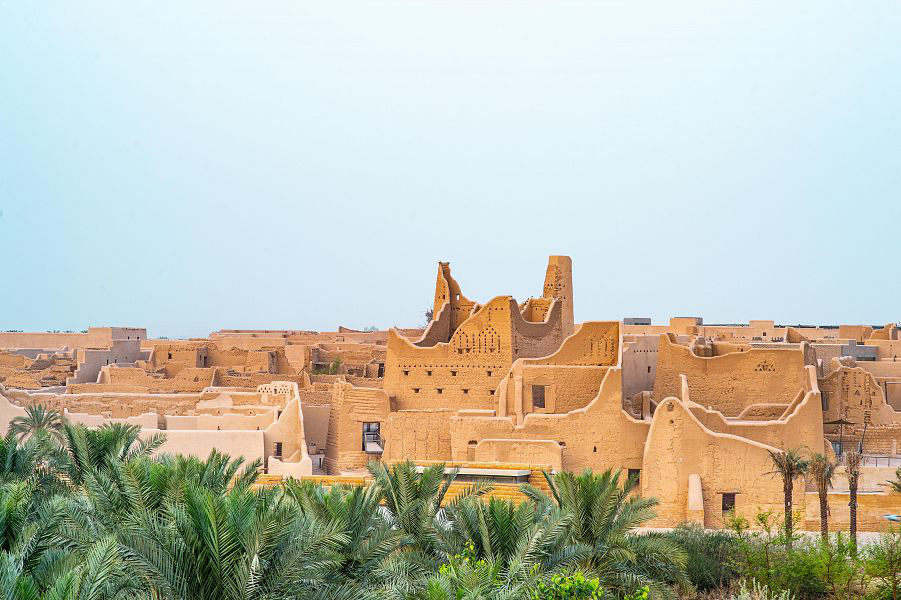
Old structures in Diriyah, the site of the first Saudi Kingdom in the 18th century, have been preserved. (Supplied)
"So, the same way Paris was master-planned and laid out, the same way Berlin was laid out, the same way Manhattan was laid out — this is how the crown prince looks at all the cities and that’s why we’ve grown.”
Diriyah, the site of the first Saudi Kingdom in the 18th century, is regarded as the centerpiece of the Vision 2030 strategy to diversify the economy and provide more leisure and cultural facilities for Saudi citizens, as well as attracting foreign tourists.
“There’s only one Diriyah. We’re the first born, we’re the favorite son. My fellow CEOs can come on the show and say, ‘No, we’re great.’ They’re all great, we love them, but there’s only one Diriyah,” Inzerillo said.
He insisted that Diriyah Gate and the other mega-projects are on time and have not been unduly delayed by the economic effects of the pandemic.
The budgets of the other big leisure projects — such as the Red Sea Development and AlUla — have not been cut back, he said.
“We executed our exact strategy all of 2020; we didn’t cut back. He (the crown prince) was brave,” Inzerillo added. “So now as a result of it, the major giga-projects in the Kingdom are on time and on budget.”
Some of the big projects will “need another budget cycle” to determine the right mix of equity and new investment required, but he is confident that the overall investment will be met by government funds, investment from the Saudi private sector and foreign investment.
Some tourism experts have questioned the overall strategy, which seeks to attract 100 million visits by the end of the decade to a variety of new leisure and cultural attractions, but Inzerillo said the projects are not in competition. “They’re very intelligently crafted to complement each other,” he added.
The reason for the big number of new tourism projects, he said, is that Saudi Arabia is trying to compete with other recognized global travel centers — such as Singapore and European countries — within a short space of time.
Inzerillo conceded that there has been an effect on the number of people visiting Saudi Arabia because of COVID-19 travel restrictions, but he estimated that it has been proportionately less than other big tourist destinations such as France and the US. “We’re coming off a low base,” he said.
In line with the new budget, the DGDA has lifted the estimate for the number of visitors it hopes to attract. It now expects 27 million visits and 100,000 residents by 2030.
Inzerillo said these estimates are achievable, and he took encouragement from the number of people applying for the new tourism visa — 55,000 per week — before the COVID-19 restrictions came into effect.
Diriyah is aimed at both Saudi domestic visitors and foreign tourists, seeking to capitalize on the rich historical legacy of the region.
Inzerillo is convinced that it can take its place among the other great cultural attractions of the world.
“It is to Saudi Arabia what the Acropolis is to the Greeks, what the Colosseum is to Rome, what Machu Picchu is to Peruvians,” he said.
“So when people come to the Gulf, they’re going to want to see where it all started — the home of the House of Saud.”
Inzerillo, who trained in Las Vegas and went on to international projects in South Africa, the UAE and elsewhere, believes that the absence of alcohol in Saudi Arabia will make little difference to its attractiveness to tourists.
When global focus groups were asked about their priorities for tourism in the Kingdom, the non-availability of alcohol in the food and beverage mix was not in the top five concerns, he said.
“People were astonished by the beauty of the Kingdom, and by the warmth of the Saudi people,” he added.
Originally from Brooklyn in New York City, Inzerillo is enthusiastic about the quality of life in Saudi Arabia for him and other Western expatriates, who make up about 20 percent of the DGDA workforce.
“But the No. 1 thing that people like is civility — the fact that you’re treated warmly and kindly, and the great thing about the Kingdom right now as a society — it’s optimistic, it’s positive,” he said.
Inzerillo also gave some insight into the decision-making style of the crown prince, whom he described as a “supercharged CEO.”
Inzerillo said: “He’s very methodical, asking, ‘What’s your process? How did you study this issue? Who did you study it with? Did you study it with the world’s best? What did you learn, and what options are you bringing to me?’
“So when you leave a meeting with an approval, he doesn’t stop. One day, two days, five days later, you’ll get a call from him. ‘If you connect that with that, doesn’t it make Diriyah better?’ ‘Yes sir, we didn’t see that’.”
_________
• Twitter: @frankkanedubai