BRUSSELS: European Union lawmakers on Wednesday endorsed a new travel certificate that will allow people to move between European countries without having to quarantine or undergo extra coronavirus tests, paving the way for the pass to start in time for summer.
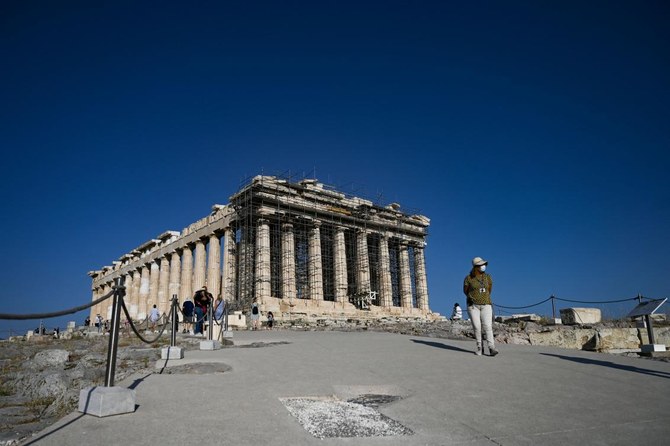
The widely awaited certificate is aimed at saving Europe’s travel industry and prime tourist sites from another disastrous vacation season. Key travel destinations like Greece have led the drive to have the certificate, which will have both paper and digital forms, rapidly introduced. Right now, traveling in the EU’s 27 nations is a trial for tourists and airlines alike. Countries have various COVID-19 traffic-light systems, where those in green are considered safe and those in red to be avoided. But each nation is applying different rules and standards, making travel confusing for all.
The new regulations governing the vaccine certificates were adopted in two votes at the European Parliament in Strasbourg, France. Rules for EU citizens were passed 546 to 93, with 51 abstentions. Those for people from outside the bloc passed 553 to 91, with 46 abstentions.
The vote must still be rubber-stamped by EU nations, but that’s likely a formality.
It means that beginning July 1 for 12 months, all EU countries must recognize the vaccine certificate. They will be issued free and certify that a person has either been fully vaccinated against the virus, has recently tested negative or has recovered from the disease.
The rules will not be heavily enforced for 6 weeks to allow countries to prepare.
The passes will be issued by individual nations, not from a centralized European system. They will contain a QR code with advanced security features. Personal data will not be shared with other countries.
Spanish Socialist lawmaker Juan Fernando Lopez Aguilar, who chaperoned the votes through parliament, said “EU states are encouraged to refrain from imposing further restrictions, unless strictly necessary and proportionate.”
People coming from outside the EU, the overwhelming majority of whom should be vaccinated to enter, will be able to get a certificate if they can convince authorities in the EU country they enter that they qualify for one.

Europe virus pass is endorsed in boost for summer vacations
https://arab.news/pbxnr
Europe virus pass is endorsed in boost for summer vacations
- Several EU countries have already begun using the system, including Bulgaria, Croatia, the Czech Republic, Denmark, Germany, Greece and Poland
Reforms target sustained growth in Saudi real estate sector, says Al-Hogail
RIYADH: The Real Estate Future Forum opened its doors for its first day at the Four Seasons Riyadh, with prominent global and local figures coming together to engage with one of the Kingdom’s most prospering sectors.
With new regulations, laws, and investments underway, 2026 is expected to be a year of momentous progress for the real estate sector in the Kingdom.
The forum opened with a video highlighting the sector’s progress in the Kingdom, during which an emphasis was placed on the forum’s ability to create global reach, representation, as well as agreements worth a cumulative $50 billion
With the Kingdom now opening up real estate ownership to foreigners, this year’s Real Estate Future Forum is placing a great deal of importance on this new milestone and its desired outcomes and impact on the market.
Aside from this year’s forum’s unique discussions surrounding those developments, it will also be the first of its kind to launch the Real Estate Excellence Award and announce its finalist during the three-day summit.
Minister of Municipalities and Housing and Chairman of the Real Estate General Authority Majed Al-Hogail took to stage to address the diverse audience on the real estate market’s achievements thus far and its milestones to come.
Of those important milestones, he underscored “real estate balance” as a key pillar of the sector’s decisions to implement regulatory tools “with the aim of constant growth which can maintain the vitality of this sector.” He pointed to examples of those regulatory measures, such as the White Land Tax.
On 2025’s progress, the minister highlighted the jump in Saudi family home ownership, which went from 47 percent in 2016 to 66 percent in 2025, keeping the Kingdom’s Vision 2030 goal of 70 percent by the end of the decade on track.
He said the opening of the real estate market to foreigners is an indicator of the sector’s maturity under the leadership of Crown Prince Mohammed bin Salman. He said his ministry plans to build over 300,000 housing units in Riyadh over the next three years.
Speaking to Arab News, Al-Hogail elaborated on these achievements, stating: “Today, demand, especially local demand, has grown significantly. The mortgage market has reached record levels, exceeding SR900 billion ($240 billion) in mortgage financing, we are now seeing SRC (Saudi Real Estate Refinance Co.) injecting both local and foreign liquidity on a large scale, reaching more than SR54 billion”
Al-Hogail described Makkah and Madinah as unique and special points in the Kingdom’s real estate market as he spoke of the sector’s attractiveness.
“Today, the Kingdom of Saudi Arabia has become, in international investment indices, one that takes a good share of the Middle East, and based on this, many real estate investment portfolios have begun to come in,” he said.
Al-Ahsa Gov. Prince Saud bin Talal bin Badr Al-Saud told Arab News the Kingdom’s ability to balance both heritage sites with real estate is one of its strengths.
He said: “Actually the real estate market supports the whole infrastructure … the whole ecosystem goes back together in the foundation of the real estate; if we have the right infrastructure we can leverage more on tourism plus we can leverage more on the quality of life … we’re looking at 2030, this is the vision … to have the right infrastructure the time for more investors to come in real estate, entertainment, plus tourism and culture.”


