

Red Sea Development Co. inaugurates first 100% renewable bottled water plant in Saudi Arabia

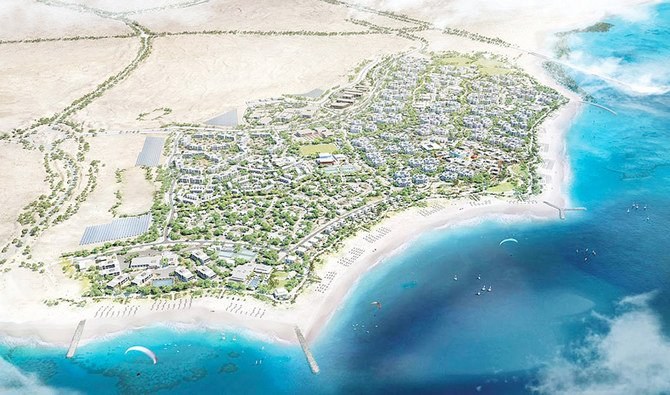
This photo shows the desalination plant in the kingdom of Saudi Arabia. (SPA)
Short Url
Updated 31 May 2021
Follow

Red Sea Development Co. inaugurates first 100% renewable bottled water plant in Saudi Arabia

  • The desalination technology is wholly sourced from Saudi companies, and conforms to local and international water quality standards

JEDDAH: The Red Sea Development Co. (TRSDC) inaugurated the first desalination plant using solar and wind energy in the Kingdom as part of efforts to preserve the environment by limiting carbon emissions.
Ahmed Ghazi Darwish, chief of staff at TRSDC, said that the project was launched in collaboration with Source Global, PBC, which specializes in renewable drinking water.
He added that the solar-powered desalination plant will be the largest of its kind in the world, with a production capacity of 2 million 330 milliliter water bottles per year. The production of 300,000 bottles annually will begin in the coming years.
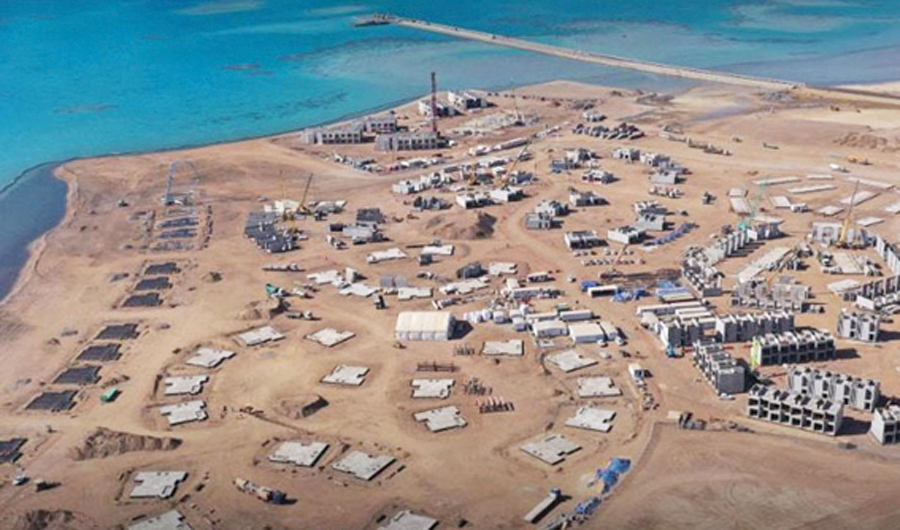
As part of the sustainable model, reusable bottles will be used to help achieve carbon neutrality.
During the first phase of the plant’s construction, experts selected an ideal plot of land, and 100 hydrogen panels were placed after a virtual survey was conducted by specialists according to the plant’s specifications and requirements.

FASTFACT

The solar-powered desalination plant will be the largest of its kind in the world, with a production capacity of 2 million 330 milliliter water bottles per year. The production of 300,000 bottles annually will begin in the coming years.

In addition, a total of 1,200 hydrogen panels will be added during the second and third phases, and the plant will be provided with necessary components and reusable bottles by companies operating in the Kingdom.
Darwish said that the desalination technology used by TRSDC will fully depend on solar energy to raise condensation levels in the hydrogen panels in order to produce high-quality fresh water.
He added that the performance of the panels will be monitored through a smart application that will show the volume of water produced, the environmental impact of the panels and maintenance alerts.
The desalination technology is wholly sourced from Saudi companies, and conforms to local and international water quality standards, including those of the GCC Standardization Organization, World Health Organization, Saudi Food and Drug Authority, and Saudi Ministry of Environment, Water and Agriculture.


UN chief visits KSrelief HQ in Riyadh

Updated 6 sec ago
Follow

UN chief visits KSrelief HQ in Riyadh

  • Guterres met Dr. Abdullah bin Abdulaziz Al-Rabeeah, Advisor at the Royal Court and Supervisor General of KSrelief, along with senior officials

RIYADH: UN Secretary-General António Guterres visited the King Salman Humanitarian Aid and Relief Center (KSrelief) in Riyadh on Tuesday, where he held talks on strengthening cooperation between the UN and the Kingdom’s leading humanitarian institution.

Guterres met Dr. Abdullah bin Abdulaziz Al-Rabeeah, Advisor at the Royal Court and Supervisor General of KSrelief, along with senior officials, the Saudi Press Agency reported.

Saudi Arabia’s permanent representative to the UN in New York, Abdulaziz bin Mohammed Al-Wasil, was also present.

During the meeting, the two sides discussed humanitarian and relief priorities, as well as ways to expand collaboration between KSrelief and various UN agencies, SPA added.

Officials also presented an overview of the center’s expanding global portfolio, which has now reached 3,881 projects across 109 countries, worth more than $8 billion.

Projects highlighted included the artificial limbs programme, the Masam demining initiative in Yemen, the Kafak scheme to reintegrate Yemeni children formerly associated with armed conflict, KSrelief’s voluntary medical missions, and its conjoined twins programme.

The center’s work in digital relief platforms, international documentation and registration, and other humanitarian initiatives was also showcased.

Guterres later toured KSrelief’s permanent exhibition, featuring an interactive map of beneficiary countries, multimedia human-interest stories, volunteer program displays, and a “messages of hope” corner, where he also used virtual-reality headsets offering immersive depictions of refugee and displaced-person experiences.

The UN chief met Saudi medical volunteers involved in KSrelief missions abroad, hearing their accounts of delivering assistance on the ground.

He then visited offices of partner organizations and international bodies housed within the center, receiving briefings on their joint programmes with KSrelief.