

Halt new hydrocarbon investment now, says IEA

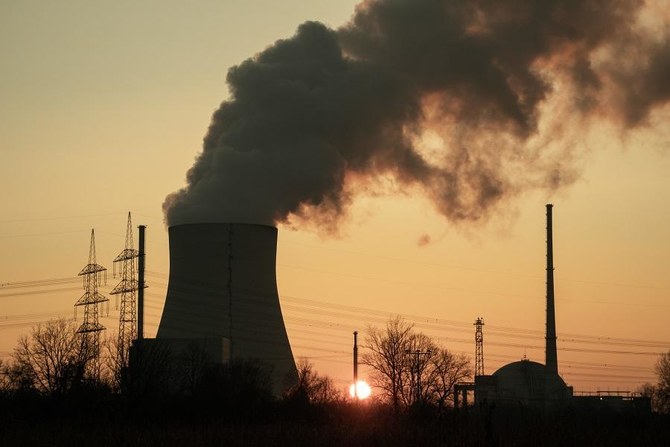
Built using its industry network and energy modelling tools, the IEA’s roadmap lays out more than 400 milestones on the path to net-zero by mid-century. (File/Shutterstock)
Short Url
Updated 19 May 2021
Follow

Halt new hydrocarbon investment now, says IEA

  • Radical move by the International Energy Agency to tackle mankind’s ‘greatest challenge’

DUBAI: The International Energy Agency (IEA) on Tuesday called for an immediate halt on new investment in fossil fuels — oil, gas and coal — as part of a strategy to get to net zero greenhouse gas emissions by 2050.

The IEA made the radical proposal as part of a “roadmap for the global energy sector” which also demanded an end to sales of petrol engine cars by 2035, as well as an instant halt to “dirty” coal projects.

The IEA’s rejection of fossil fuel investment coincided with the price of global benchmark Brent crude moving above the $70 per barrel level, which it has only reached once since the onset of the COVID-19 pandemic.

“Our pathway requires the immediate and massive deployment of all available clean and efficient energy technologies,” the IEA said. It calculated that $5 trillion of investment was needed in energy to get it to net zero levels, most of it in renewables like wind and solar.

Total global spend on energy is currently around $2 trillion, with the bulk spent on hydrocarbon investment, the IEA estimated.

“We find that the world has a viable pathway to building a global energy sector with net zero greenhouse gas emissions in 2050, but it is narrow and requires immediate action across all countries to begin an unprecedented transformation of how energy is produced, transported and used worldwide.

“In our pathway, no investment in new fossil fuel supply projects is needed, nor is (there) further investment for new unabated coal plants, and sales of new internal combustion engine passenger cars are halted by 2035,” it added.

HIGHLIGHTS

• The IEA made the radical proposal as part of a ‘roadmap for the global energy sector’ which also demanded an end to sales of petrol engine cars by 2035, as well as an instant halt to ‘dirty’ coal projects.

• The IEA’s rejection of fossil fuel investment coincided with the price of global benchmark Brent crude moving above the $70 per barrel level, which it has only reached once since the onset of the COVID-19 pandemic.

IEA executive director Fatih Birol said it was still possible to reach the climate goals of the Paris Agreement. “Our roadmap shows the priority actions that are needed today to ensure the opportunity of net zero emissions by 2050 — narrow but still achievable — is not lost. “The scale and speed of the efforts demanded by this critical and formidable goal — our best chance of tackling climate change and limiting global warming to 1.5°C — make this perhaps the greatest challenge humankind has ever faced.”

The IEA, which was founded in the 1970s in the face of global oil spikes, has long been regarded as a defender of oil consumers. The new stance surprised some oil industry experts in the region. 

“They’ve been hijacked by the Europeans,” said one Saudi Arabia-based energy adviser who did not want to be named, pointing to the European-led movement to divest funds from fossil fuels.

Other investment experts said it was a recognition of a new guiding principle in global energy finance.

Tarek Fadlallah, managing director of Nomura Asset Management in the Middle East, said: “The IEA has taken the increasingly populist outlook that diminishes the outlook for oil.”

Saudi Arabia recently joined other big oil-producing countries to study the prospects for net zero in a forum that includes the US and Norway.

Birol said that he saw a “growing gap” between rhetoric about the need to tackle climate change and the facts of increasing global greenhouse gas emissions.


PIF-backed AviLease achieves revenue of $664m and 19% growth in 2025

Updated 27 February 2026
Follow

PIF-backed AviLease achieves revenue of $664m and 19% growth in 2025

RIYADH: Saudi Arabia’s Public Investment Fund-backed AviLease achieved exceptional performance and sustainable business growth during 2025, supported by the strategic expansion of its global platform.

According to its financial results for 2025, AviLease recorded total revenues of $664 million, an annual increase of 19 percent, driven by disciplined growth in its asset portfolio and strong performance in aircraft remarketing amid sustained global demand for modern, fuel-efficient aircraft, the Saudi Press Agency reported.

Profit before tax doubled compared to the previous year, reaching $122 million. The year witnessed an expansion in AviLease’s portfolio, reaching 202 owned and managed aircraft, leased to over 50 airline companies in more than 30 countries. 

The total value of the company’s assets stabilized at $9.3 billion. AviLease maintained a 100 percent fleet utilization rate, reflecting the resilience of its business model, the efficiency of its asset management, and the strength of its strategic relationships with airlines around the world.

AviLease concluded purchase agreements for aircraft from Airbus, including the A320neo family and A350F, and Boeing 737 aircraft, aiming to enhance its future asset portfolio with modern, fuel-efficient aircraft. This step will contribute to supporting future growth and meeting increasing customer demand for the latest aircraft, aligning with the Kingdom’s ambitions to become a leading global aviation hub.

AviLease strengthened its prestigious credit standing by obtaining a strong Baa2 credit ratings from Moody’s and BBB from Fitch, reflecting its financial solidity, managerial discipline, and efficiency in managing leverage. The company also successfully issued senior unsecured bonds worth $850 million last November under Regulation 144A/RegS. This issuance contributed to diversifying its funding sources and enhancing its financial flexibility.

Commenting on the results, AviLease CEO Edward O’Byrne said: “This exceptional performance reflects the quality of the company’s investment portfolio, the strength of its partnerships with airlines, and its strategic focus on responsibly deploying capital into highly sought-after, efficient, modern aircraft assets.”

He added: “As aviation markets continue to grow, AviLease is strategically positioned to continue its expansion plans and deliver sustainable long-term value for shareholders, contributing to the Kingdom’s ambitions.”

Throughout 2025, AviLease continued to play a pivotal role in the Kingdom’s growing aviation sector and contributed directly to the launch and scaling of the new national carrier, Riyadh Air, by completing a sale and leaseback transaction for a Boeing 787-9 aircraft, which thereby became the first aircraft to join the airline’s fleet.

AviLease also established a strategic partnership with Hassana Investment Co. This partnership aims to provide an opportunity for local and international investors to enter the aircraft financing asset class and benefit from AviLease’s technical expertise and operational capabilities to support partnership growth and enhance performance. 

Hassana Investment Co. has agreed to acquire an initial portfolio of 10 modern aircraft from AviLease.