

Saudi tourism chief eyes Q4 turning point as international flights resume

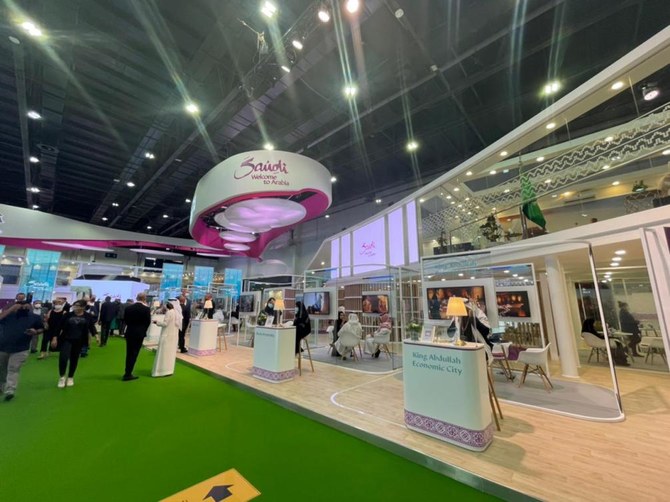
Saudi Arabia has a big presence at the Arabian Travel Market in Dubai this week. (AN)
Short Url
Updated 18 May 2021
Follow

Saudi tourism chief eyes Q4 turning point as international flights resume

  • Kingdom has opened international tourism offices in major countries, including China and Russia

DUBAI: The fourth quarter of this year could be a turning point for Saudi Arabia’s tourism industry as the countries that the Kingdom is targeting reach a 70 percent vaccination rate.

Saudi Tourism Authority (STA) CEO Fahd Hamidaddin made the prediction at the Arabian Travel Market (ATM) in Dubai, as the Kingdom reopened its borders to certain group of people on Monday.

Although foreign tourists are still not allowed to travel to Saudi Arabia, Hamidaddin said on Monday that it was preparing to reopen its borders for inbound travel and an announcement would be made “very soon.”

Saudi Arabia has opened international tourism offices in major countries including China and Russia, and is targeting 28 markets in a global marketing push.

Hamidaddin said international tourism in the country could only boom when other countries also restarted their travel industries — and that this could only be fully considered after they had reached a vaccination rate of 70 percent.

He said that such a vaccination milestone may be reached in the last quarter of the year. Speaking at an ATM panel focused on Saudi Arabia, participants highlighted the strong performance of domestic tourism in the Kingdom. “Domestic tourism was our huge success,” Hamidaddin told the conference.

Capt. Ibrahim AlKoshy, CEO of Saudia, the Kingdom’s state-owned flag carrier, who attended the event through a video link from Riyadh, said local demand was even exceeding airline capacity at times. He said travelers were particularly interested in leisure tourism, more than business and other essential travel. The aviation chief also told Reuters on Monday the airline expects to turn a profit by 2024.

HIGHLIGHT

Riyadh aims to raise the contribution of its tourism sector to its GDP from 3 percent to 10 percent, in a bid to modernize its economy and veer away from oil dependence.

Saudi Arabia opened up to international tourism in September 2019 and has since announced a number of megaprojects to attract visitors, including a $530 million fund to develop key destinations across the Kingdom. Riyadh aims to raise the contribution of its tourism sector to its GDP from 3 percent to 10 percent, in a bid to modernize its economy and veer away from oil dependence.

Market research firm Euromonitor International estimated in March that inbound tourism spending in Saudi Arabia would reach $25.3 billion by 2025, recovering from the impact of the coronavirus disease pandemic.

Saudi domestic tourism exceeded expectations during the pandemic, despite the UN World Tourism Organization (UNWTO) describing 2020 as “the worst year on record in the history of tourism.”

Figures from the UNWTO in December revealed that destinations welcomed 900 million fewer international tourists between January and October, compared with the same period in 2019 — a 72 percent year-on-year slump.

Despite the dire international picture, the Saudi Ministry of Tourism announced in September that domestic tourism saw a significant rise in traveler numbers, surpassing official projections.

During the 2021 Budget Forum in December, Saudi Arabia’s Minister of Tourism Ahmed Al-Khateeb said the Kingdom is aiming to attract new tourism investments worth SR220 billion ($58 billion) by 2023, and more than SR500 billion by the end of the decade. In 2019, Saudi travelers spent $22 billion traveling overseas. One of the ways the ministry is aiming to boost the Kingdom’s tourism revenues is to encourage Saudis to spend some of their tourism cash at home.

“We have reduced the leakage,” Al-Khateeb told Arab News in December. “In 2019, we launched 11 ‘seasons’ in Saudi Arabia and reduced travel outside by 30 percent. If we continue to do this, we will definitely reduce the leakage — Saudis will like to stay at home and they will enjoy the offering.”


RLC Global Forum highlights role of Saudi youth in retail digital shift 

Updated 04 February 2026
Follow

RLC Global Forum highlights role of Saudi youth in retail digital shift 

RIYADH: Saudi Arabia’s young and highly digital population is reshaping how the Kingdom’s retail sector adopts new technologies and artificial intelligence, advancing faster than many global competitors, industry leaders told Arab News. 

Speaking on the sidelines of the RLC Global Forum in Riyadh, executives told Arab News that the intersection of a youthful population and strong investment in AI is driving a shift in the industry’s priorities. 

From understanding consumer behavior to leveraging the Kingdom’s growing status as a global AI leader, Saudi Arabia is becoming as a unique destination for the retail sector to thrive, learn, and evolve in the digital sphere. 

Abdullah Al-Tamimi, CEO of commercial real estate company Hamat Holding, told Arab News that the firm is keen to analyze and understand consumer behavior, with a particular focus on the younger generation as a key part of that insight. 

“Actually, it’s a big part of our day-to-day operation,” he said, adding that the company invests heavily in understanding customer needs and behavior and works to correct any missteps. 

Al-Tamimi emphasized paying close attention to small details, noting that younger consumers are especially sensitive to the overall experience and “deserve that we work around the clock in order to improve it.” 

He added that this focus “can be a competitive advantage for Saudi Arabia as well.” 

Al-Tamimi said that as the younger generation grows accustomed to new technology shaping retail customer experiences, Hamat Holding is leveraging AI to enhance them further. 

“We started a couple of initiatives improving digitalization,” he said, adding that the company sees digital tools as a way to enhance its work by automating day-to-day operations and allowing teams to focus on bigger-picture and more complex tasks. 

While the firm has expanded its use of technology, he stressed it has not replaced human workers, emphasizing the continued importance of human capital for creativity and interaction. “AI is a big part of our strategy,” Al-Tamimi added. 

Amit Keswani Manghnani, chief omnichannel and AI officer at luxury goods retailer and distributor Chalhoub Group, told Arab News that bridging a younger customer base with continuous digital development is key to advancing the Kingdom’s retail strategies. 

On Saudi Arabia’s demographics, he said: “We look at 2030 as really building products which serve especially the younger population, which is growing and very digitally savvy.” 

Manghnani underscored the unique characteristics of the Kingdom’s retail market as a tool for developing effective products and customer experiences. 

“So it’s very digitally savvy, much more than in other markets,” he said, noting that e-commerce penetration is rising not only through online purchases but also via digital catalogs that drive in-store visits. 

Manghnani said investment is focused on making products more digitally accessible and easier to use, while strengthening customer service to meet the expectations of what he described as a demanding but welcome consumer base. “Service excellence, digital — all these things together are how we are tapping into the younger population, which again is extremely savvy.” 

Manghnani reinforced Al-Tamimi’s point that the Kingdom holds a competitive advantage, citing the speed at which its retail and technology industries are aligning. 

“As a market, we’re tending to see the adoption of digital,” he said, referring to AI, data and other forms of digital interaction, adding that these tools are increasingly being combined. 

He noted that this market is moving “much quicker than the other markets.” 

The two-day RLC Global Forum brought together more than 2,000 global leaders, policymakers, and innovators from over 40 countries over the two-day event to define the next chapter of growth across retail, consumer, and lifestyle industries.