
DUBAI: The fourth quarter of this year could be a turning point for Saudi Arabia’s tourism industry as the countries that the Kingdom is targeting reach a 70 percent vaccination rate.
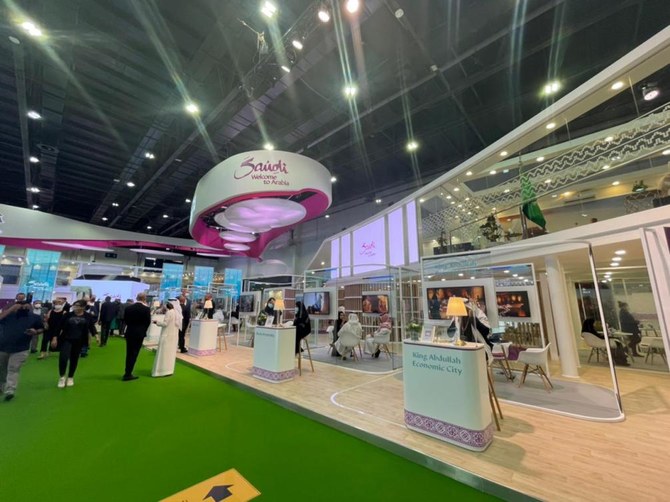
Saudi Tourism Authority (STA) CEO Fahd Hamidaddin made the prediction at the Arabian Travel Market (ATM) in Dubai, as the Kingdom reopened its borders to certain group of people on Monday.
Although foreign tourists are still not allowed to travel to Saudi Arabia, Hamidaddin said on Monday that it was preparing to reopen its borders for inbound travel and an announcement would be made “very soon.”
Saudi Arabia has opened international tourism offices in major countries including China and Russia, and is targeting 28 markets in a global marketing push.
Hamidaddin said international tourism in the country could only boom when other countries also restarted their travel industries — and that this could only be fully considered after they had reached a vaccination rate of 70 percent.
He said that such a vaccination milestone may be reached in the last quarter of the year. Speaking at an ATM panel focused on Saudi Arabia, participants highlighted the strong performance of domestic tourism in the Kingdom. “Domestic tourism was our huge success,” Hamidaddin told the conference.
Capt. Ibrahim AlKoshy, CEO of Saudia, the Kingdom’s state-owned flag carrier, who attended the event through a video link from Riyadh, said local demand was even exceeding airline capacity at times. He said travelers were particularly interested in leisure tourism, more than business and other essential travel. The aviation chief also told Reuters on Monday the airline expects to turn a profit by 2024.
HIGHLIGHT
Riyadh aims to raise the contribution of its tourism sector to its GDP from 3 percent to 10 percent, in a bid to modernize its economy and veer away from oil dependence.
Saudi Arabia opened up to international tourism in September 2019 and has since announced a number of megaprojects to attract visitors, including a $530 million fund to develop key destinations across the Kingdom. Riyadh aims to raise the contribution of its tourism sector to its GDP from 3 percent to 10 percent, in a bid to modernize its economy and veer away from oil dependence.
Market research firm Euromonitor International estimated in March that inbound tourism spending in Saudi Arabia would reach $25.3 billion by 2025, recovering from the impact of the coronavirus disease pandemic.
Saudi domestic tourism exceeded expectations during the pandemic, despite the UN World Tourism Organization (UNWTO) describing 2020 as “the worst year on record in the history of tourism.”
Figures from the UNWTO in December revealed that destinations welcomed 900 million fewer international tourists between January and October, compared with the same period in 2019 — a 72 percent year-on-year slump.
Despite the dire international picture, the Saudi Ministry of Tourism announced in September that domestic tourism saw a significant rise in traveler numbers, surpassing official projections.
During the 2021 Budget Forum in December, Saudi Arabia’s Minister of Tourism Ahmed Al-Khateeb said the Kingdom is aiming to attract new tourism investments worth SR220 billion ($58 billion) by 2023, and more than SR500 billion by the end of the decade. In 2019, Saudi travelers spent $22 billion traveling overseas. One of the ways the ministry is aiming to boost the Kingdom’s tourism revenues is to encourage Saudis to spend some of their tourism cash at home.
“We have reduced the leakage,” Al-Khateeb told Arab News in December. “In 2019, we launched 11 ‘seasons’ in Saudi Arabia and reduced travel outside by 30 percent. If we continue to do this, we will definitely reduce the leakage — Saudis will like to stay at home and they will enjoy the offering.”