Saudi crown prince allocates 20 million square meters for housing units north of Riyadh

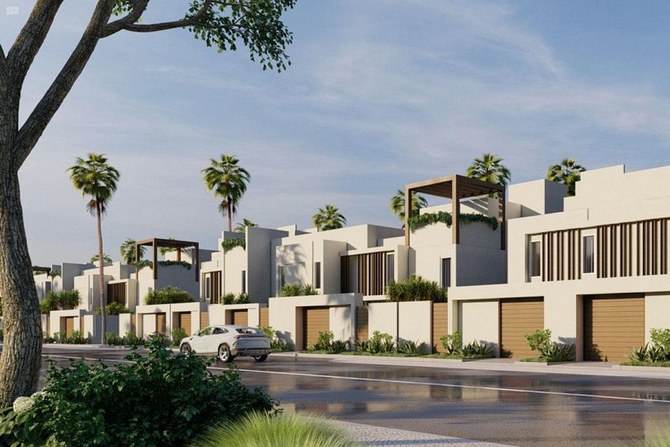
The allocation aims to increase the residential area of ​​Al-Jawan suburb (pictured) from 10 million square meters to 30 million square meters. (File/SPA)
Short Url
Updated 10 May 2021
Follow

Saudi crown prince allocates 20 million square meters for housing units north of Riyadh

  • The additional lands will provide more than 53,000 various housing units
  • Riyadh aims to become one of the 10 largest economic cities in the world

RIYADH: Saudi Arabia’s Crown Prince Mohammed bin Salman has directed the allocation of 20 million square meters for new residential land north of Riyadh.
The ownership will be transferred to the Ministry of Municipal, Rural Affairs and Housing, and is part of a drive to improve the housing sector and hep families, Saudi Press Agency reported.
The allocation aims to increase the residential area of ​​Al-Jawan suburb from 10 million square meters to 30 million square meters, and build up to 53,000 housing units through integrated projects, facilities and services in partnership with the private sector. This is on top of the 20,000 housing units that have already been announced.
Support for the housing sector has led to Saudi home ownership increasing from 47 percent to 60 percent in the last four years.
The Kingdom hope that figure will reach 70 percent under the Vision 2030 reform programs.
“The additional lands allocated to the housing sector north of Riyadh will provide more than 53,000 various housing units that real estate developers will work on, taking into account the quality of services that meet the aspirations of citizens,” the statement said.
The move is also in line with the city’s growth with the aim of becoming one of the 10 largest economic cities in the world and an increase in population from 15 to 20 million by 2030.
Minister of Municipal and Rural Affairs and Housing Majed Al-Hogail said the housing sector contributes more than SR115 billion ($30.6 million) to GDP and provides about 40,000 direct and indirect jobs.
Riyadh’s housing sector has witnessed rapid growth over the past two years.


Saudi authority sets new standards for beach operators on the Red Sea

Updated 19 January 2026
Follow

Saudi authority sets new standards for beach operators on the Red Sea

JEDDAH: The Saudi Red Sea Authority has announced a new regulatory framework for beach operations, redefining beaches as managed operating sites rather than informal recreational spaces, the Saudi Press Agency reported.

The framework introduces standardized requirements for beach operators, focusing on licensing, safety, risk management and service quality across coastal tourism activities.

Under the regulations, beach operations will be permitted only through licensed entities, with license issued for two-year periods. 

Renewal applications must be submitted at least 30 days before expiration. The authority said the system is intended to bring consistency to beach management and provide operators with clearer operational timelines.

The framework applies along more than 1,800 km of Red Sea coastline and establishes a unified national approach to regulating beach activities. The authority said no beach operation will be allowed without an official license. 

The initiative supports the authority’s broader objectives to develop a coastal tourism sector that contributes SR85 billion ($22.66 billion) to GDP by 2030, creates approximately 210,000 jobs, and attracts 19 million visitors, the SPA noted. 

To ensure a smooth transition, the regulations will come into effect one month after their announcement, while existing operators will be granted a one-year grace period to comply. 

Safety forms a central pillar of the new framework. Licensing conditions include environmental permits, insurance coverage, approved safety plans, defined activity zones, and assessments of beach capacity.

Operators will also be required to provide licensed lifeguards, safety equipment, and systems for incident reporting and analysis.

The requirements extend to infrastructure and operation standards, including compliance with the Saudi Building Code to ensure accessibility for people with disabilities and structural safety.

Operators are also encouraged to align with international benchmarks such as Blue Flag standards and the ISO 13009:2024 for beach management, the SPA added.

The authority said this framework is designed to reduce operational risks, improve oversight and support the sustainable development of coastal tourism.

Unified requirements reduce operational risks, minimize inconsistencies, and improve the sector’s ability to attract financing and scale sustainably.