LONDON: More than 150 former UN officials and human rights experts have demanded that the UN conduct an inquiry into the 1988 massacre of political prisoners in Iran.
The UN High Commissioner for Human Rights Michelle Bachelet received the letter, which said the extrajudicial killings “may amount to crimes against humanity.”
The killings, which lasted for over five months, remain under-examined, with many relatives of those disappeared during the massacre still demanding information on their deaths.
In 1988, Iran’s then-Supreme Leader Ruhollah Khomeini ordered executions of all political prisoners linked to the People’s Mojahedin (MEK). In a second wave soon after, other opponents of the regime were killed.
Signatories to the open letter include former UN High Commissioner and Irish President Mary Robinson, 28 former UN special rapporteurs on human rights, and the chairs of previous UN Commissions of Inquiry into human rights abuses in Eritrea and North Korea.
Other signatures include the former chief prosecutor of the UN International Criminal Tribunals for the former Yugoslavia and Rwanda, a former special prosecutor at the Special Tribunal for Lebanon, and the first president of the UN Special Court for Sierra Leone.
Former Archbishop of Canterbury Rowan Williams, former Canadian Prime Minister Kim Campbell, and 1996 Nobel Peace Prize winner Jose Ramos-Horta have also signed the letter, which says the families of the victims are the “subject of persistent threats, harassment, intimidation and attacks because of their attempts to seek information on the fate and whereabouts of the individuals and their demands for justice.”
READ MORE
Iran faces a UN investigation into massacres of imprisoned dissidents that the regime in Tehran has tried to cover up for more than 30 years. Find out more.
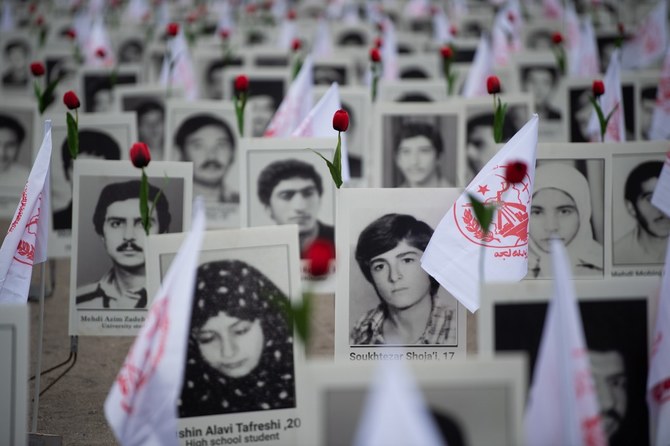
Justice for the Victims of the 1988 Massacre in Iran (JVMI) also signed, along with 23 other major international NGOs.
“Iran’s judiciary is led by perpetrators of the 1988 massacre. While we always knew there was a culture of impunity in the Iranian government and judiciary, this reality was put on stark display with the cold-blooded murder of some 1,500 Iranians by the authorities in the course of the 2019 anti-government protests,” Tahar Boumedra, a former UN human rights official in Iraq and member of the JVMI’s board of advisors, told Arab News.
“Given the potential for another uprising by Iranian society, we strongly fear the risk of another crackdown,” he said.
“The 1988 massacre is an ongoing crime against humanity. The families of the victims continue to receive heavy sentences simply for asking the authorities where their loved ones have been buried,” he added.
“Seven UN special rapporteurs called on the Iranian authorities to account for the massacre last September. Given the Iranian authorities’ refusal to respond, it’s time the UN conducts its own investigation into these mass executions.”