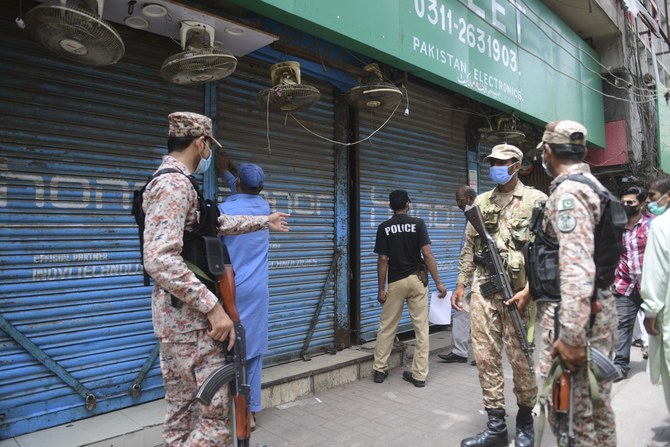
KARACHI: Authorities in Pakistan’s southern Sindh province on Monday warned that more restrictions could be put in place as members of the public and businesses flouted coronavirus standard operating procedures (SOPs) and positivity rates climbed in a number of cities, including to as high as 22 percent in parts of Karachi.
Sindh reported 895 new infections in the last 24 hours, with 11 deaths, the chief minister said. Pakistan is currently battling a third wave of the coronavirus, and in the last 24 hours recorded 4,213 new infections and 79 deaths.
“The situation of coronavirus is getting dangerous with each passing day and to tackle the dangerous situation, the government had taken some strict decisions in the people’s best interest and at the same time people were given some concessions to live their normal life with SOPs,” government spokesman Murtaza Wahab said in a video message posted on Twitter. “But it has been noticed that these SOPs are being violated.”
He said offices, restaurants and markets had been allowed to remain open subject to following health guidelines, but they continued to violate rules: “If you keep violating the SOPs, the government will be forced to impose harsher restrictions.”
A statement released by the Sindh chief minister’s office said the province’s second largest city, Hyderabad, which earlier had a coronavirus positivity rate of less than five percent, was now recording a ratio of 19 percent, whereas the detection rate in parts of Karachi had climbed to 22 percent.
In light of this, the statement said, the chief minister had directed the administration to take strict measures to implement SOPs announced by the government.
“The district administration and the police must take coercive action against business units defying government orders in respect of working hours and enforcement of SOPs,” the chief minister said at a meeting on Monday, directing the commissioner of Karachi “to launch an awareness campaign.”


![]()

Pakistan’s Sindh province warns of ‘harsher’ COVID restrictions over violations, case surge
Short Url
https://arab.news/4thte
Pakistan’s Sindh province warns of ‘harsher’ COVID restrictions over violations, case surge
- Sindh spokesperson says restaurants, offices, grocery, and medical stores continuing to violate standard operating procedures
- Positivity rates climb in a number of Sindh cities, including to as high as 19 percent in Hyderabad and 22 percent in parts of Karachi
Latest updates


Recommended


© 2026 SAUDI RESEARCH & PUBLISHING COMPANY, All Rights Reserved And subject to Terms of Use Agreement.