

Budding creative talent captures joy, despair of Lebanon in viral snaps of her grandmother

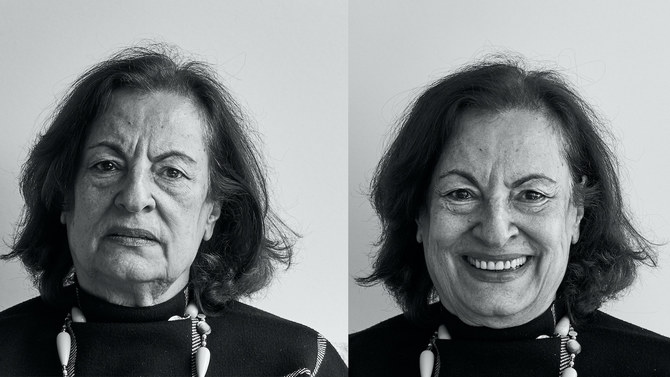
The project in question featured two side-by-side, black-and-white portraits of their 73-year-old grandmother with two contrasting expressions on her face. (Supplied)
Short Url
Updated 30 April 2021
Follow

Budding creative talent captures joy, despair of Lebanon in viral snaps of her grandmother

DUBAI: They say a picture speaks a thousand words and since time immemorial, one of the best ways to express emotion is by way of a thought-provoking portrait. Just ask Lea Kabbani, the 20-year-old budding photographer from Lebanon, who recently went viral on social media after her older cousin Lama Ramadan shared her university project on Twitter.  

The project in question featured two side-by-side, black-and-white portraits of their 73-year-old grandmother with two contrasting expressions on her face. The concept, explained Kabbani to Arab News, is that she was capturing her grandmother’s genuine reactions to both happy and upsetting conversations about Lebanon. 
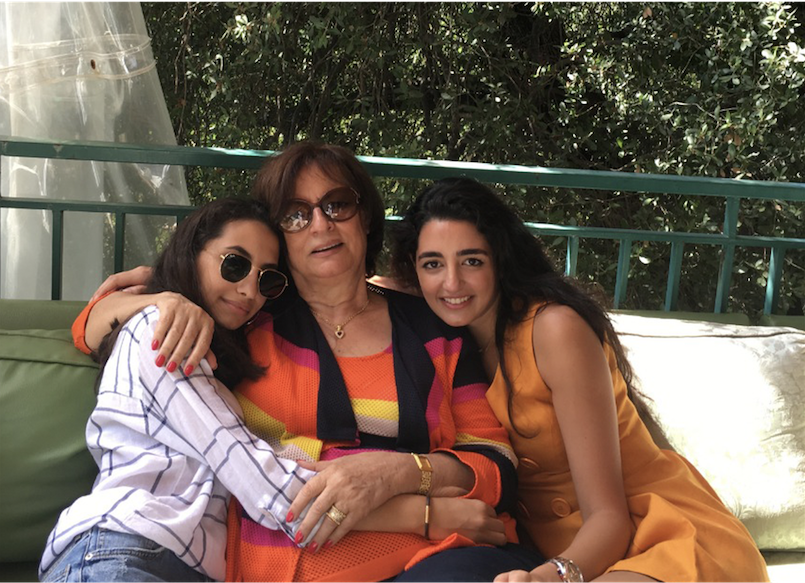


Kabbani and Ramadan pose with their 73-year-old grandmother. (Supplied)

“The intentions were to – out of one conversation – try to get out multiple different emotions in a short span,” Kabbani told Arab News. “It was tricky because you need to try to navigate the conversation in a certain way and also ask the questions at a certain time.”

For the sad image, Kabbani said she was discussing the current situation in Lebanon – the economic crisis, the recession and the aftermath of the Beirut explosion — with her grandmother. 
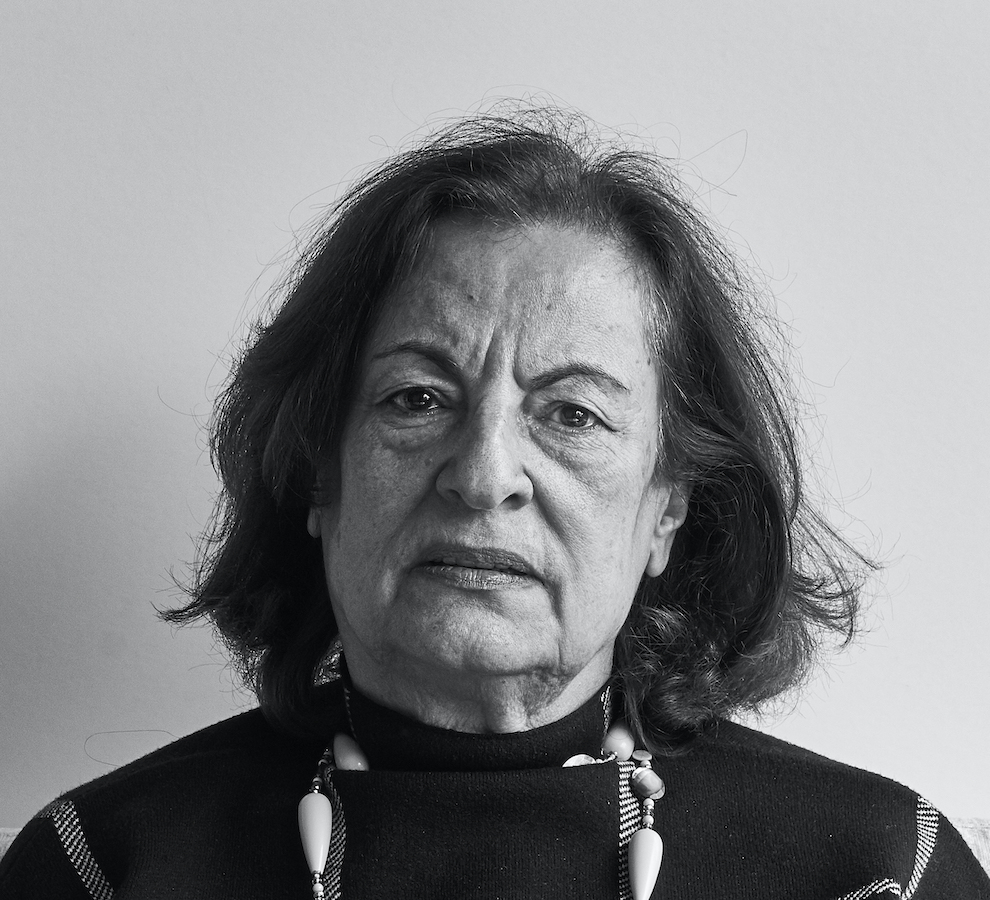


For the sad image, Kabbani said she was discussing the current situation in Lebanon – the economic crisis, the recession and the aftermath of the Beirut explosion — with her grandmother. (Supplied)

“We were talking about the family,” who the photographer said have a close relationship. “We were talking about how people are moving, how there’s a possibility that I might have to move because we’re forced to – not because we want to – to be able to continue life and have a good future.”
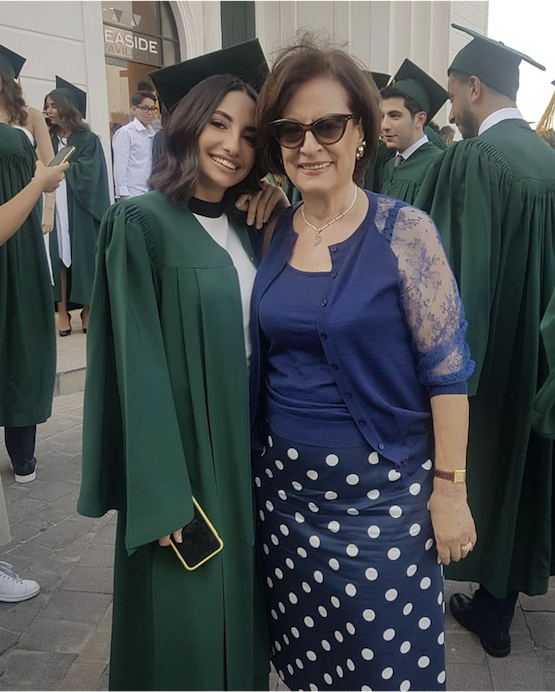


Kabbani poses with her grandmother on her graduation day. (Supplied)

Ramadan said she believes that these are sensitive topics for the older generation, which is why there were a lot of emotions captured in the picture. “My grandma also lived through the Lebanese war, and it’s like, she’s able to see everything … it’s like history is repeating itself,” she told Arab News. 

After their emotional conversation, they switched things up by discussing how “lively” Lebanon is. 
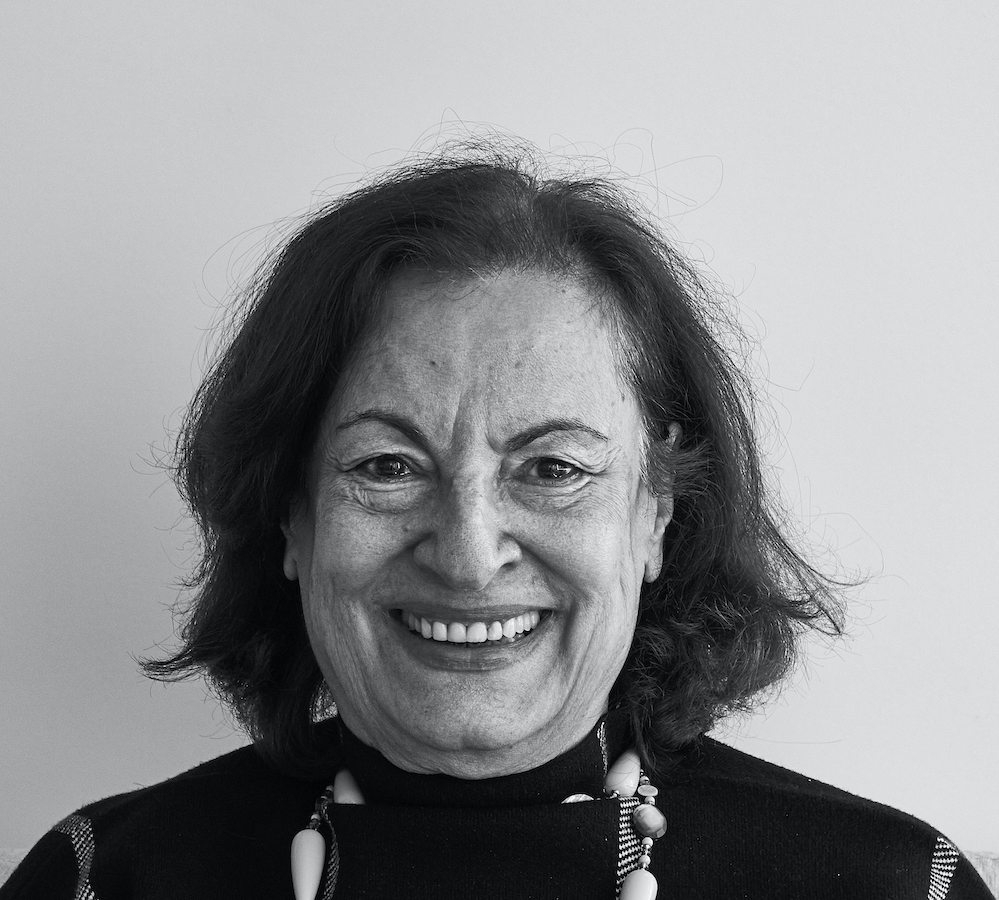


Kabbani was thinking of how “lively” Lebanon is. (Supplied)

“The outings, the constant happiness, the laughter, how close every Lebanese person is with one another, because Lebanon is so small,” Kabbani said. “Then I asked her: ‘how would you want Lebanon to be for your maximum happiness and your maximum satisfaction?’”

While the grandmother was thinking of the answer, Kabbani snapped a beautiful photo of her grandmother wearing a joyous expression. 

Out of over 70 images, these two pictures made the cut. 
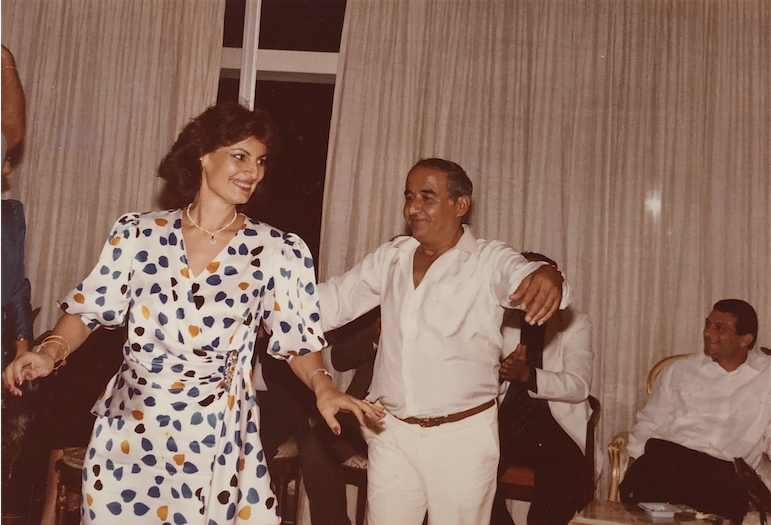


Kabbani’s mother dances with her husband. (Supplied)

The attention the two shots garnered on social media led Kabbani to dream up a campaign called “The Two Things Campaign” that is still in the development process. 

“It’s like thinking of two things that one is set on,” Kabbani said. “Maybe this is a way to just breathe and share what you have or what you’re feeling… It’s really important so that you can share your story with others who can relate to you.” 


BMW Art Cars mark 50 years at inaugural Art Basel Qatar

Updated 10 min 20 sec ago
Follow

BMW Art Cars mark 50 years at inaugural Art Basel Qatar

DOHA: BMW’s long-running Art Car initiative took center stage at the inaugural Art Basel Qatar, with Thomas Girst, BMW Group’s head of cultural engagement, reflecting on five decades of collaboration between artists, engineers and the automobile.

Speaking at the fair, Girst situated the Art Car program within BMW’s broader cultural engagement, which he said spanned “over 50 years and hundreds of initiatives,” ranging from museums and orchestras to long-term partnerships with major art platforms.

“Every time Art Basel moves — from Miami to Hong Kong to Qatar — we move along with them,” he said. “That’s why we’re here.”


A post shared by Art Basel (@artbasel)

The occasion also marked the 50th anniversary of the BMW Art Car series, which began in 1975 with Alexander Calder’s painted BMW 3.0 CSL. Since then, the project has grown into a global collection that brings together motorsport, engineering, design and contemporary art. “Those Art Cars speak to a lot of people at the intersection of motorsports, technology, racing engineering, arts, lifestyle and design,” Girst said.

For Girst, the relationship between art and the automobile has deep historical roots. He pointed to early modernist fascination with cars, noting that “since the inception of the automobile,” artists have seen it as both a subject and a symbol of modernity. “There’s a reason for arts and culture and cars to mix and mingle,” he said.

At Art Basel Qatar, visitors were invited to view David Hockney’s BMW Art Car — Art Car No. 14 — displayed nearby. Girst described the work as emblematic of the program’s ethos, highlighting how Hockney painted not just the exterior of the vehicle but also visualized its inner life. The result, he suggested, is a car that reflects both movement and perception, turning the act of driving into an artistic experience.

Central to BMW’s approach, Girst stressed, is the principle of absolute artistic freedom. “Whenever we work with artists, it’s so important that they have absolute creative freedom to do whatever it is they want to do,” he said. That freedom, he added, mirrors the conditions BMW’s own engineers and designers need “to come up with the greatest answers of mobility for today and tomorrow.”

The Art Car World Tour, which accompanies the anniversary celebrations, has already traveled to 40 countries, underscoring the project’s global reach. For Girst, however, the enduring value of the initiative lies less in scale than in its spirit of collaboration. Art, design and technology, he said, offer a way to connect across disciplines and borders.

“That’s what makes us human. We can do better things than just bash our heads in — we can create great things together,” he said.