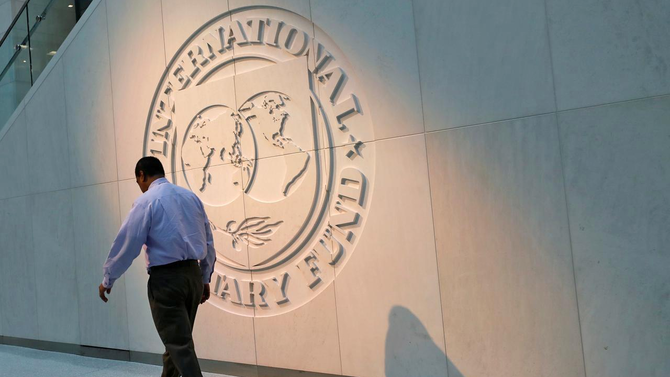
ISLAMABAD: The IMF said on Wednesday the COVID-19 pandemic had exacerbated existing debt vulnerabilities and led to a surge in financing needs across the Middle East, North Africa, Afghanistan, and Pakistan (MENAP).
The Fund uploaded four questions about debt and financing risks from COVID-19 in MENAP as well as responses on its website on Wednesday.
“Across the Middle East, North Africa, Afghanistan, and Pakistan (MENAP), countries responded to the COVID-19 pandemic with unprecedented scale and urgency,” the IMF said. “While this strong response helped save lives and cushion the economic blow, it also exacerbated existing debt vulnerabilities and led to a surge in financing needs.”
Many countries were already facing high debt before the pandemic, the Fund said. By the end of 2019, one-half of MENAP countries had government debt ratios above 70 percent of GDP and one in four countries faced public gross financing needs above 15 percent of GDP annually.
With limited access to external financing, governments and large state-owned enterprises turned to domestic banks. This expanded banks’ exposure to the public sector in several of MENAP’s emerging markets— ranging from over 20 percent of total banks’ assets in Iraq, Jordan, and Qatar, to above 45 percent in Algeria, Egypt, and Pakistan, and up to 60 percent in Lebanon. By contrast, banks in emerging markets elsewhere had a public sector exposure of 12 percent, the Fund added.
The collapse in economic activity led to losses in fiscal revenues, as countries increased government spending to mitigate the pandemic’s impact.
“Although one-third of MENAP countries tapped international financial markets— representing 25.5 percent of worldwide emerging market issuances— domestic financing played a critical role, particularly during the first phase of the crisis when international markets were disrupted,” the Fund said. “For instance, governments in Egypt, Jordan, Pakistan, and Tunisia covered more than 50 percent of their public gross financing needs with domestic bank financing in 2020.”
Responding to a question of what challenges MENAP’s emerging markets would face due to higher financing needs ahead, the Fund said “if domestic banks fund these unexpected needs, in addition to the expected financing needed during 2021–22, Egypt, Oman, Pakistan, and Tunisia would absorb an additional 10 to 23 percent of banks’ assets as government debt by the end of 2022. As a result, Egypt and Pakistan’s banks could reach levels of public sector exposure similar to those currently seen in Lebanon.”


![]()

COVID-19 worsened debt vulnerability in Middle East, North Africa, Afghanistan, Pakistan — IMF
Short Url
https://arab.news/n586v
COVID-19 worsened debt vulnerability in Middle East, North Africa, Afghanistan, Pakistan — IMF
- MENAP countries responded to COVID-19 pandemic with unprecedented urgency but also had to face surge in financing needs
- Collapse in economic activity led to losses in fiscal revenues, as countries increased government spending to mitigate pandemic impact
Latest updates




© 2026 SAUDI RESEARCH & PUBLISHING COMPANY, All Rights Reserved And subject to Terms of Use Agreement.