BEIRUT: Lebanon on Tuesday condemned smuggling operations and “all that undermines the security and stability of the Kingdom and the safety of its people.”
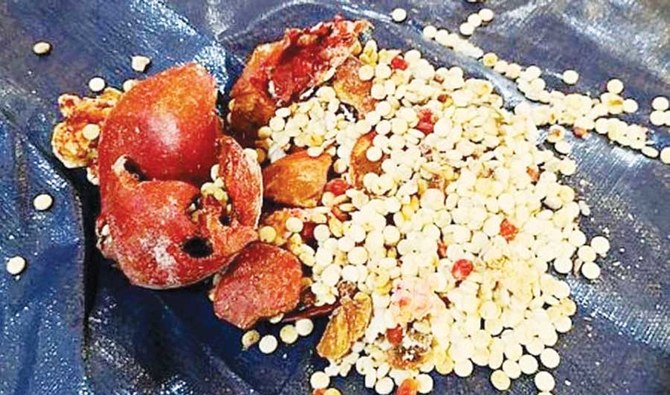
Saudi Arabia banned the import of agricultural products from Lebanon after authorities seized a narcotic-stuffed pomegranate shipment in Dammam.
Lebanon’s Interior Minister Mohammed Fahmy has been tasked with updating the Saudi side on the measures being taken to tackle smuggling. He called Foreign Minister Prince Faisal bin Farhan and said: “Lebanon condemns the smuggling operation and all that undermines the security and stability of the Kingdom and the safety of its people.”
President Michel Aoun led a high-level meeting in Beirut to deal with the ban’s fallout and address the country’s smuggling problem.
But the statement issued afterwards was criticized for ignoring the smuggling from Syria and the smuggling that took place through legitimate crossings, some of which, it was said, were run by Hezbollah.
The Lebanese Economic Organizations, chaired by former minister Mohamed Choucair, warned that the state and all its institutions were “at stake.” They criticized the methods adopted by the authorities to face challenges, “especially the announcement of flamboyant positions” that no longer had any value on a domestic or international level.
They hoped the recommendations made during the meeting would lead to practical measures on combating drugs and dealers, controlling legal crossings, and closing illegal crossings.
“Then, the state can protect its reputation, dignity, economy, and foreign relations, especially with sister countries.” They feared that “indolence” in seriously addressing the crisis would allow criminals to further “defy the state” and persist with their conduct.
They called for security crackdowns, pursuing drug dealers and smugglers, prosecuting those involved in drugs, assigning the army and security services to prevent smuggling on the border between Lebanon and Syria, controlling ports, developing a list of exporters with a good reputation, and equipping ports and border crossings with scanners.
Naim Khalil, who leads the Syndicate of Fruit and Vegetable Exporters and Importers, said: “We have been working with Saudi Arabia for 40 years without any harassment.”
He demanded the provision of “sophisticated scanners, police dogs, and strong personnel whose eyes are open to the harbor, as things are now out of control.”
Ibrahim Tarshishi, head of the Bekaa Farmers’ Association, repeated that there were 40 trucks loaded with Lebanese products scattered between the port of Jeddah, the port of Beirut, and the Syrian-Lebanese borders.
He demanded sifting through exporters and giving priority to well-known companies. “As for the companies that entered the market recently, they have neither bank balances nor a commercial registration. We also hope that the certificate of origin is verified.”
A number of farmers said that talk of the ban reducing prices was inaccurate.
The farmers hoped that “the measures would lead to stopping shell companies that export agricultural products when we do not know their owners. The Cedar Company, which was responsible for the pomegranate shipment, is one of these companies.”


![]()

Lebanon condemns ‘all that undermines’ KSA stability, security
Short Url
https://arab.news/8wj3q
Lebanon condemns ‘all that undermines’ KSA stability, security
- Saudi Arabia banned the import of agricultural products from Lebanon after authorities seized a narcotic-stuffed pomegranate shipment in Dammam


Latest updates


Recommended


© 2026 SAUDI RESEARCH & PUBLISHING COMPANY, All Rights Reserved And subject to Terms of Use Agreement.