Drive planned to increase awareness on IP rights in Saudi Arabia

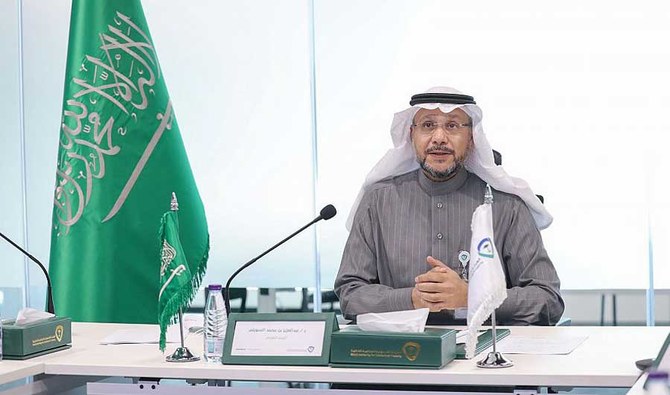
Dr. Abdul Aziz bin Mohammed Al-Suwailem. (SPA)
Short Url
Updated 27 April 2021
Follow

Drive planned to increase awareness on IP rights in Saudi Arabia

  • The main goal of inspection visits is to increase public awareness about the breach of intellectual properties

RIYADH: Saudi Arabia marked World Intellectual Property Day on Monday. This year’s slogan for the day is “Taking your ideas to the market.”
The CEO of the Saudi Authority for Intellectual Property (SAIP), Dr. Abdul Aziz bin Mohammed Al-Suwailem, said the authority is taking measures to create awareness about the importance of intellectual property rights in the Kingdom.
He said SAIP has launched several programs to educate small and medium enterprises (SMEs) in this regard.
Al-Suwailem said the IP Clinic is one of the services offered by the authority to establish a communication channel with inventors and SMEs. He said through the channel experts offer consultation services. SAIP also offers training programs and so far more than 3,710 people have benefited from the training, he said.
SAIP can be reached through its direct customer service number (920021421), via its email address [email protected], or through its official social media accounts, using the handle @SAIPKSA.
Recently, the authority launched a campaign aimed at inspecting websites to verify their compliance with intellectual property systems and ensure they do not violate intellectual rights.
The SAIP’s inspection campaigns have been on two fronts, visiting websites that broadcast movies, sports matches and TV series and sell books, and conducting field inspections of stores in the cities of Riyadh, Jeddah and Dammam. The main goal of inspection visits is to increase public awareness about the breach of intellectual properties.


Amr Moussa: Saudi Arabia and Egypt must lead Arabs for true peace

Updated 5 sec ago
Follow

Amr Moussa: Saudi Arabia and Egypt must lead Arabs for true peace

RIYADH: Amr Moussa, former Arab League secretary-general, has called for the establishment of an effective Arab leadership led by Saudi Arabia and Egypt, in partnership with Jordan, to unify regional positions and negotiate on the Palestinian cause and broader regional future.

During a panel discussion at the King Fahd National Library in Riyadh on Thursday evening, Moussa stressed this was “both vital and achievable” and emphasized the primary goal should be the establishment of a fully sovereign and effective Palestinian state: “True peace is only that which protects all parties … we need genuine peace, not a facade or a superficial justification,” he said.

Such a state must be “responsible for security and peace in the Middle East alongside its neighbors,” rather than a fragile entity, he added.

Moussa underlined that achieving this objective first requires the Arab world to demonstrate the capacity for unified and decisive action. “Are we as Arabs truly capable of being ‘we,’ or has that moment passed?” he asked.

He said the firm positions taken by Saudi Arabia and Egypt in rejecting forced displacement and calling for an end to aggression “underscore that it is possible to assert ‘no’ when the Arab stance is justified.”

Warning of the severe consequences of maintaining the status quo, he added: “If things continue this way … there will inevitably be something akin to October 7 again, because injustice breeds resistance.”

He placed full responsibility on Israel, saying it “bears complete responsibility for the chaos and destruction.”

On a practical mechanism to implement a unified Arab stance, Moussa proposed that Saudi Arabia and Egypt take the lead in establishing a diplomatic baseline, representing their “yeses and noes” in consultation with other Arab states. This framework, he said, would counter any attempts to impose unjust solutions under labels such as the new international “Peace Council,” which might “demand Palestinian concessions on Palestinian land.”

On whether peace was possible with the current Israeli government, which he described as “not committed to peace,” Moussa said: “There are other Israelis who speak the language of peace.” He urged efforts to “identify and support them to create a political alternative within Israel.”

He said the first thing Palestinians should do is hold comprehensive Palestinian elections as soon as possible, utilizing technology to ensure all Palestinians took part, including those in Jerusalem, to select a new leadership “with strong negotiating legitimacy.”

Moussa also warned that the challenges “are not limited to Palestine,” saying the Arab world faces interconnected crises in Syria, Yemen, Sudan, Lebanon and Libya, alongside shifts in the international order and the race for space.

“The issue of our future (requires) reviving a new Arab world,” capable of actively shaping that future rather than being marginalized, the former secretary-general concluded.