



NEW DELHI: On a day when intensive care patients died when a fire broke out at a coronavirus hospital on the outskirts of Mumbai, dozens of others choked to death as India’s health care system was overwhelmed, facing a critical shortage of oxygen amid a devastating surge in infections.
India has reported 333,000 new cases in the past 24 hours, for a second day recording the world’s highest daily tally of coronavirus.
Daily coronavirus deaths jumped to 2,263, while officials across northern and western India, including the capital, New Delhi, warned that most health facilities were full and running out of oxygen.
The fire that broke out at the ICU of the COVID-19 hospital in the Virar area of the Palghar district killed 13 patients in what was the second major hospital incident in the western state of Maharashtra within a week. On Wednesday, an oxygen leakage at a hospital in Nasik district claimed the lives of 24 patients who were on ventilators.
“Such accidents show the pressure under which these hospitals are working and also the laxity in enforcing quality regulations in hospitals,” Mumbai-based researcher and Indian Journal of Medical Ethics editor, Dr. Amar Jesani, told Arab News.
“The situation is extremely grim across the country. People are not able to find a bed, oxygen. It seems a significant number of deaths are taking place due to the non-availability of critical care,” he said.
READ MORE
India put oxygen tankers on special express trains as major hospitals in New Delhi begged on social media on Friday for more supplies to save COVID-19 patients who are struggling to breathe. Click here for more.
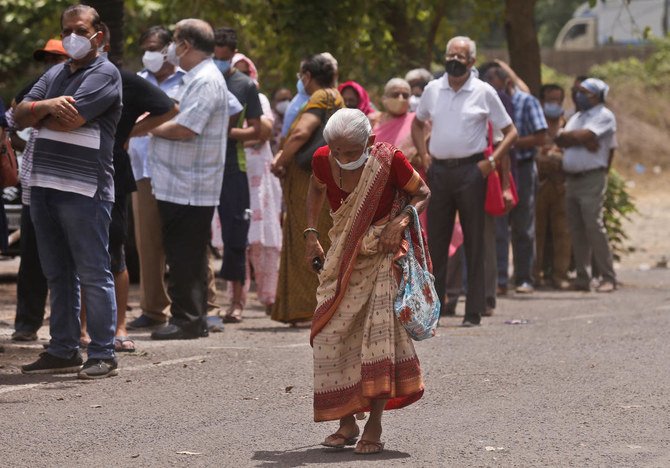
TV channels showed footage of people with empty oxygen cylinders lining up outside refilling facilities across the country, hoping to save critically ill relatives.
While the situation in Maharashtra is the worst, with more than 67,000 new COVID-19 cases and 600 deaths reported in the past 24 hours, New Delhi is also under increasing pressure as it reported 24,000 new COVID-19 cases and a record of 306 deaths in the past 24 hours.
The chief minister of Delhi, Arvind Kejriwal, warned in a meeting with Prime Minister Narendra Modi on Friday that there was a “huge shortage of oxygen” at hospitals in India’s capital territory.
At Sir Ganga Ram Hospital, one of the oldest medical facilities in New Delhi, 25 people have died, the hospital’s medical director, Satendra Katoch, said.
“Low oxygen concentration likely contributed to the deaths of critical patients,” he said. “Critical patients need high pressure, stable oxygen supply.”
As the hospital’s statement that another 60 patients were at risk resulted in panic, oxygen was supplied later in the day.
The developments came as Modi held meetings on Friday with experts, chief ministers of states and oxygen manufacturers to address the crisis, which his government has been accused of mishandling.
The main opposition Congress party said that the government’s response was characterized by “shortage, shortcoming and short-sightedness.
“The priorities of the prime minister and home minister reflect that they have entirely become inefficient, incompetent and indifferent toward the COVID-19 crisis,” Congress spokesperson, Abhishekmanu Singhvi, told a press conference.
Dr. Jesani also said there had been no preparedness in dealing with the pandemic.
“The government had one year to strengthen its public health systems, appoint more doctors and nurses, strengthen primary health care centers in districts, but none of those things were done,” he said.
“The government did not prepare the nation to face the crisis.”
As India’s second wave of infections has been blamed on a new virus variant, Jesani added that scientists had not been engaged in the pandemic response.
“The government identified a new variant of the virus in October itself and they did not take it seriously,” he said. “The government from the beginning is not listening to science. It has its own agenda.”


