Saudi Arabia aims to help SMEs expand their export potential

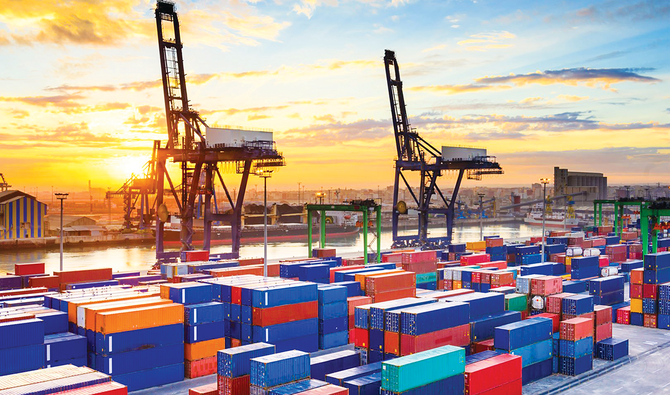
As Saudi SMEs become more experienced at marketing their products to a wider global audience, agencies such as the Saudi EXIM Bank will be on hand to help them to finance the logistics needed to become exporters. (Shutterstock)
Short Url
Updated 22 April 2021
Follow

Saudi Arabia aims to help SMEs expand their export potential

  • Saudi bank offers 17 credit solutions to small exporters to help them expand their operations worldwide

RIYADH: The Saudi Export-Import (EXIM) Bank has approved nearly SR8 billion ($2.13 billion) in lending to non-oil exporters since it was launched early last year, helping them to distribute their goods to more than 45 countries around the world.

The lender was established as part of the government’s Vision 2030 goal to raise the share of exports in the non-oil economy from 16 percent at present to 50 percent by the end of the decade.

“We at Saudi EXIM are mandated to serve all Saudi-based exporters of non-oil content, be it goods, services or intermediate value-added products, irrespective of their enterprise size. We do so by ensuring that our role complements that of commercial lenders instead of eroding it or competing with it,” Dr. Naif Al-Shammari, acting CEO of Saudi EXIM, said in an interview with Arab News.

“We pay special attention to small and medium enterprises given the limited access they have to commercial funds. This extends even to those that do not have an export track record, provided that they have valid on-hand orders from the export market,” Al-Shammari said. 
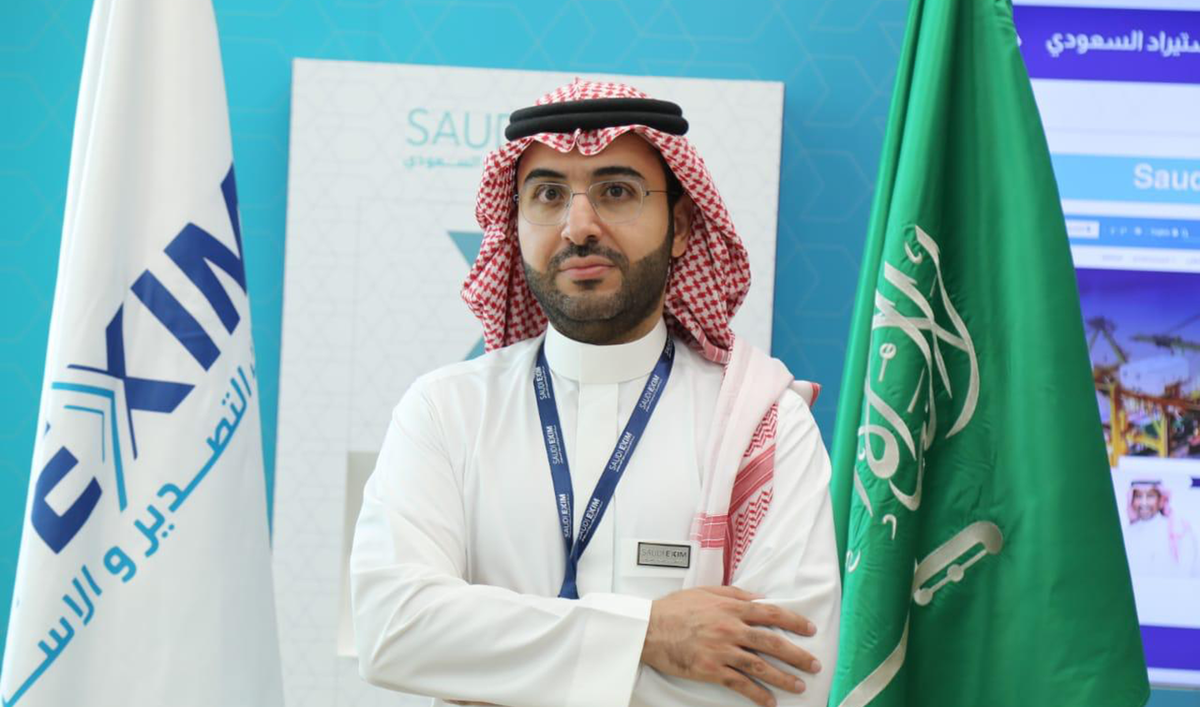


Dr. Naif Al-Shammari, acting CEO of Saudi EXIM

To boost the performance of exporters in the non-oil sector, the Saudi EXIM Bank offers 17 different credit solution products, which were developed in accordance with best international practices and based on the needs of Saudi-based exporters and their foreign clients, Al-Shammari said.

Meshari Alrajih, an assistant professor of marketing at the King Saud University, said small and medium-sized exporters can benefit from the new “Made in Saudi” program, which offers several solutions to promote the development of local products. There are many forms of support that can be used, such as fee exemptions for starting industrial enterprises of up to five employees, he explained. He pointed to other programs related to Vision 2030 that can help small and medium enterprises (SMEs), including the National Industrial Development and Logistics Program, the Local Content and Government Procurement Authority and the Industrial Development Fund.

FASTFACTS

• The Saudi Export-Import Bank has approved nearly $2.13 billion in lending to non-oil exporters since it was launched early last year.

• It provides export financing, guarantees and export credit insurance services with competitive advantages.

To become one of the companies helping to achieve the targets set by the Vision 2030 program, Alrajih said, entrepreneurs should contact the relevant authorities with experience in this area, such as the Saudi Exports Development Authority and the chambers of commerce. He also recommended that small companies participate in international exhibitions and conferences, to build up their overseas networks.

Alrajih urges SMEs to market their products outside the Kingdom through a number of channels such as the Ministry of Investment, which has overseas offices specializing in helping such companies.

Design and branding consultant Fawaz Al-Otaibi said the “Made in Saudi” initiative comes at a critical time. “During the past years, many Saudis have received their education in the most prestigious universities in the world and studied design, branding, industrial design and other specializations,” he said, adding that this new skillset among young Saudis will lead to “a significant transformation within a short period.”

As Saudi SMEs become more experienced at marketing their products to a wider global audience, agencies such as the Saudi EXIM Bank will be on hand to help them to finance the logistics needed to become exporters, helping the government to achieve its ambitious Vision 2030 targets.


IMF raises Saudi Arabia’s 2026 growth forecast to 4.5% 

Updated 4 sec ago
Follow

IMF raises Saudi Arabia’s 2026 growth forecast to 4.5% 

RIYADH: The International Monetary Fund raised its 2026 growth forecast for Saudi Arabia to 4.5 percent, citing higher oil output, resilient domestic demand, and continued economic reforms across the region. 

The revised projection marks a 0.5 percentage point upgrade from the IMF’s October report, according to the fund’s latest World Economic Outlook Update. Saudi Arabia’s economy is expected to have grown 4.3 percent in 2025, with expansion set to ease to 3.6 percent in 2027. 

This comes as the World Bank said earlier this month that Saudi Arabia’s gross domestic product is expected to grow by 4.3 percent in 2026 and 4.4 percent in 2027, up from an estimated 3.8 percent in 2025. 

The IMF expects growth momentum to build across the broader Middle East and North Africa and the Gulf Cooperation Council region. 

In its latest report, the IMF stated: “In the Middle East and Central Asia, growth is projected to accelerate from 3.7 percent in 2025 to 3.9 percent in 2026 and to 4.0 percent in 2027, supported by higher oil output, resilient local demand, and ongoing reforms.” 

Similarly, the Middle East and North Africa region is forecast to see growth rise from 3.4 percent in 2025 to 3.9 percent in 2026 and 4 percent in 2027. 

The broader report underscores a global economy holding steady at 3.3 percent growth in 2026, but noted this stability rests on a “narrow base of drivers,” primarily technology investment and fiscal support, making growth vulnerable.

Key risks include a potential reevaluation of artificial intelligence productivity gains, escalating trade tensions, and geopolitical flare-ups. 

“Headwinds from shifting trade policies are offset by tailwinds from surging investment related to technology, including artificial intelligence, more so in North America and Asia than in other regions, as well as fiscal and monetary support, broadly accommodative financial conditions, and adaptability of the private sector,” the IMF stated in its report. 

For energy commodities, a factor critical to regional revenues, the IMF expects prices to fall about 7 percent in 2026 due to “tepid global demand growth and strong supply growth,” but noted a soft floor is provided by higher-cost producers and strategic stockpiling. 

On inflation, the IMF projects a continued decline worldwide. Global headline inflation is expected to fall from an estimated 4.1 percent in 2025 to 3.8 percent in 2026 and further to 3.4 percent in 2027. The report stated that “overarching trends of softening demand and lower energy prices” are expected to remain intact. 

The IMF also provided updated growth forecasts for other major economies. Among advanced economies, the US is projected to grow by 2.4 percent in 2026, while the euro area is expected to expand by 1.3 percent. Japan’s growth is forecast to moderate to 0.7 percent.

For key emerging markets, China’s growth is projected at 4.5 percent in 2026, and India is expected to grow by 6.4 percent. 

The IMF’s policy advice emphasized rebuilding fiscal buffers, maintaining central bank independence, and reducing policy uncertainty to foster sustainable medium-term growth, advice particularly relevant for commodity-exporting regions navigating energy transition and diversification.