

Pollution solution: Pakistani province scraps old buses to curb carbon emissions

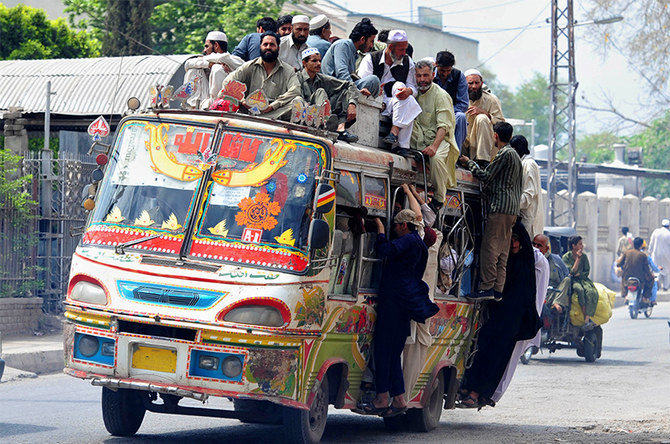
Pakistanis sit on a passenger bus during the transport strike in Peshawar on April 10, 2012. (AFP/File)
Short Url
Updated 19 April 2021
Follow

Pollution solution: Pakistani province scraps old buses to curb carbon emissions

  • Initiative comes as Peshawar Bus Rapid Transit is expanding coverage of its more environment-friendly hybrid diesel vehicles
  • TransPeshawar offers as compensation of Rs1.4 million ($9,000) for a wagon and Rs1.5 million for one passenger bus

PESHAWAR: Transportation authorities in Khyber Pakhtunkhwa have started to shred decades-old and corroded passenger buses into scrap metal as the administration says it is trying to reduce traffic congestion and carbon dioxide emissions in Peshawar, the provincial capital.

The initiative launched last month comes as the city's Bus Rapid Transit (BRT) is expanding coverage of its more environment-friendly hybrid diesel vehicles.  

"This project will contribute to clean and green initiatives," Umair Khan, spokesperson of TransPeshawar — the government-owned company that manages BRT — told Arab News on Sunday.  

He said the company has already bought from private owners and turned into scrap 148 buses out of 418 such vehicles registered in the city. It has not been decided how the scrap metal would be recycled.
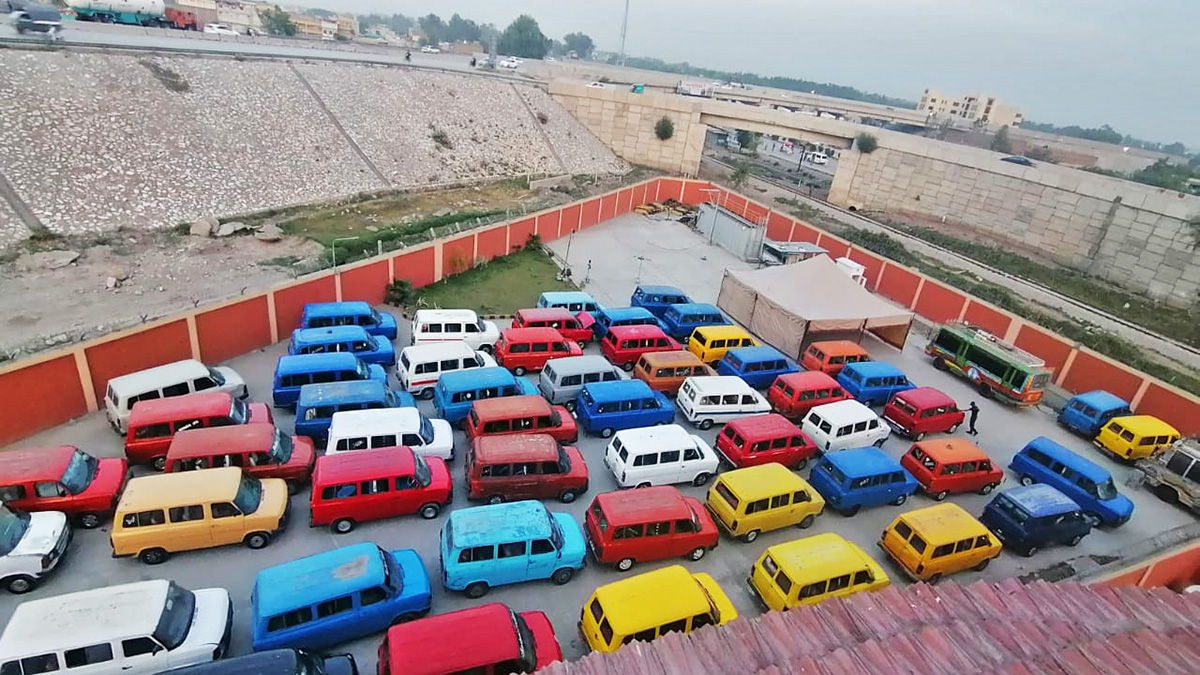


In this undated photo, old passenger wagons bought by TransPeshawar are parked in Peshawar to be turned into scrap metal. (Photo courtesy: TransPeshawar)

The provincial government says it has earmarked Rs150.8 million to compensate bus owners.

"TransPeshawar offers Rs1.4 million ($9,000) against one wagon and Rs1.5 million for one passenger bus," Khan said. "The scheme is still ongoing and more transporters are coming to get themselves registered to qualify for compensation."

He added that by offering compensation and competitive price for the vehicles, the administration is giving the sector's stakeholders a chance to start new and better businesses.

But while both the provincial government believes the initiative is necessary for reducing air pollution in a city that is one of Pakistan's most polluted, a transporters' body says it would lead to unemployment.

"Initially, the government has promised to give alternate businesses or adjust our drivers and helpers in the BRT-service, but that pledges cannot be materialized. We demand alternate business to feed our children," Yar Muhammad Afridi, president of the provincial Local and Urban Transport Association, told Arab News.
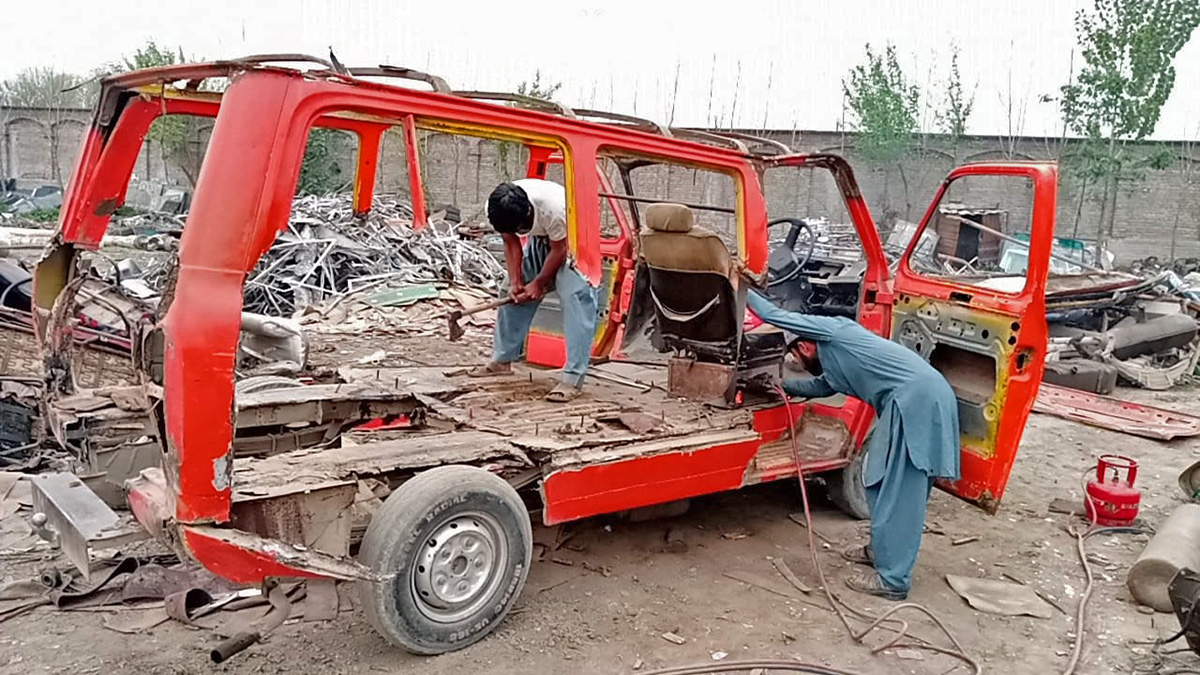


Workers dismantle a former public transport minibus at a workshop in Peshawar, Pakistan, on March 13, 2021. (Photo courtesy: TransPeshawar)

According to Afridi's estimates, around 3,000 drivers and helpers involved in the sector would lose their livelihoods.

Drivers themselves, however, do not link the loss of jobs to the scrapping project but the inevitable expansion of BRT.

Naeem Shinwari, 56, a bus driver for over 20 years, said he was earning a decent amount of up to Rs40,000 every month. It was the introduction of BRT last year, he said, that had "snatched" his job, forcing him to consider entering a new profession.

“For two months now I’m at home without any work and I’m still undecided what to do," he told Arab News. "But I plan to start either a chicken business or establish a roadside fruit and vegetable kiosk."


Pakistan urges UN Security Council to sanction separatist BLA group after recent attacks

Updated 6 sec ago
Follow

Pakistan urges UN Security Council to sanction separatist BLA group after recent attacks

  • Separatist BLA launched attacks in multiple Balochistan cities last week, killing over 50 as per official figures
  • Pakistan envoy says since Taliban assumed control of Afghanistan, BLA, other militant groups have a “new lease of life“

ISLAMABAD: Pakistan’s UN Ambassador Iftikhar Ahmed this week urged the Security Council to impose sanctions against the separatist Baloch Liberation Army (BLA) militant group and designate it as a “terrorist” group, after its recent coordinated attacks in southwestern Balochistan province. 

Pakistan’s military said on Thursday it has concluded security operations in Balochistan against separatists that was launched since Jan. 29, killing 216 militants. The military launched counteroffensive operations in Balochistan after the BLA said it launched coordinated attacks in several parts of the province last Friday and Saturday. 

The attacks killed 36 civilians and 22 law enforcement and security forces personnel, Pakistan’s military said. Pakistan’s government has accused India of being involved in the attacks, charges that New Delhi has dismissed. 

“We hope the Council will act swiftly to designate BLA under the 1267 sanctions regime acceding to the listing request that is currently under consideration,” Iftikhar said on Wednesday during a UNSC briefing on the topic ‘Threats to International Peace and Security caused by Terrorist Acts.’

The 1267 sanctions regime is a UNSC program that seeks to impose sanctions on individuals and entities associated with “terrorism.”

The regime seeks to impose travel bans, freeze assets and impose an arms embargo on individuals and groups primarily associated with Al-Qaeda or the Taliban. 

Ahmad said that after the Taliban takeover of Afghanistan in 2021, “externally sponsored and foreign-funded proxy terrorist groups” such as the Tehreek-e-Taliban Pakistan and the BLA have got a “new lease of life.”

“Operating with virtual impunity from Afghan soil and with the active support of our eastern neighbor, these groups are responsible for heinous terrorist attacks inside Pakistan,” he said. 

The Pakistani envoy said it has become imperative to prevent billions of dollars of sophisticated weapons and equipment, which were left behind by foreign forces in Afghanistan, “from falling into the hands of terrorists.”

“There must be accountability of external destabilizing actors who support, finance and arm these groups, including their proxies in Afghanistan,” Ahmad said in a veiled reference to India. 

Pakistan’s largest and poorest province, mineral-rich Balochistan borders Iran and ‌Afghanistan and is home to China’s investment in the Gwadar deep-water ‍port and other projects.

Balochistan has been the site of a ‍decades-long insurgency led by ethnic Baloch separatists seeking greater autonomy and a larger share of its natural ‍resources. 

They accuse the state of denying locals a fair share of the province’s mineral wealth, charges that are denied by the Pakistani government.