

Saudi Arabia’s historic Hail mosque reopens to worshippers

1 / 5
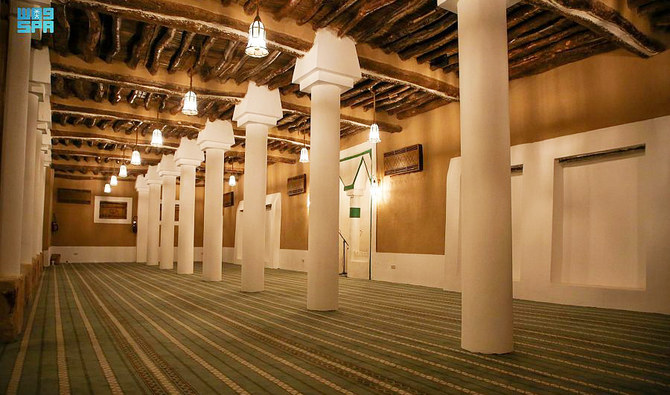
The building’s unique style originates in its construction from mud and stone. (SPA)
2 / 5
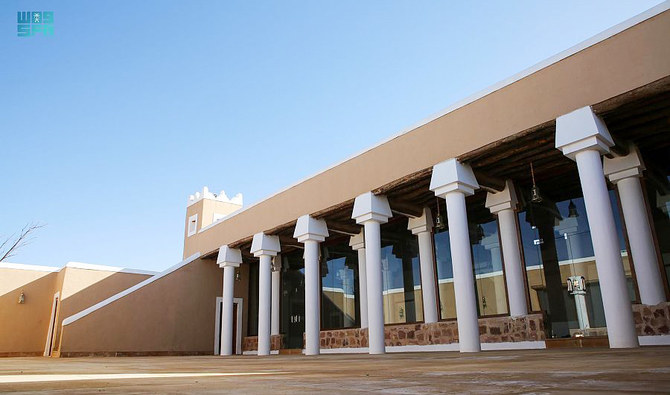
The building’s unique style originates in its construction from mud and stone. (SPA)
3 / 5
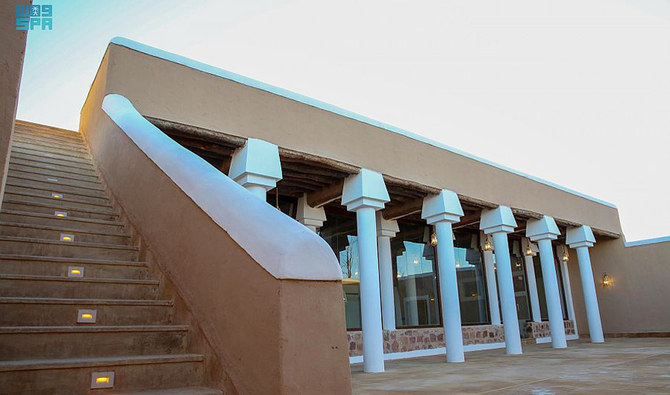
The building’s unique style originates in its construction from mud and stone. (SPA)
4 / 5
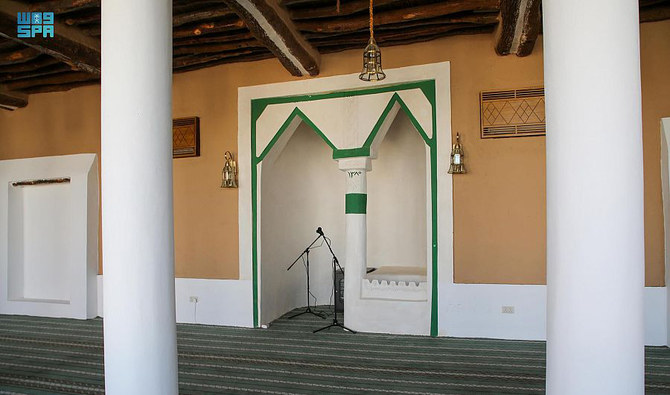
The building’s unique style originates in its construction from mud and stone. (SPA)
5 / 5
The building’s unique style originates in its construction from mud and stone. (SPA)
Short Url
Updated 18 April 2021
Follow

Saudi Arabia’s historic Hail mosque reopens to worshippers

  • The mosque used to host Friday prayers when worshippers traveled from neighboring villages to pray

HAIL: Several famous mosques in the Hail region, including the Qafar Mosque, have been rehabilitated as part of the Mohammed bin Salman Project for Historical Mosques Renovation, through which 30 religious sites in 10 regions will be restored.

The construction of the Qafar Mosque dates back to between 1334 AH and 1445 AH when Ruqayya bint Abdullah founded the site following the death of her husband. It was renovated in 1385 AH, according to the pillar of the mihrab.

The mosque used to host Friday prayers when worshippers traveled from neighboring villages to pray. A modern prayer house was built inside the mosque’s campus in 1412 AH. Today, the mosque is open to worshippers for the five daily prayers and Friday prayer.

Qafar Mosque is located in the old town of Qafar near the road linking Hail and AlUla, about 20 kilometers southwest of Hail.

The building’s unique style originates in its construction from mud and stone, with a wooden roof built from tamarix and palm fronds.

Qafar mosque covers an area of 687 square meters and can accommodate 170 worshippers.

The mosque features the Al-Saha courtyard, which houses two depots and a rectangular eight-meter minaret.

After the mosque’s restoration, it now contains a prayer house, the upgraded Al-Saha courtyard, a prayer area for women, toilets and ablution facilities for both men and women. It can now house more than 400 worshippers.


France, Saudi collaborate on space for artists in Riyadh

Updated 16 January 2026
Follow

France, Saudi collaborate on space for artists in Riyadh

  • L’Institut francais, Riyadh Art will open La Fabrique on Feb. 22
  • ‘New cultural chapter’ between the nations, says France envoy

RIYADH: L’Institut francais in Saudi Arabia and Riyadh Art, an initiative of the city’s royal commission, have announced the opening of La Fabrique, a space for artists, on Jan. 22.

The project is based in the Riyadh Art Hub in JAX District and will enable Saudi and French artists to create, experiment, and bring their visions to life, according to a press release from the organizers.

La Fabrique also offers the public a rare opportunity to witness creative production including movement performances, digital and immersive arts, photography, music, cinema, cuisine and poetry.

At its core, La Fabrique fosters artistic exchange between French and Saudi artists, fostering new encounters, shared practices, and co-creation.

The initiative is aligned with the vision shared by French President Emmanuel Macron and Crown Prince Mohammed bin Salman, who have placed cultural cooperation at the heart of the renewed Saudi-French strategic partnership.

Anchored in the ambitions of Vision 2030, La Fabrique is a part of Riyadh’s transformation into a major international cultural hub.

Developed in cooperation with Saudi Arabia’s Ministry of Culture, the project strengthens the long-standing cultural dialogue between the two nations, the press release stated.

Patrick Maisonnave, ambassador of France to Saudi Arabia, said: “La Fabrique embodies the spirit of a new cultural chapter between France and Saudi Arabia.

“By bringing our artists together, we are not only sharing techniques and traditions, we are opening a space where imaginations meet, new forms emerge, and creativity becomes a bridge between our two societies.

“This initiative reflects our belief that artistic dialogue is one of the most powerful ways to build understanding, trust, and a shared future. It stands as a concrete example of France’s contribution to the ambitions of Vision 2030.”