

Oman becomes fourth GCC country to introduce VAT

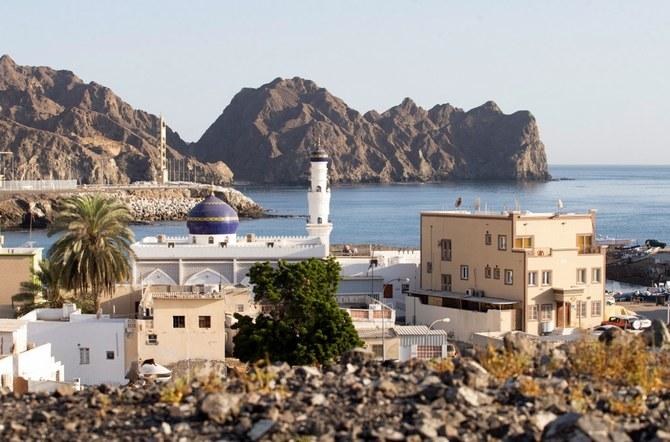
A partial view of the area of Haramil in the Omani capital Muscat on September 18, 2020. (AFP)
Short Url
Updated 16 April 2021
Follow

Oman becomes fourth GCC country to introduce VAT

  • Tax starts April 16 at 5%
  • Zero-rated items include essential foodstuffs

OMAN: Oman introduced a 5 percent value-added tax (VAT) on Friday, the fourth Gulf Cooperation Council country to implement a so-called consumption tax.

It followed the UAE, Saudi Arabia and Bahrain. Saudi Arabia tripled its VAT rate to 15 percent last July to help fund its coronavirus relief efforts.

Oman has predicted it will raise OMR400 million ($1.04 billion) from the tax this year, equivalent to 1.5 percent of GDP, as it looks to narrow a widening fiscal deficit.

In June 2016, all six GCC states signed the Common VAT Agreement, pledging to introduce a 5% VAT rate. Kuwait’s parliament has pushed back the implementation date several times but the International Monetary Fund said last year that it expects it to be introduced by 2022. Qatar is expected to go ahead with VAT in the second or third quarter of this year and is said to be close to finalizing its tax administration system, Dhareeba.

Omanis had 6 months to prepare for the introduction of VAT, which may be followed by the Gulf’s first income tax in the coming years.

Goods and services exempt from VAT include financial services, health care, education, local passenger transport, bare land, resale of residential real estate and residential rents. Zero-rated goods and services include all exports, basic foodstuffs, medicine and medical equipment, investment in gold, silver and platinum, crude oil and derivatives and natural gas, among certain transport goods.


Saudi Maaden reports 156% profit surge to $2bn on strong commodity prices, record production

Updated 05 March 2026
Follow

Saudi Maaden reports 156% profit surge to $2bn on strong commodity prices, record production

RIYADH: Saudi mining and metals company Maaden has reported a 156 percent jump in its net profit attributable to shareholders for 2025, driven by higher commodity prices, record production volumes, and a one-off bargain purchase gain.

The state-backed giant posted a net profit of SR7.35 billion ($1.95 billion) for the full year 2025, an increase from SR2.87 billion in the previous year. The firm’s revenue surged by 19 percent to SR38.58 billion, up from SR32.55 billion in 2024.

This comes as Saudi Arabia steps up efforts to expand its mining sector as a pillar of economic diversification, encouraging international participation and private investment to unlock the Kingdom’s estimated $2.5 trillion in untapped mineral resources under Vision 2030.    

In a statement on Tadawul, the company said: “Performance was led by record phosphate production, near record aluminum production, an increase in all three of Maaden’s main output commodity prices.”

The performance was also fueled by a 60 percent increase in gross profit, which reached SR14.79 billion. In its annual results announcement, Maaden attributed the top-line growth to “higher commodity market prices for phosphate, aluminum and gold business units,” as well as increased sales volumes in its phosphate and aluminum segments. This was partially offset by slightly lower sales volume in the gold unit.

Maaden’s CEO, Bob Wilt, hailed 2025 as a transformative year for the company, marked by strategic growth and operational excellence. “This was a great year for Maaden’s strategic growth. We delivered strong financial results and sustained operational excellence across the business,” he said in a statement.

“This was driven by growth in production across all businesses, including record-breaking DAP (di-ammonium phosphatevolumes), disciplined cost control across and a clear commitment to our role as a cornerstone of the Saudi economy,” Wilt added.

Profitability was further bolstered by an increased share of net profit from joint ventures and an associate. This included a one-off bargain purchase gain of SR768 million related to Maaden’s investment in Aluminium Bahrain B.S.C. The company also benefited from lower finance costs.

The fourth quarter of 2025 was strong, with Maaden swinging to a net profit of SR1.67 billion, compared to a loss of SR106 million in the same period of the prior year. Quarterly revenue rose 7 percent to SR10.64 billion.

The firm achieved record production of di-ammonium phosphate, reaching 6.72 million tonnes for the year, a 9 percent increase. Aluminum production remained near-record levels, while the company added a net 7.8 million ounces to its reportable gold mineral resources through discovery and resource development.

The phosphate division saw sales jump 17 percent to SR20.77 billion, with the earnings before interest, taxes, depreciation, and amortization margin expanding to 47 percent. The aluminum business reported a 9 percent increase in sales to SR10.99 billion, with EBITDA more than doubling in the fourth quarter.

Looking ahead, Wilt emphasized that the pace of growth will accelerate as the company advances key initiatives, including the Phosphate 3 Phase 1 and Ar Rjum projects, which remain on budget and schedule. Maaden has also secured a gas supply for its future Phosphate 4 project.

“This pace of growth will only accelerate. Not only as we advance projects and increase the scale of our exploration program, but as we continue to grow production and implement technology that will further modernize, streamline and unlock value,” Wilt added.

Earnings per share for the year rose sharply to SR1.91, up from SR0.78 in 2024. Total shareholders’ equity increased by 18.7 percent to SR61.59 billion.