

What We Are Reading Today: Three Roads Back by Robert D. Richardson

Short Url
Updated 06 March 2026
Follow

What We Are Reading Today: Three Roads Back by Robert D. Richardson

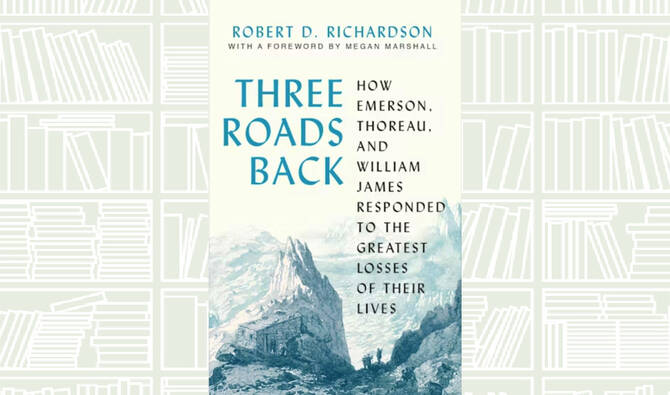
In “Three Roads Back,” Robert Richardson, the author of magisterial biographies of Ralph Waldo Emerson, Henry David Thoreau, and William James, tells the connected stories of how these foundational American writers and thinkers dealt with personal tragedies early in their careers. 
For Emerson, it was the death of his young wife and, 11 years later, his five-year-old son; for Thoreau, it was the death of his brother; and for James, it was the death of his beloved cousin Minnie Temple. 

Filled with rich biographical detail and unforgettable passages from the journals and letters of Emerson, Thoreau, and James, these vivid and moving stories of loss and hard-fought resilience show how the writers’ responses to these deaths helped spur them on to their greatest work, influencing the birth and course of American literature and philosophy.
As Richardson shows, all three emerged from their grief with a new way of seeing, one shaped by a belief in what Emerson called “the deep remedial force that underlies all facts.”


What We Are Reading Today: The Political Economy of Security by Stephen G. Brooks

Updated 04 March 2026
Follow

What We Are Reading Today: The Political Economy of Security by Stephen G. Brooks

In this book, Stephen Brooks provides a systematic empirical and theoretical examination of how economic factors influence security affairs. Empirically, he analyzes how economic variables of all kinds affect interstate war, terrorism, and civil war; in total, 16 pathways are examined.

Brooks shows that the relationship between economic factors and conflict is complex and multifaceted; discrete economic factors—such as international trade, economic development, and globalized manufacturing, to name a few—are sometimes helpful for promoting peace and stability, but at other times are detrimental.

Brooks also develops a stronger theoretical foundation for guiding future research on the economics-security interaction. 

Drawing on Adam Smith, he provides a more complete range of answers to the three key conceptual questions analysts must consider: how economic goals relate to security goals; what economic factors to focus on; and how economic actors influence security policies.

Combining an innovative theoretical understanding with empirical rigor, Brooks’s account will reshape our understanding of the political economy of security.